
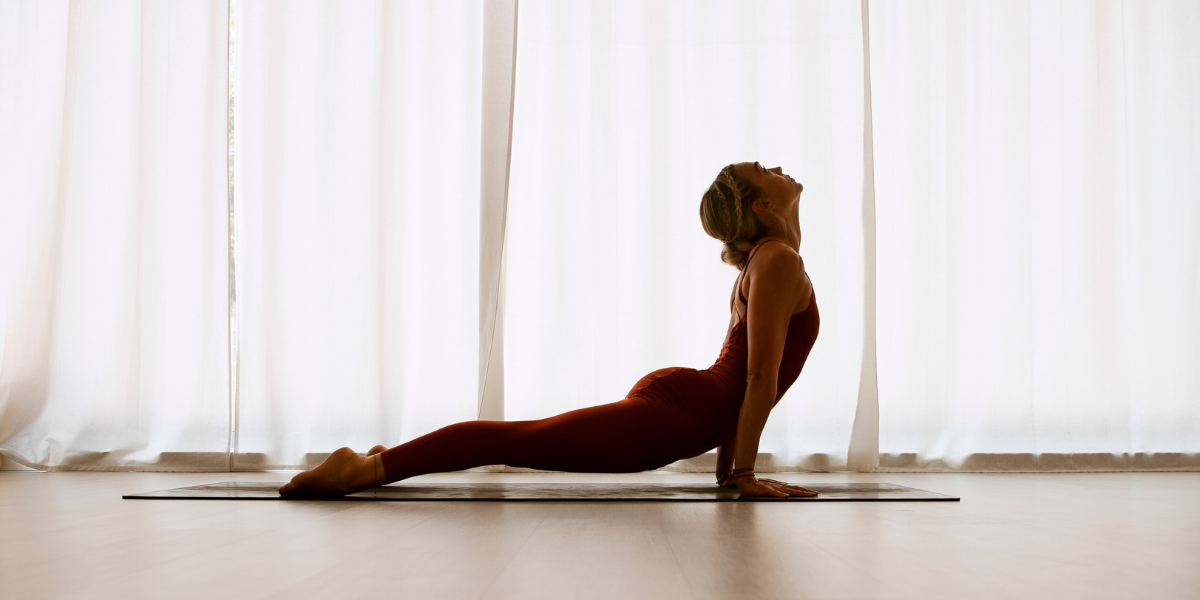
What if your body could speak to you about the emotional patterns you’ve been carrying for years? In the ancient practice of yoga, Urdhva Mukha Svanasana—commonly known as Upward Facing Dog pose—serves as far more than a simple backbend or strength-building asana. This powerful posture acts as a mirror, reflecting back the emotional blocks and resistance patterns that live beneath the surface of our conscious awareness.
When you lower into this heart-opening pose, your body begins an intimate conversation about the ways you’ve learned to protect yourself, the fears you’ve tucked away, and the emotional armor you’ve built over time. The physical sensations, areas of tension, and patterns of resistance that emerge in Urdhva Mukha Svanasana offer profound insights into your inner emotional landscape—if you know how to listen.
The connection between our physical bodies and emotional experiences runs deeper than many realize. Every emotion we experience creates a physical response, and over time, unprocessed emotions can become stored as tension, restriction, or sensitivity in specific areas of the body. Upward Facing Dog pose, with its demands on the heart center, shoulders, and core, creates the perfect conditions for these stored emotions to surface and reveal themselves.
Understanding the Mind-Body Connection in Upward Facing Dog
The brilliance of using Urdhva Mukha Svanasana as an emotional diagnostic tool lies in its comprehensive engagement of the body’s most emotionally sensitive areas. This pose requires openness through the heart center, strength through the core, and surrender through the shoulders and neck—all regions where we commonly store emotional tension and protective patterns.
When you press your hands into the mat and lift your torso toward the sky, you’re not just working your muscles; you’re inviting a conversation with the emotional memories and patterns held within your tissues. The areas where you feel restriction, the places where your breath catches, and the sensations that arise all carry meaningful information about your inner emotional state.
Consider how you naturally respond to stress or emotional overwhelm. Do you round your shoulders forward to protect your heart? Do you tighten your jaw or hold tension in your lower back? These protective patterns don’t disappear when you step onto your yoga mat—instead, they become more apparent as the pose challenges your body to move in ways that contradict these habitual holdings.
The beauty of this awareness lies in its potential for transformation. Once you recognize the patterns, you can begin to work with them consciously, using the pose as a tool for both physical opening and emotional release.
Way #1: Chest and Heart Center Resistance Reveals Protection Patterns
The most immediate insight Urdhva Mukha Svanasana offers relates to how you approach vulnerability and emotional openness. As you lift your chest and open your heart center, notice what sensations arise. Do you feel a natural expansion and freedom, or does something in your chest feel tight, constricted, or protected?
The heart center serves as the emotional hub of the body, and when we’ve experienced heartbreak, rejection, or emotional trauma, we often unconsciously create physical armor around this area. In Upward Facing Dog, this protection manifests as difficulty opening the chest, a sensation of heaviness across the front body, or even emotional resistance to the pose itself.
Picture this scenario: imagine you’re moving into the pose and notice your shoulders wanting to roll forward, even as you try to open your chest. This isn’t a sign of physical weakness—it’s your body showing you how it has learned to guard your heart. The forward rolling of the shoulders creates a protective shell around the vulnerable heart space, a pattern that likely extends beyond your yoga practice into your daily interactions.
Pay attention to your breathing in this heart-opening position. Does your breath flow freely, or does it feel shallow and restricted? Breath patterns offer another window into emotional holding. When we’re protecting ourselves emotionally, we often restrict our breathing as a way to maintain control and limit the intensity of what we might feel.
The key to working with heart center resistance lies in gentle persistence rather than forcing. Each time you practice Urdhva Mukha Svanasana, you’re offering your nervous system an opportunity to reassess whether this protection is still necessary. As you breathe deeply into the pose and maintain it with compassion for your body’s responses, you begin to dissolve the emotional blocks that have been limiting your capacity for openness and connection.
Way #2: Shoulder Tension Indicates Control and Responsibility Burdens
The shoulders in Urdhva Mukha Svanasana tell a story about how you carry responsibility and your relationship with control. As you press down through your hands and engage your arms, notice where tension accumulates in your shoulder region. Do your shoulders creep up toward your ears? Do they feel rigid and locked, or can they maintain strength while remaining soft?
Excessive shoulder tension often reflects the emotional weight of carrying too much responsibility, whether real or perceived. When we feel overly responsible for outcomes, other people’s emotions, or circumstances beyond our control, this burden manifests as chronic shoulder tension. In Upward Facing Dog, this pattern becomes amplified as the pose requires both strength and surrender through the shoulder complex.
The phrase “carrying the weight of the world on your shoulders” exists because this connection between emotional burden and physical tension is so universal. If you notice your shoulders working harder than necessary in the pose, or if they feel locked and immovable, your body is showing you how you approach responsibility and control in your life.
Another common pattern involves shoulders that refuse to settle, remaining elevated and braced throughout the pose. This reflects a nervous system that has learned to stay perpetually ready for the next challenge or crisis. Your shoulders are literally holding themselves in a state of chronic preparation, never fully relaxing into the present moment.
Working with shoulder tension in Urdhva Mukha Svanasana involves learning to distinguish between necessary effort and unnecessary holding. As you practice the pose, experiment with maintaining the strength needed for stability while consciously releasing any additional tension. This practice trains both your body and your emotional patterns to carry only what is truly necessary, letting go of the extra burden that serves no constructive purpose.
Way #3: Core Engagement Reflects Personal Power and Boundaries
The way your core responds in Upward Facing Dog provides insight into your relationship with personal power and boundary setting. The deep abdominal muscles and lower back work together in this pose to create stability and support, much like how healthy boundaries create stability in our emotional lives.
Notice how your core engages as you hold the pose. Does it feel strong and supportive, or does it feel weak and unavailable? Some practitioners find their core muscles seem to “disappear” in the pose, leaving them feeling unstable and reliant entirely on their arm strength. This pattern often reflects a disconnection from personal power or difficulty maintaining boundaries in relationships.
The core muscles represent our center of personal power—our ability to stand firm in our values, maintain our energy, and protect our inner resources. When these muscles feel weak or unresponsive in Urdhva Mukha Svanasana, it may indicate that you’ve been giving away your power or struggling to maintain healthy boundaries in your daily life.
Conversely, a core that grips and over-engages might reflect the opposite challenge: an inability to relax control or trust others. If you find your abdominal muscles clenching desperately in the pose, creating unnecessary rigidity, this could mirror how you approach trust and delegation in your relationships and responsibilities.
The balanced core engagement in Upward Facing Dog teaches us about sustainable personal power—strong enough to provide support and stability, yet flexible enough to allow for movement and adaptation. As you work with core awareness in this pose, you’re practicing the art of maintaining your center while remaining open to life’s natural flow.
Way #4: Breath Patterns Reveal Emotional Processing Capabilities
Perhaps nowhere is the mind-body connection more apparent than in the breath patterns that emerge during Urdhva Mukha Svanasana. Your breathing in this pose offers direct insight into how you process emotions and handle intensity in your daily life.
As you hold Upward Facing Dog, observe your natural breathing rhythm. Does your breath remain steady and deep, or does it become shallow and restricted? Do you find yourself holding your breath during challenging moments of the pose? These patterns extend far beyond your yoga practice, reflecting how you navigate emotional intensity in all areas of your life.
Breath-holding during the pose often indicates a tendency to emotionally “brace” when facing difficulty. Just as you might hold your breath to get through a challenging pose, you may unconsciously restrict your breathing when dealing with difficult emotions or stressful situations. This pattern limits your capacity to stay present and process experiences fully.
Shallow breathing in the pose typically reflects a nervous system that has learned to stay on high alert. When we breathe shallowly, we maintain a state of readiness for flight or fight, never fully settling into relaxation and presence. This pattern prevents deep emotional processing and healing, keeping us skimming the surface of our experiences rather than integrating them fully.
The most revealing aspect of breath awareness in Urdhva Mukha Svanasana is what happens when you consciously deepen your breathing while maintaining the pose. If deeper breathing feels uncomfortable or triggers emotional sensations, this indicates areas where your emotional processing capacity needs attention and development.
Developing breath awareness in this pose teaches you to maintain steady, conscious breathing even during intensity. This skill translates directly to your ability to stay present and emotionally available during life’s challenging moments, rather than shutting down or disconnecting.
Way #5: Exit Strategy Patterns Show How You Handle Completion and Transition
The final insight Urdhva Mukha Svanasana offers relates to how you transition out of the pose, which reflects your patterns around completion, transition, and letting go. Many practitioners focus intensely on getting into poses but pay little attention to how they exit them, missing valuable information about their emotional patterns.
Notice how you choose to come out of Upward Facing Dog. Do you hold the pose until you absolutely must release, pushing through discomfort and ignoring your body’s signals? Do you exit the moment it becomes slightly challenging, avoiding any sensation of intensity? Or do you release mindfully, staying present through the transition?
Practitioners who hold poses beyond their capacity, ignoring discomfort signals, often struggle with completion and transition in life. They may have difficulty ending relationships that no longer serve them, leaving jobs that drain their energy, or moving on from situations that have run their course. The body’s tendency to grip and hold in the pose mirrors an emotional pattern of clinging to the familiar, even when change would be beneficial.
On the opposite end, those who exit poses at the first sign of intensity may struggle with commitment and follow-through. Just as they avoid discomfort in their physical practice, they may avoid emotional discomfort in their relationships and goals, never staying present long enough for transformation to occur.
The most revealing pattern involves how you treat your body during the transition out of the pose. Do you collapse or drop suddenly, or do you maintain awareness and control through the release? This reflects how you handle endings and transitions in your emotional life—whether you stay conscious and present during difficult transitions or disconnect and emotionally “check out.”
Learning to exit Urdhva Mukha Svanasana with the same consciousness and care you bring to entering it teaches valuable skills about completion and transition. You learn to stay present through the full cycle of experience, honoring both the engagement and the release as equally important parts of the process.
Transforming Awareness into Emotional Freedom
The insights revealed through Urdhva Mukha Svanasana become truly valuable only when you understand how to work with them skillfully. Recognition is the first step, but transformation requires consistent, compassionate practice and a willingness to stay present with whatever arises.
Each time you practice this pose, approach it as a conversation with your inner emotional landscape rather than a physical challenge to conquer. Notice the patterns without judgment, breathe into the areas of restriction with compassion, and allow your body’s wisdom to guide the process of release and integration.
The beauty of using yoga as a tool for emotional discovery lies in its gentle, non-invasive approach. Unlike talking therapies that work primarily with the mind, or massage therapies that work primarily with the body, yoga addresses the whole system simultaneously. Through conscious movement and breath, you can access and transform emotional patterns that might otherwise remain hidden beneath the surface of awareness.
Remember that emotional blocks developed over time as protective mechanisms, and they deserve respect and patience as they dissolve. Your body’s resistance patterns served important purposes at various points in your life, helping you navigate challenges and protect your sensitive emotional core. As these patterns begin to shift through yoga practice, honor both the protection they provided and the freedom that comes with their release.
The transformation that occurs through this deep mind-body work extends far beyond your yoga practice. As you develop greater emotional awareness and release stored tensions through poses like Urdhva Mukha Svanasana, you naturally begin to show up differently in your relationships, your work, and your daily interactions. The openness you cultivate in your heart center translates to greater capacity for love and connection. The strength you develop in your core reflects increased confidence in your personal power and boundaries.
Your Journey Toward Emotional Freedom Begins Now
Urdhva Mukha Svanasana offers a profound gateway to understanding and transforming the emotional patterns that shape your daily experience. Through conscious practice of this pose, you gain access to insights about your protection strategies, your relationship with vulnerability, your patterns of control and responsibility, and your capacity for emotional processing and transformation.
The five ways this pose reveals your hidden emotional blocks—through heart center resistance, shoulder tension, core engagement, breath patterns, and exit strategies—provide a comprehensive map for understanding your inner emotional landscape. Each insight offers not just awareness but also a pathway for conscious change and growth.
Your body holds incredible wisdom about your emotional patterns, and poses like Upward Facing Dog create the perfect conditions for this wisdom to surface and be heard. As you continue to explore the mind-body connection through your yoga practice, remember that every sensation, every area of resistance, and every moment of openness carries meaningful information about your path toward emotional freedom.
The journey toward emotional healing and self-discovery through yoga is deeply personal and infinitely rewarding. Each time you step onto your mat and practice with conscious awareness, you’re taking another step toward understanding yourself more fully and living with greater authenticity and freedom. Let Urdhva Mukha Svanasana be your teacher, your mirror, and your guide as you explore the profound connections between your physical practice and your emotional well-being.


