In this whirlwind of chaos and uncertainty, gratitude is the beacon of hope and change. Gratitude affords an easy yet profound entrée into personal development and emotional life in this complex maze of existence. Welcome to The Gratitude Practice—a 30-day tour into the heart of thankfulness, revealing how pinpointing the good in our lives can change them. It is much more than saying “thank you”; it means re-wiring our brains, then changing our perspective, and finally changing our reality. By making this month-long commitment, people can realize long-term changes in their perception and relationships with the world
How to Start a Gratitude Practice as a 30-Day Challenge
Start the Gratitude Practice, our 30-day journey, a quest that helps you learn to appreciate life’s positive moments better. This adventure is about building consistency and mindfulness, not perfection. From here, you are to embark on this amazing journey that involves the practice of a set of activities or prompts—unique practices from the first discovery to learning to acquire basic reflections to advance on life, relationships, and personal growth.
Gratitude Practice: Allocate a particular time each day, either in the morning or at night. Build consistency in your essential neural and lasting habits. Writing tends to strengthen the practice, establish progress records, and play a role in recollection. Expect flexibility and self-compassion with the 30-day challenge. If you fall a day short, just carry on where you left off. After all, it is about progress and not perfection, and the more gratitude felt, the better.
- Small Pleasures: Record five small pleasures you experienced throughout the day.
- Savor: Reflect on one thing you’re grateful for using each of your five senses.
- Love Note: You will write a detailed thank you letter to someone who has positively affected your life.
- Nature’s Bounty: Spend time outside and make a list of natural things for which you are grateful.
- Body’s Miracles: Think of five things your body does that you do not even need to think about.
- Lessons in Adversity: Think of a difficult experience you have had in your life. Now write about three of the positive things in your life that have come from that experience.
- Future Hopes: Write about something that hasn’t happened yet that you are looking forward to in your life.
- Strangers’ Kindness: Take.
- Tech Blessings: Write all the ways that technology has improved your life and be grateful.
- Talent Treasure: Think about your gifts, skills, or talents, and what positive influence they have had on your life.
- Cozy Corners: Give thanks for whatever it is that makes your home comfortable and a place of security.
- Childhood Joys: Remember and be grateful for all the fun things from childhood.
- Work Wins: Identify something about your job or something you do every day you are grateful for.
- Food Journey: Engage in mindful eating and express gratefulness for our food’s course to our table.
- Self-love: Write a gratitude letter to yourself, appreciating your strength and growth.
- Growth Challenges: Point out what is presently challenging and show thanks for how it helps you to grow.
- Unexpected Joys: Journal about something unexpectedly positive that has happened in your life.
- Cultural Riches: Be thankful for ways in which either your cultural heritage or the cultures of others enrich your life.
- Learning Moments: Be grateful when given both formal and informal opportunities to learn and grow.
- Relationship Gems: Consider one significant relationship and make a list of those top qualities you are thankful for about the person in that relationship.
- Mentor Magic: Reflect on the mentors or role models who have had a positive influence on you.
- Simple Pleasures: Focus on minor comforts or indulgences you take for granted.
- Change is Good: Reflect on the good changes that have occurred in your life, and be thankful for how they have helped you grow.
- Eco-Gratitude: Be grateful for things protecting the environment.
- Blessings of Health: Be thankful for those aspects of your health and well-being.
- Joy from Arts: Think about various forms of art, music, or literature that have enriched your life.
- Time Gifts: Reflect on times of free time and how those times are used.
- Community Bonds: Be grateful for aspects of your community or your social group.
- Personal Growth: Reflect on personal evolution in the past year and be grateful for such changes.
- Gratitude Journey: Think about your month of gratitude and be grateful for what you’ve learned.
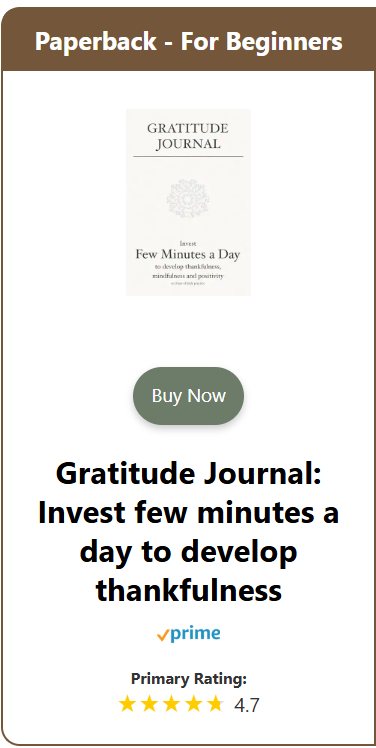
Recomended Books for Gratitude Journal
Benefits of Gratitude Practice
Cultivating a gratitude habit should not be a 30-day endeavor; it should become an activity that is deeply ingrained in your life, with new tracings growing with time. The following are some tips to make sure your gratitude habit is long-lasting and diversified:
- Ritual It: Set aside a certain moment and place to be thankful. Perhaps take a few minutes every night before going out to create a journal or discuss what you are thankful for during dinner. Continuity from one ritual to the next strengthens the habit.
- Reminders: Sprinkle reminders of your gratitude across your place. A bracelet may cause you to halt and consider, a gratitude color swirled around the office, or gratitude-related post-it remarks put in the relevant spot.
- Technology: Install a “gratitude” program or use your smartphone to set a reminder every day. Technology may nudge you, walk around with you on your journey, and connect you to a more extended network in pursuit of gratitude.
- Mindfulness: Combine your thankfulness with mindfulness. Even if it’s just a few more breaths at the start or a brief meditation shortly before it starts.
- Mix It Up: Mix up your routine and make it enjoyable by alternating between different strategies. Keep a journal one day, read aloud the next, turn your gratitude into artwork, and write songs or poems of gratitude.
- Tell Someone: Share your sentiments of appreciation with others. This not only deepens your value but also spreads kindness among your own groups.
- Challenge Yourself: Even when life is at its most difficult, challenge yourself to say something nice. Such a mental attitude may help develop hardiness and allow you to maintain a positive mindset.
- Make It a Value: The more you keep connected to others, the more pertinent to your core beliefs and long-term objectives.
- Recollection and Reflection: Sort through your gratitude entries or statements on a regular basis. This approach can encourage you by showing how far you’ve come and how your attitude has changed over time.
- Be Kind to Yourself: Remember that it is a long-term effort. Be nice to yourself and treat the activity compassionately; it’s understandable that your interest and commitment will wane.
Transform your mindset and invite positivity into your life! Discover the power of gratitude meditation and its profound benefits:
Daily Gratitude Practice
A Core Element of Wellbeing Holistic wellness requires embracing the ideas presented here in The Gratitude Practice, and as we work through our series on gratitude together (we are nearing the end), it’s obvious to see that this is not merely superficial hype in self-help land. A potent, research-backed change agent that seamlessly fits in with the tapestry of whole health. It does not compare to a deliberate choice the 30-day challenge may seem structured but I can assure you that gratitude will truly happen in our life. Just like eating well, exercising daily or keeping our stress in control — consistency is the key. With repetition, habitual gratitude can reprogram our brains over time to encourage lasting changes in attitude and emotional resilience.