When you purchase through links on our site, we may earn an affiliate commission. Here's how it works.
A good DIY facial mask uses three or four kitchen ingredients matched to what your skin needs that week: avocado and honey when it feels dry, clay when it feels oily, oat and aloe when it feels irritated, and yogurt with a little papaya when it looks dull. Patch test first, leave most masks on for 10 to 15 minutes and clay for 5 to 10 (rinse sooner if it stings or your skin tightens), then rinse and moisturize.
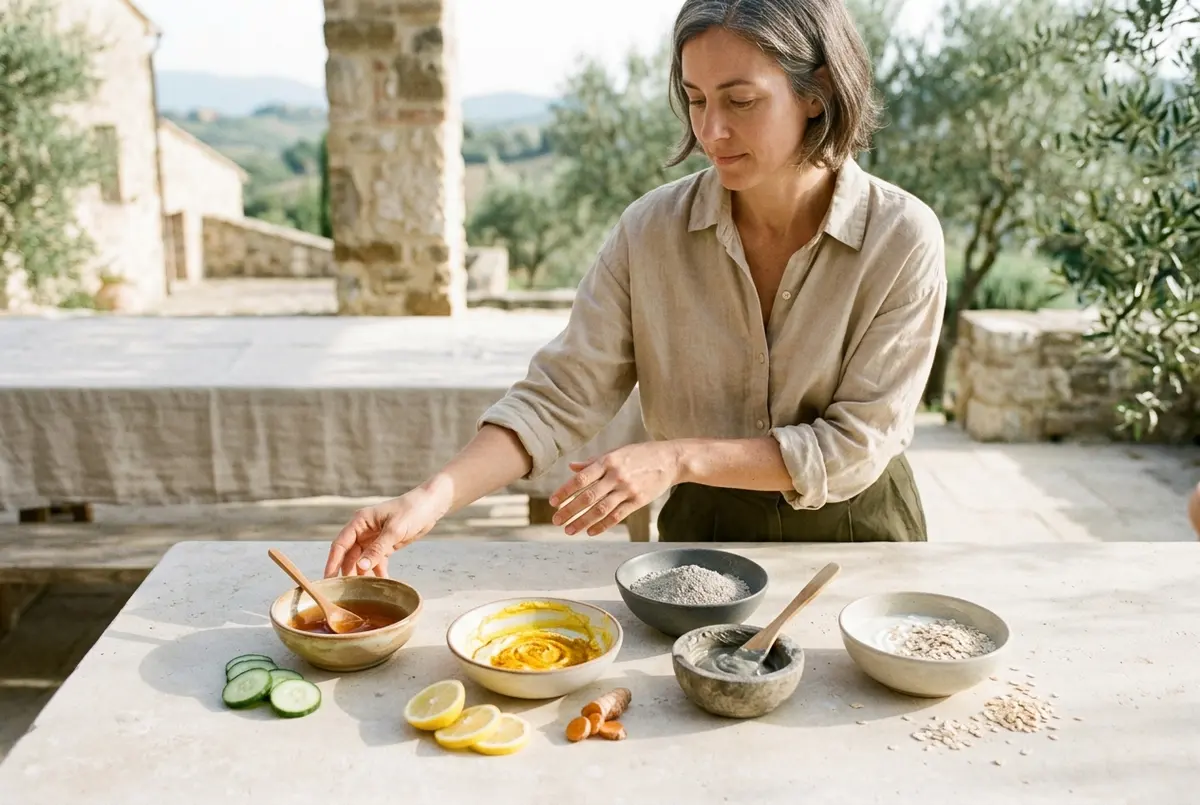
This page turns that into a 15-minute weekly self-care ritual: a decision table to pick your mask, four recipes with exact amounts, and the cautions most recipe pages leave out. If you want to know more about a single ingredient, such as lemon or coconut oil, our guide to 7 kitchen ingredients for skin covers each one in depth.
Which DIY mask should you use? A quick decision table
| Your skin this week | Mask | Time on skin | How often | Main caution |
|---|---|---|---|---|
| Tight, flaky, dry | Avocado and honey | 10 to 15 min | 1 to 2 times a week | Avocado allergy is rare but possible |
| Shiny, congested, oily | Clay | 5 to 10 min | Once a week | Rinse before it dries and cracks |
| Red, reactive, irritated | Oat and aloe | 10 to 15 min | Up to 2 times a week | Skip chamomile if you react to daisy-family plants |
| Dull, uneven | Yogurt, papaya and honey | 10 min | Once a week | Turmeric stains; papaya can tingle |
| Broken, sunburned or inflamed | No mask | Let skin heal first |
Combination skin? You can do two masks at once: clay on the T-zone and avocado and honey on the cheeks. If dryness is the main issue every week, not just this one, our winter skincare routine deals with the barrier itself.
The 15-minute weekly mask ritual
- Cleanse (2 minutes). Wash your face with your usual gentle cleanser and pat it almost dry.
- Apply (1 minute). Spread an even, medium layer with clean fingers or a brush, staying clear of your eyes, eyebrows and lips.
- Rest (10 minutes). Set a timer, lie down with your head on a towel and breathe slowly. This is the part that makes it a ritual rather than a chore. Some people add soft meditation music to help them switch off.
- Rinse (1 minute). Use lukewarm water and soft circular movements, or a warm damp washcloth held on the skin for a few seconds first.
- Moisturize (1 minute). Apply your moisturizer while your skin is still slightly damp.
4 DIY facial mask recipes
Each recipe makes one application. Mix it fresh, use it straight away and throw away any leftovers, because homemade masks contain no preservatives.
1. Avocado and honey mask for dry skin
- 1/4 ripe avocado
- 1 teaspoon honey
- 1/2 teaspoon avocado oil
Mash the avocado until completely smooth, then stir in the honey and oil. Leave on for 10 to 15 minutes. Rinse well; honey can feel sticky around the hairline.
2. Clay mask for oily or congested skin
- 1 tablespoon bentonite clay powder
- 1 tablespoon water or cooled green tea, plus a little more if needed
- Optional: 1 drop tea tree essential oil
Stir into a smooth paste the texture of thick yogurt. Leave on for 5 to 10 minutes and rinse while the clay is still slightly damp. Clay that dries until it cracks pulls moisture from the skin and can leave it tight and irritated. Skip the tea tree oil if your skin is sensitive, and never use more than one drop, since essential oils can irritate even oily skin.
3. Oat and aloe mask for sensitive skin
- 2 tablespoons very finely ground oats
- 1 tablespoon pure aloe vera gel
- 1 tablespoon cooled chamomile tea or plain water
Blend the oats to a fine powder first, so there are no sharp pieces, then mix everything into a paste. Leave on for 10 to 15 minutes and rinse with cool water. If you react to daisy-family plants, such as ragweed, use water instead of chamomile.
4. Yogurt, papaya and honey mask for dull skin
- 1 tablespoon plain yogurt
- 1 tablespoon mashed ripe papaya
- 1 teaspoon honey
- Optional: a very small pinch of turmeric
Mix until smooth and leave on for 10 minutes. Papaya can make skin tingle slightly; rinse straight away if it starts to sting. Turmeric can stain skin, nails, towels and light grout yellow, so use only a pinch and an old towel.
Safety: what most DIY mask recipes leave out
Patch test every new recipe. For a single-use homemade mask, the minimum is a 24-hour spot test: apply a little to your inner forearm for the same time you would leave it on your face, rinse, and wait 24 hours. The American Academy of Dermatology's method, applying a product twice a day for 7 to 10 days on a small area, is more thorough, and worth using if your skin reacts easily or you plan to make the mask often. Redness, itching or swelling means that recipe is not for you.
- No masks on broken skin, open spots, sunburn, eczema flares or skin that is already stinging.
- Go easy if you use retinoids, retinol or benzoyl peroxide. Skin is more reactive, so stick to the oat mask. The same applies on nights you use an exfoliating acid; our glycolic acid toner guide explains why.
- We leave lemon juice and vinegar out of these recipes, and lemon off the face entirely. Undiluted acids can sting and irritate, and citrus juice on skin that then sees the sun can cause a blistering, burn-like rash. Our kitchen ingredients guide explains why lemon is best kept off skin.
- Keep masks out of your eyes. If any gets in, rinse with plenty of clean water.
- Use clean tools. Wash the bowl, spoon and brush before and after.
- Know when to stop. If a mask stings, burns or itches at any point, rinse it off immediately.
Three pantry staples we would keep on hand
We have not tested these ourselves; they are simply clear examples of the ingredients above.
Local Hive Raw Honey. Raw honey for the avocado and papaya masks, and it doubles as breakfast. Downside: sticky to rinse, and not for anyone allergic to bee products.
Cold Pressed Avocado Oil. Adds richness to the dry-skin mask and works as a body oil after a bath. Downside: a heavy oil that can feel greasy on oily skin.
Aztec Secret Indian Healing Clay. A calcium bentonite clay powder for the oily-skin mask; one tub lasts a long time. Downside: it is strong. Its own instructions suggest only 5 to 10 minutes on delicate skin and a patch test first, and it can feel drying if you leave it on longer.
How masks fit a simple skincare routine
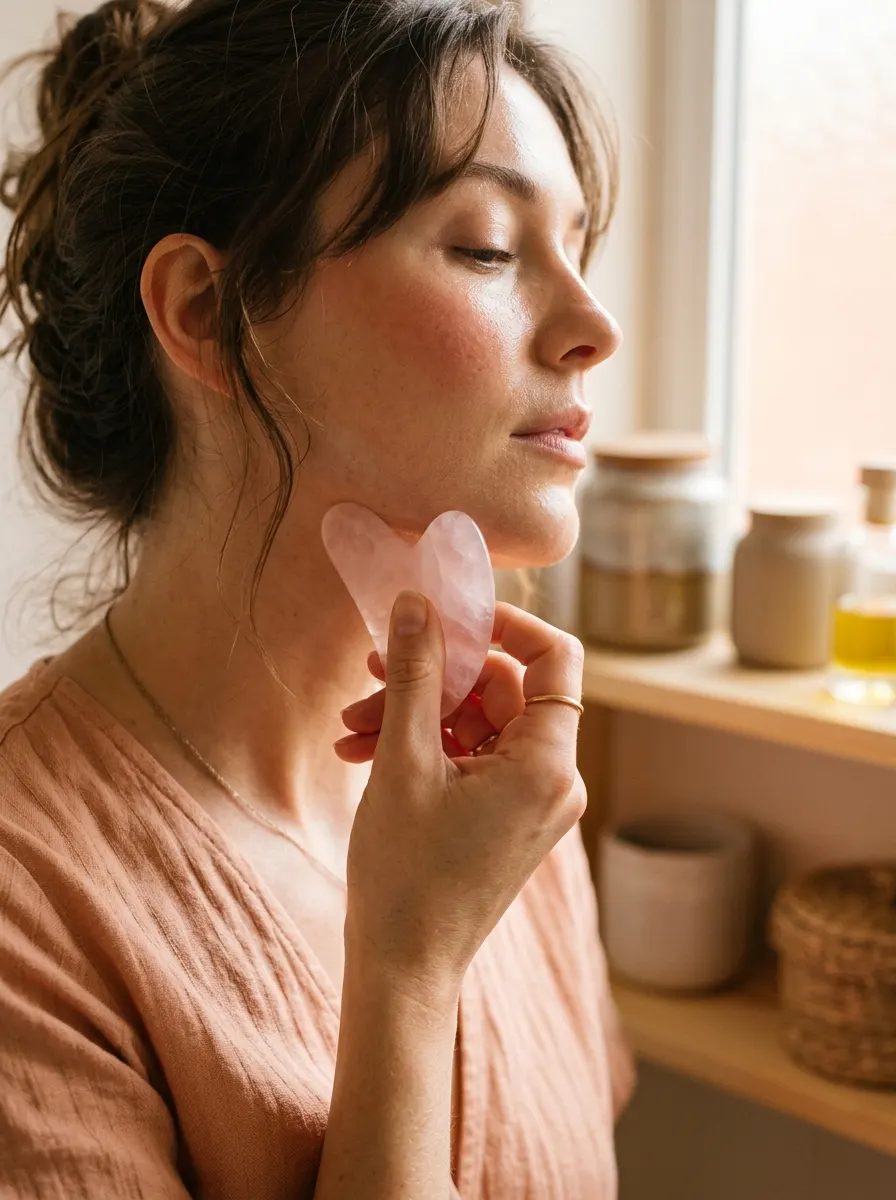
A weekly mask is a treat, not a treatment. Cleansing, moisturizer and daily sunscreen do far more for your skin over time, as we explain in our holistic skincare approach. If you enjoy the ritual, pair your mask evening with a body homemade sugar scrub or a short gua sha routine after rinsing, and keep everything gentle. A few facial yoga exercises need no tools at all, and a mask evening is a natural start to a calm beauty sleep night routine. More simple rituals live in our beauty section.
Frequently Asked Questions
How long should I leave a DIY face mask on?
Ten to 15 minutes for most homemade masks, and 5 to 10 minutes for clay. Longer does not mean better: masks that dry out completely can leave skin tight and irritated. Rinse sooner if anything stings or your skin starts to feel tight.
How often should I use a homemade face mask?
Once or twice a week suits most skin. Clay masks are best once a week, while a gentle oat mask can be used a little more often if your skin likes it.
Can I store a homemade face mask in the fridge?
It is safer not to. Homemade masks have no preservatives, and fresh ingredients like avocado, yogurt and papaya spoil quickly. Make one portion at a time and discard the rest.
Are DIY face masks safe for sensitive skin?
Some are. The oat and aloe mask is the gentlest choice here. Patch test first, avoid essential oils and acids, and skip masks entirely during a flare.
Do homemade face masks really work?
They can make skin feel softer, calmer or less oily for a while, and the ritual itself is relaxing. They will not change your skin long term on their own. Daily sunscreen, a gentle cleanser and moisturizer do the heavy lifting.