Adding a little gentle resistance to your daily movement can make a meaningful difference in how strong and steady you feel, and ankle weights are one of the simplest tools to get there. For women in their 40s, 50s, and beyond, the right pair can support leg strength, balance, and overall vitality without putting undue stress on your joints. The key is finding options that are light, comfortable to wear for extended periods, and easy to fasten and remove on your own.
Not all ankle weights are created equal, and seniors have specific needs that general-purpose products don't always address. In this guide, we've focused on adjustable, well-cushioned options with secure but gentle straps, so you can progress at your own pace. Light cuffs add modest resistance, which can help muscle endurance and activation in the moves that keep you steady; bigger strength gains come from progressive resistance training with heavier loads, so think of these as a gentle layer of your exercise routine. Our complete guide to ankle and wrist weights covers the basics. If you're curious about how effective ankle weights actually are from a research perspective, our dedicated article Are Ankle & Wrist Weights Actually Effective? (The Science) goes deeper. For now, let's get you matched with the right pair.
Our Top Pick
Full-Range Adjustable Ankle Weights (1-20 lbs) wins our top spot for seniors: it starts as light as 0.5 lb per ankle, ideal for easing in gently, and adjusts upward as you build strength, so one pair grows with you.
Quick Comparison
| Product | Best For | Why It Wins |
|---|---|---|
| Full-Range Adjustable Ankle Weights | Best Overall | Lightest 0.5 lb start, adjusts up as you progress |
| Sportneer Adjustable Ankle Weights | Best Simple Choice | Removable sandbags, gradual 2-10 lb progression |
| APEXUP Adjustable Ankle Weights | Best Modular System | Start ultra-light, add load one module at a time |
| RitFit Ankle Weights | Best Budget Pick | Quality neoprene build at a budget price |
Best Overall: Full-Range Ankle Weights (1-20 lbs)

This set pairs a comfortable fit with a secure adjustable strap, the two things that matter most when you are wearing weights for a whole walk. For seniors, the lower-end weight options (starting at 0.5 lbs per ankle) are genuinely useful for those just beginning or returning to exercise after a break. The wide range also means you won't outgrow this product as your strength improves, and since it doubles as a wrist weight, it's worth reading whether you can wear ankle weights on your wrists before you switch it over.
Pros:
- Available starting from very light loads, ideal for true beginners
- Strap design stays put without pinching
- Doubles as a wrist weight for upper-body variety
Cons: The availability of very heavy options (15-20 lbs) in the same product listing can create ordering confusion: seniors should select the lower-weight variants carefully.
Best Simple Choice: Sportneer Adjustable Ankle Weights

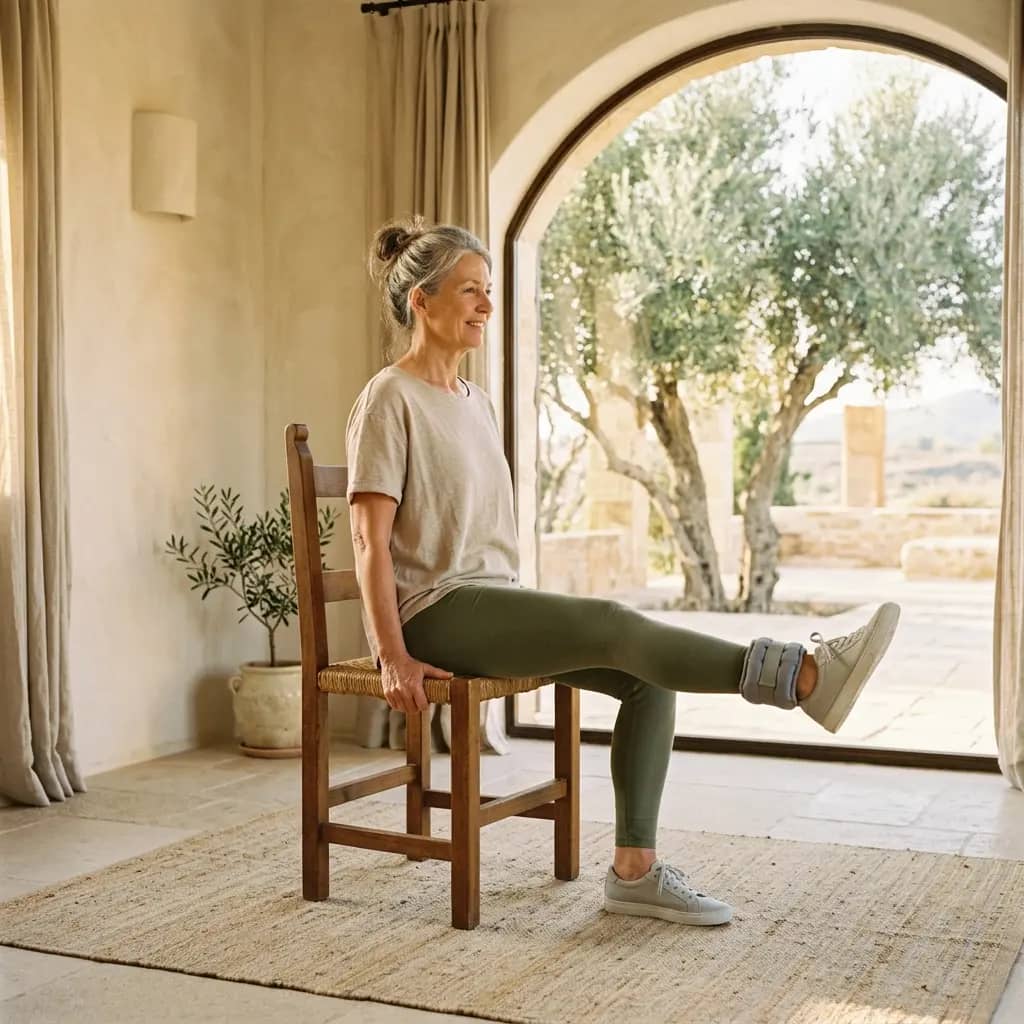
The Sportneer set is our simplest choice for seniors because it balances ease of use with genuine versatility. The removable sandbag system lets you start as light as 1 lb per ankle and work up to 5 lbs each, so you're never forced to jump ahead faster than your body is ready for. It suits walking, gentle yoga, and physical therapy routines equally well, as well as seated moves like the chair poses in our desk yoga routine.
Pros:
- Adjustable 2-10 lb total range (1-5 lbs per ankle) via removable sandbag inserts
- Soft neoprene construction is gentle on skin during longer wear sessions
- Versatile enough for walking, Pilates, and seated leg exercises
Cons: The bulkier profile compared to fixed-weight styles can make fastening slightly less convenient for those with limited hand dexterity.
Best Modular System: APEXUP Adjustable Ankle Weights

The APEXUP set stands out for its genuinely modular design: individual weight units snap in and out independently, making it easy to fine-tune your load in very small increments. For seniors who want to begin extremely light and add resistance only as they feel confident, this system is particularly thoughtful. The strap is built to hold securely during movement, and the low-profile units sit close to the ankle.
Pros:
- Modular, snap-in weight units allow precise, incremental progression
- Secure adjustable strap designed to stay in place
- Suitable for seated exercises, floor work, and gentle walking routines
- Clean design sits relatively low-profile on the ankle
Cons: Snapping modules in and out takes a little more finger dexterity than sliding a sandbag into a pocket, which can matter if your grip is weaker.
Best Budget Pick: RitFit Ankle Weights

If you want a quality, no-fuss option without spending much, the RitFit set delivers. The neoprene construction is comfortable against the skin and well suited to walking and physical therapy style exercises, two of the most common activities for seniors. As one of the more affordable sets here, it's an excellent entry point if you're not yet sure how often you'll use ankle weights.
Pros:
- The budget-friendly pick in our guide
- Comfortable neoprene build cited for low-impact and PT-style use
- Clean, straightforward design with no complicated assembly
- Available in a useful range of fixed weights (2-10 lbs per pair)
Cons: Fixed weight pairs mean you'll want to purchase a new set to progress, rather than simply adjusting the one you own: less economical over time if you advance quickly.
How to Choose Ankle Weights as a Senior
The most important factors for older adults aren't the same as for younger athletes. Here's what we focused on when evaluating these options:
Start Light: Seriously Light
If you are 55 or over, start at 0.5 to 1 lb per ankle. Stay at that weight for at least two weeks (closer to four if exercise is new to you), move up only if those weeks pass without joint soreness, and then add 0.5 to 1 lb at a time. For walks, 2 lbs per ankle is a sensible ceiling, and the weights come off before any jogging; slim, secure walking cuffs are compared in the best ankle weights for walking. The free ankle weight calculator suggests a starting weight based on your age and experience. If you have arthritis, a past knee, hip or ankle injury, or a joint that is already sore, check with your doctor or a physical therapist first. Our article How Much Weight Should Ankle Weights Be? walks through the reasoning in detail, but as a general rule, if you feel your gait changing or your joints working harder, the weight is too heavy.
Easy Fastening Matters More Than You'd Think
Velcro straps that are wide, smooth-closing, and don't require two hands to manage make a real difference in daily usability. All four options above use adjustable Velcro systems, so if your grip is limited, compare strap width and how many small parts each design has before you choose.
Prioritize Joint Safety
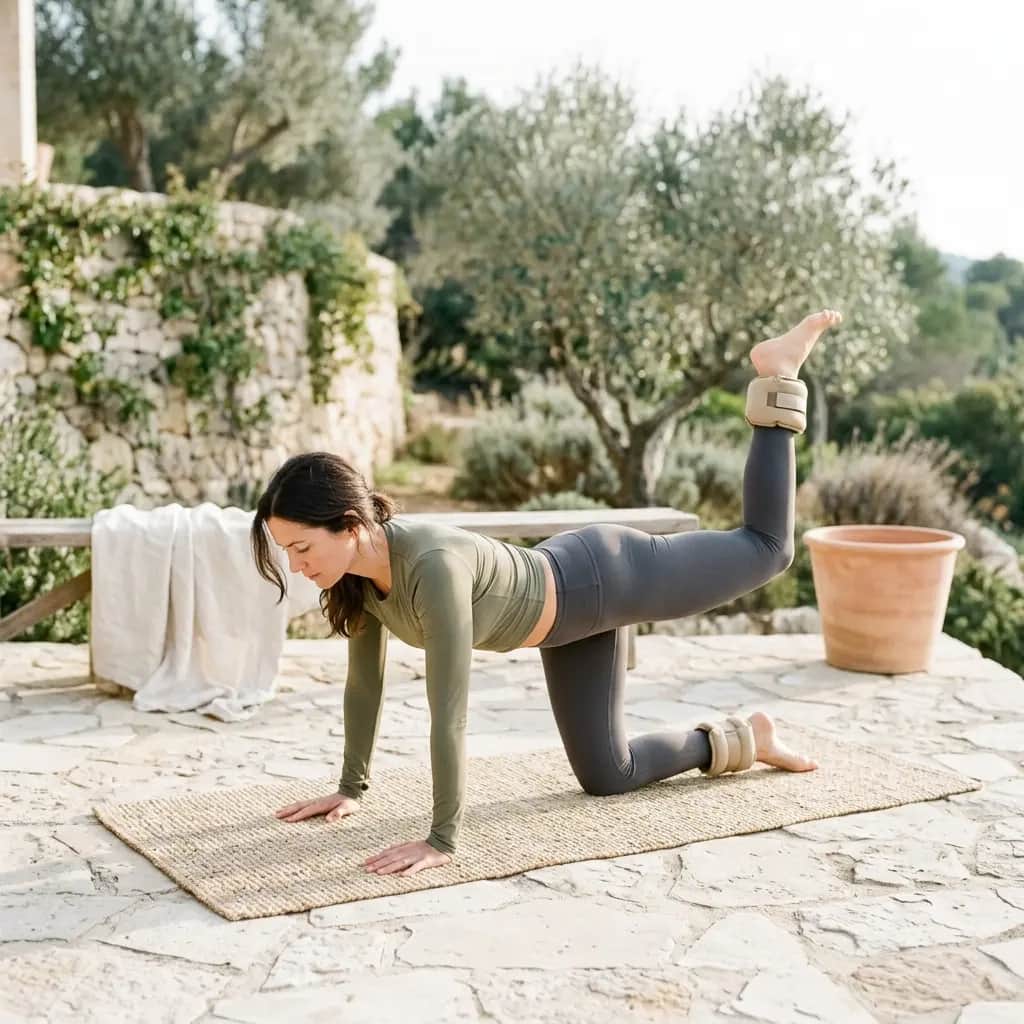
Ankle weights add load to your joints with every step, so pairing them with appropriate, low-impact movement is essential. For form and a gentle progression plan, see ankle weights for beginners, which works just as well if you are returning after a break. It also helps to pair cuff work with everyday bodyweight moves such as sit-to-stands from our guide to functional fitness at home. And if you're interested in strengthening your glutes and legs specifically, a great goal for balance and stability, Ankle Weights for Glutes & Legs: Best Exercises has a full beginner-friendly routine.
Consider Physical Therapy Use
If you're recovering from an injury or surgery, ankle weights can be part of a gentle rehab program, but always confirm this with your care team first. Our article Wrist & Ankle Weights for Physical Therapy & Rehab covers what to expect in that context.
How We Chose
We evaluated each product based on how light it can start, materials and construction quality (neoprene comfort, strap security, and overall durability), and value relative to senior-specific needs like easy adjustment and gentle weight ranges. We did not accept free products or sponsored placements: our recommendations are editorially independent.
The Bottom Line
The best ankle weights for seniors share a few things in common: they're adjustable, comfortable against the skin, secure without being difficult to fasten, and available in genuinely light starting weights. Our overall top pick is the Full-Range Adjustable Ankle Weights for its gentle, light starting weight and wide range, but any of the four options above can support a safe, rewarding low-impact strength routine. As always, if you have existing joint concerns or a medical condition, we gently encourage you to check in with your healthcare provider before adding resistance training to your routine. Small, consistent steps forward are what add up over time, and you're already taking one by choosing thoughtfully.