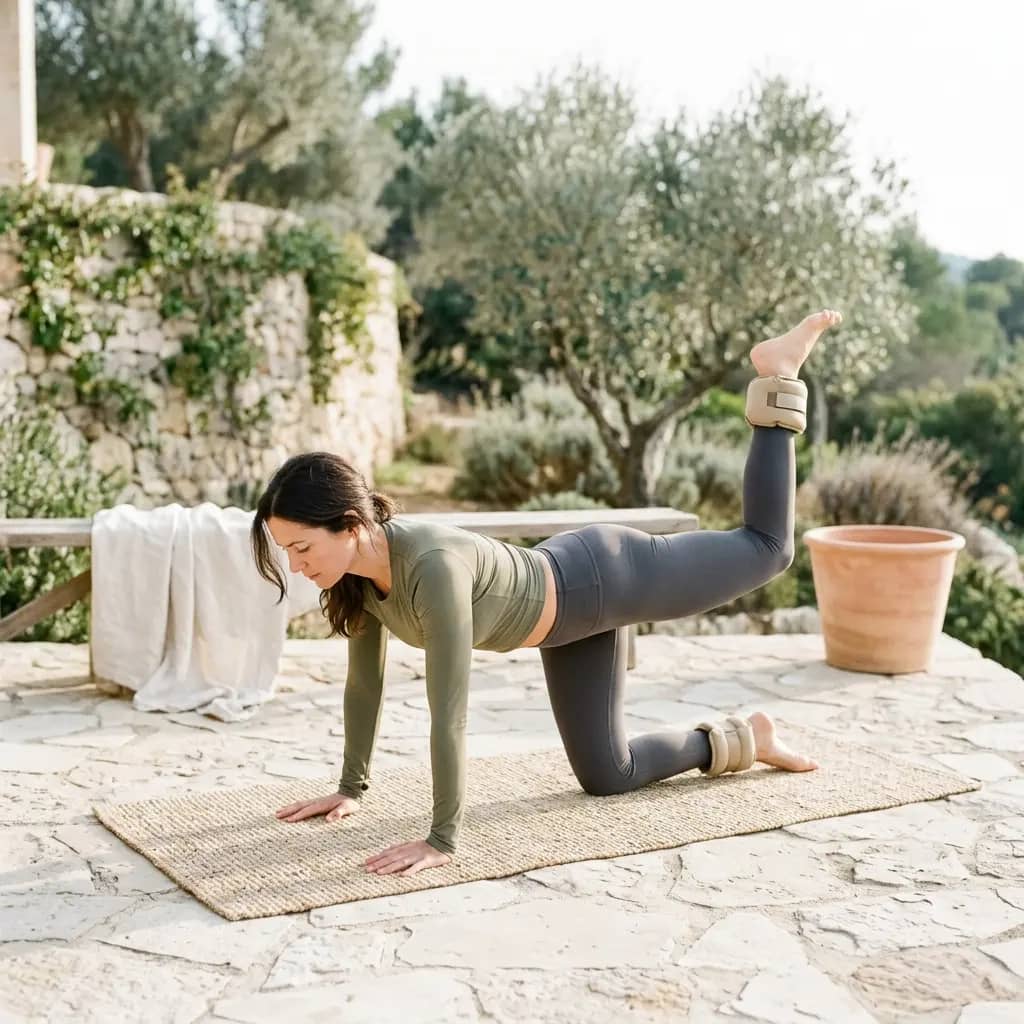
Ankle weight exercises are one of the most accessible ways to add resistance to lower-body training without stepping foot in a gym. Strapped around your ankles, these small but mighty tools intensify familiar movements, glute kickbacks, leg lifts, side raises, turning a gentle floor routine into a genuinely challenging session. If you are still choosing a pair, our complete guide to ankle and wrist weights explains the basics first.
Whether you are returning to exercise after a break, looking to level up your at-home workouts, or simply want more definition in your glutes, hamstrings, and inner thighs, the right ankle weight exercises can make a meaningful difference. Below, we walk through the best moves, how to sequence them, and what to keep in mind so you get results without discomfort.
Why Ankle Weights Work So Well for the Lower Body
Adding even a modest amount of resistance at the ankle creates a longer lever arm, which means your glutes, hip abductors, and leg muscles have to work harder through every degree of movement. Many people find this small change significantly increases muscle activation compared to bodyweight alone, especially in isolation moves where gravity provides little natural challenge.
It helps to be clear about what that extra work does. Light ankle weights add modest resistance, which can improve muscle endurance and activation, especially for beginners, older adults and rehab-style moves. Strength gains are more limited than with progressive resistance training, where heavier loads increase over time, so think of these moves as a useful layer rather than your whole strength plan.
For a deeper look at what the research actually says about effectiveness, visit our dedicated piece Are Ankle & Wrist Weights Actually Effective? (The Science). And if you are new to using them altogether, Ankle Weights for Beginners: How to Start Safely is an excellent starting point before diving into this exercise guide.
Choosing the Right Weight Before You Begin
Starting too heavy is the most common mistake. For floor-based glute and leg work, start at 1 lb per ankle if you are new, 1-2 lbs with some fitness behind you, or 2-3 lbs if you train regularly but are new to ankle weights. Stay at that weight for at least two weeks (closer to four if you are brand new), move up only if those weeks pass without joint soreness, and add 0.5 to 1 lb at a time. Most people doing home strength work do well up to 5 lbs per ankle; going beyond that is for experienced exercisers with solid form, and 10 lbs is the upper limit even then. Heavier is not always better, if your form breaks down or you feel strain in your knees or hips, reduce the load immediately.
For personalized guidance on selecting the right amount, see How Much Weight Should Ankle Weights Be?, or get a quick starting suggestion from the free ankle weight calculator. If you want a curated comparison of adjustable options, Best Adjustable Ankle Weights Compared covers the leading picks in detail.
The Best Ankle Weight Exercises for Glutes and Legs
Work through these moves as a circuit (12-15 reps per side, 2-3 rounds) or add individual exercises to an existing lower-body routine.
Glute Kickbacks
Targets: Gluteus maximus, hamstrings
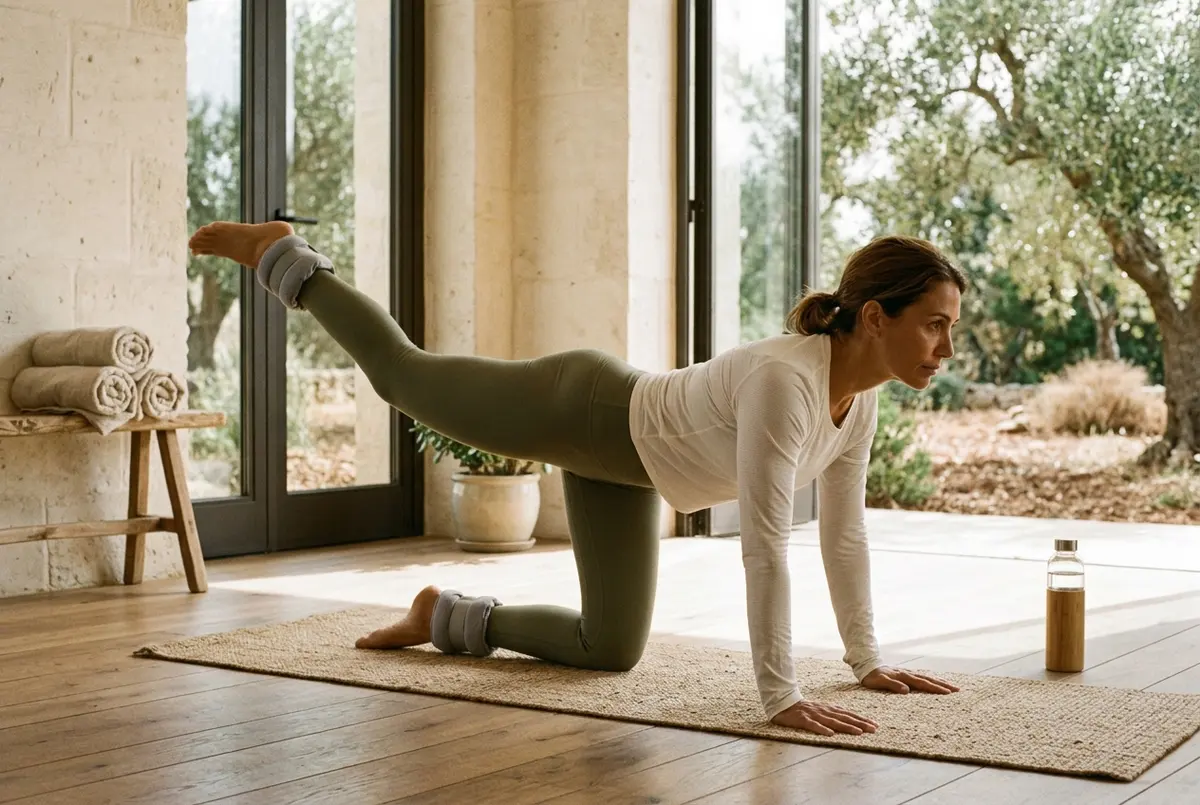
Start on all fours with a flat back. Keeping your knee bent at 90°, press one foot toward the ceiling until your thigh is parallel to the floor. Squeeze at the top, lower with control. Avoid arching your lower back: the movement comes entirely from the hip.
Donkey Kicks
Targets: Glutes, core stabilizers
Similar to a glute kickback but with the knee bent throughout. From all fours, kick one leg up and back in a controlled arc. The ankle weight adds resistance at the peak of the movement where bodyweight alone provides little challenge.
Fire Hydrants
Targets: Gluteus medius, hip abductors, outer thighs
From all fours, keep your knee bent and lift one leg out to the side until your thigh is parallel to the floor. Hold briefly, then lower. This move is excellent for outer glute definition and hip stability: areas many women find hard to target.
Standing Side Leg Raises
Targets: Hip abductors, outer thighs, glutes
Stand tall holding a chair or wall for balance. Keeping your leg straight and toes pointing forward, slowly raise one leg out to the side to about 45°, then lower. The ankle weight turns this simple move into a more demanding abductor exercise.
Lying Inner-Thigh Leg Lifts
Targets: Adductors, inner thighs
Lie on your side with your top leg bent and foot flat on the floor in front of you. Keep the bottom leg straight and slowly lift it toward the ceiling. Lower with control. Inner-thigh work is often neglected: this move fills that gap beautifully, and it also appears in many wall Pilates routines.
Rear Leg Lifts (Standing)
Targets: Gluteus maximus, lower back stabilizers
Stand with feet hip-width apart, hands resting on a chair. Keeping your core engaged and hips square, slowly lift one straight leg behind you. Avoid rotating the pelvis: imagine pressing your heel back rather than lifting it up.
Flutter Kicks
Targets: Hip flexors, lower abs, quads
Lie on your back with hands beneath your hips. Lift both legs a few inches off the floor and alternate small, controlled up-and-down kicks. Ankle weights add significant intensity here: reduce the load if you feel strain in your lower back.
Clamshells
Targets: Gluteus medius, hip external rotators
Lie on your side with knees bent and feet stacked. Keep your feet together and open your top knee toward the ceiling like a clamshell, then lower. This gentle move is also popular in physical therapy settings: see Wrist & Ankle Weights for Physical Therapy & Rehab for more context.
Sample Workout Structure
| Exercise | Sets | Reps (per side) | Rest |
|---|---|---|---|
| Glute Kickbacks | 3 | 12-15 | 30 sec |
| Fire Hydrants | 3 | 12-15 | 30 sec |
| Standing Side Leg Raises | 2 | 15 | 30 sec |
| Lying Inner-Thigh Lifts | 2 | 15 | 30 sec |
| Rear Leg Lifts | 2 | 12-15 | 30 sec |
| Clamshells | 2 | 15 | 30 sec |
| Flutter Kicks | 2 | 20 total | 45 sec |
Tips for Getting the Most Out of Every Session
- Slow down the lowering phase. The muscle keeps working on the way down, so control it. Count two to three seconds as you lower.
- Prioritize alignment over load. Proper form with lighter weights outperforms sloppy form with heavier ones, every time.
- Pair with full-body movement. These isolation exercises complement broader exercise routines, think walking, yoga, or low-impact cardio, rather than replacing them. Everyday functional fitness moves such as squats and step-ups round out the picture.
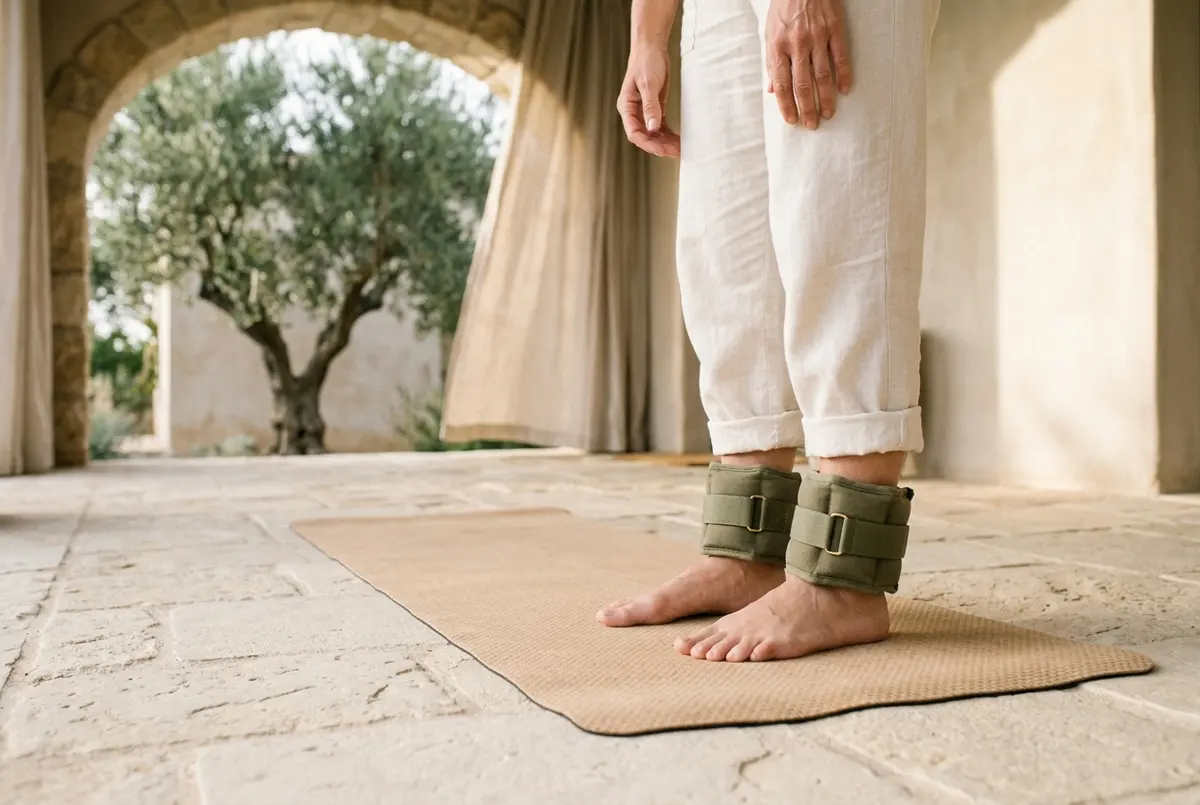
- Check your fit. Ankle weights should feel snug but never restrictive. Poorly fitted weights can shift during movement and alter your gait, so tighten the strap before each set and stop to adjust it if it slides. If you are pregnant, read ankle weights while pregnant and check with your provider before adding load.
If you are shopping for a new pair, Best Ankle Weights for Women (Comfort & Grip) features options chosen specifically for comfort, fabric quality, and secure fit. For older adults or anyone prioritizing joint health, Best Ankle Weights for Seniors (Low-Impact Strength) highlights the gentlest, most supportive picks on the market.
The Bottom Line
Ankle weight exercises are a simple, affordable way to make your glutes, thighs, and hips work harder: no heavy equipment required. Expect better muscle endurance and activation; if bigger strength gains are your goal, add progressive resistance training with heavier loads over time. The key is consistency, good form, and a weight that challenges you without compromising your joints. Start with the exercises in this guide two to three times per week, leave a rest day between sessions, progress gradually, and pair them with a broader wellness routine for the best results. As always, if you have any existing joint concerns or injuries, checking in with a healthcare professional before adding resistance training is a wise step.