Mindful Morning: How To Cultivate The Perfect AM Routine
- Meditation and relaxation
When you purchase through links on our site, we may earn an affiliate commission. Here’s how it works.
Table of Contents
How we start our day can affect the rest of it in a big manner If we wake up as the first beams of late morning sunlight begin to peer through windows, we find ourselves in a powerful position to approach the hours ahead with clarity and purpose. And so enters the idea of a mindful morning routine — guiding us to redefine how we should begin our day to execute an impactful, clear, and purpose-driven life.

Benefits of Guided Morning Meditation
Getting into a mindful morning is no fad; science backs up the proven benefits that contribute to improved well-being. Research suggests that engaging in morning meditation and mindfulness practices may support various physiological, mental, and emotional benefits, all of which have a positive impact on the rest of your day — not even counting what it does for you.
Reduction in Stress: One of the major benefits of a mindful morning routine is that it may help reduce stress. Meditation or relaxation practices may help activate the parasympathetic nervous system, known as the “rest and digest” mode. It counteracts the sympathetic nervous system, which controls our “fight or flight” response. This may help you feel more prepared for the stressors ahead.
How to Build your First Morning Meditation Mindfulness Practice
Morning meditation may be a staple in the mindful morning routine. Meditation can often be mysterious and scary to many people when it is just a skill we all possess. A step-by-step guide to create a morning meditation practice, and stick with it!
- Choose the right time to meditate: That means waking up about 15-30 minutes earlier. Sticking to About the Same Time: Choose a time that will be easy and realistic for you at least once daily.
- Design Your Sitting Spot: Allocate a corner of your house to meditate in. You are not required to get fancy with this; all that is needed for your meditation space can be just a corner of the bedroom & a nice comfortable cushion or chair. Really what matters is that it’s a place where you can feel at peace and not get interrupted.
- Take it slow: Use shorter meditations, maybe only for 5–10 minutes. Increase the time until you feel more comfortable doing this. When you start focus more on consistency than length.
- Your Meditation Technique: There are many types of meditation so play around with them to find the one that best suits you. A good starting point is mindfulness meditation, which can be incorporated with breath or bodily sensations. You could also find apps or guided meditations offered through resources online for beginners.
- Begin by inhaling deeply: focusing entirely on your breath as you settle into a meditation position. Feel the breath going in and out of your body. No matter how much you think, or when your mind wanders (you know it will), just slowly and carefully return to breathing without judgment.
- Use Mantra or Visualization: Once you get used to meditation, consider adding mantras (repetitive words) and visualizing techniques as part of your practice.
- Finish Strong: End your meditation by placing an intention on the day ahead. It could even be just a vague statement like to take things more slowly for challenges, or universally give thanks during the day.
- Review and Adapt: Go over the process of meditation at least once. Pay attention to how it makes you feel: mood, relaxed(and/ or ready to go for a walk, write that novel), well-being. Prepare to have your but kicked so you can feel the benefit, just be willing and prepared to change course
Elevate your mornings and set powerful intentions for the day! Discover how 5-minute mindfulness meditation may help transform your morning rituals.
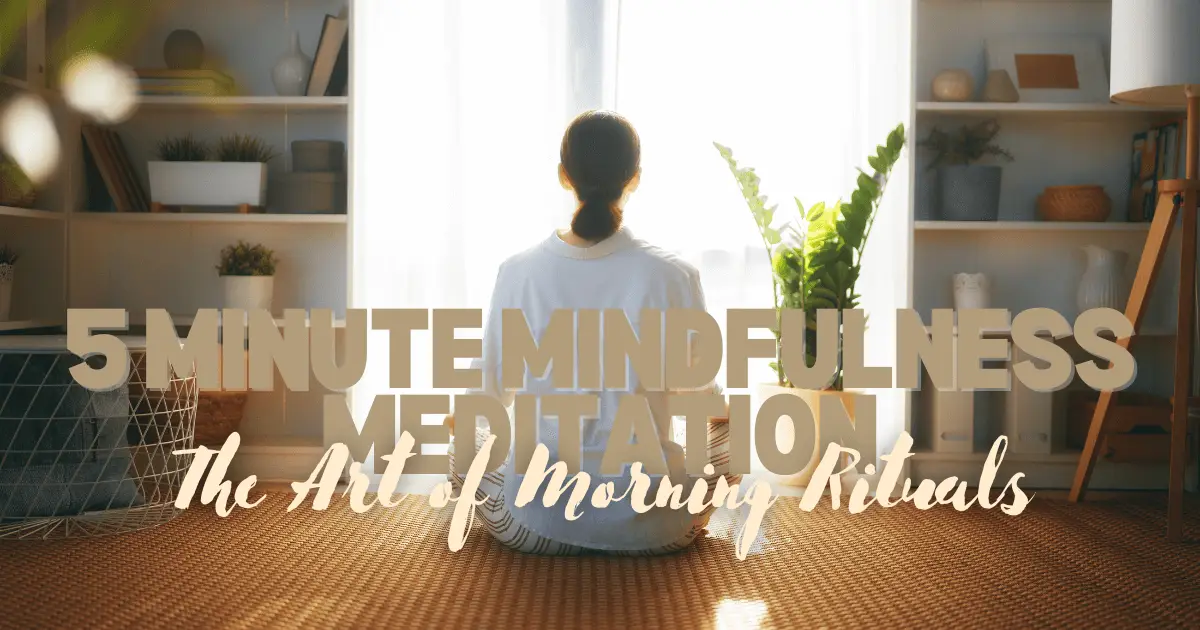
5 Minute Mindfulness Meditation: The Art of Morning Rituals
Feeding Your Mind Nourishing The Body; Food/Tips For Mental Clarity
Breakfast is the most important meal we take as it creates a foundation for our brain and physical activities throughout the day. Being mindful with your breakfast can go a long way when it comes to feeling in control of the day while giving you higher brain function and overall mood. Nutrient Tactics For The Day.
Hydration: Before You Drink That Coffee or Tea, 1st Item on Your List– HYDRATE. When we sleep, our bodies dehydrate slightly and rehydrating may support alertness and help gently kick-start your metabolism. For some extra digestive benefits and vitamin C, serve with a squeeze of lemon.
Boost Proteins: Including protein-rich foods in your breakfast may help support steadier blood sugar levels and sustained energy throughout the morning. The best bets would be Greek yogurt, eggs, or plant-based options like tofu scramble/chia seed puddings.
Healthy Fats: Include omega-3 fats, which are found in nuts and seeds like avocados. These healthy fats may help support satiety and more sustained energy levels through the morning.
Complex Carbs are Your Friend: As long as you can exercise portion control, complex carbs may provide steady energy throughout the day and may help support healthy serotonin levels. For breakfast, select whole grains or oatmeal with sweet potatoes.
Munch on Berries: they are packed with antioxidants that may help support memory and cognitive function. A breakfast full of blueberries, strawberries, or blackberries can help with your nutrition and taste buds!
How about Herbal Teas: Many people drink coffee to kick-start their mornings, so try herbal tea instead. Green tea contains L-theanine, an amino acid associated with a sense of calm focus. On the other hand, choices like peppermint or ginger tea may support digestion and help you feel refreshed.
FGO Organic Ginger TeaFGO Organic Peppermint Tea
Mindful Eating: Again, whatever you decide to eat practice mindful eating. Sit down and enjoy your meal without distractions—put away the phone, turn off the TV and taste your food. Doing so may support digestion and foster a broader appreciation of the meal, and help to set an intention for awareness in the remainder of your day.
Developing the Self-Awareness with Journal and Intention-Setting Exercise
These are two powerful ways to improve self-awareness and set the tone for a positive day; journaling & intention-setting. It serves as a bridge from your meditative state into the working portion of the day, solidifying insights and extending mindfulness onward. Below are ways in which you can integrate these practices into your morning routine:
Morning Pages: made famous by Julia Cameron in “The Artist’s Way”; when you wake up every morning, write three pages of stream-of-conscious thoughts. It is a practice to empty your mind, process emotions, and tap into the creative you. Morning pages are not something you have to do wrong, they just need to be right about getting any uncensored writing down (not having them filled with bad grammar and out of content also).
Gratitude Journaling: Write down 3 things you are grateful for, each morning Doing so may help you focus on the positive aspects of life and gently reframe your mindset toward gratitude and abundance, setting an uplifting tone for the day ahead. Choose one thing— each day — and be specific in what you will be grateful for (e.g., instead of writing family, you might write receiving a supportive phone call from my sister yesterday.
Intention Setting: Spend a few minutes planning your day including a set intention. This does not necessarily involve making a to-do list, but simply how you prepare yourself for the day. Something like: “I intend to respond with patience and creativity in every challenge,” or “I intend to be as present 100% of the time.
Response Questions: These questions can be great journaling prompts to help you expand your self-awareness. Some examples include:
“Plan Ahead – What am I looking forward to today?”
“What is something small and doable I can do today that will directly help me achieve my long-term goals?”
“How do I want to feel by the end of today, and what can I simply accomplish that creates that feeling?”
Positive affirmations: Your positive mantras. These can be beliefs about what you are capable of, your values, or something very important to you. Such as; “I have the ability to confront any challenges I face today” or “Success and happiness are my birth wars”. These affirmations are to be read or written as part of your self-talk.
Reflect on your goals: Short-term, long-term. Revisit the 3 most important goals for your year, and highlight one very small action you can take today to move closer to those. It helps you remember what matters most to YOU!
These exercises are not about creating perfect writing or amazing new thoughts every day. Instead, it’s building a regular habit of reflection and deliberate living. All it takes is five minutes of journaling or intention-setting to reset your mind and process everything in a healthier way going forward.
Serach and read articles and product reviews by category
[
Exercise
](/exercise)[
Healing & Spirituality
](/healing-and-spirituality)[
Meditation & relaxation
](/meditation-and-relaxation)[
Beauty
](/beauty)[
Nutrition & Weightloss
](/nutrition-and-weightloss)[
Health & Wellness
](/health-and-wellness)
Frequently Asked Questions
How long should a mindful morning routine take?
Even 15–30 minutes may be enough to make a meaningful difference. Starting with a 5–10 minute meditation, a glass of water, and a few journaling prompts is a realistic and sustainable way to begin.
What is the best way to start a morning meditation practice?
Begin by waking up a little earlier and choosing a quiet, comfortable spot. Start with just 5 minutes of breath-focused mindfulness and gradually increase the duration as the habit feels natural.
What should I eat for a mindful, brain-supporting breakfast?
Foods rich in protein, healthy fats, and complex carbohydrates — such as eggs, avocado, oatmeal, and berries — may help support steady energy and mental clarity through the morning.
How does intention-setting differ from writing a to-do list?
A to-do list tracks tasks, while intention-setting focuses on how you want to show up emotionally and mentally throughout the day — for example, choosing to respond with patience or presence.