When you purchase through links on our site, we may earn an affiliate commission. Here's how it works.
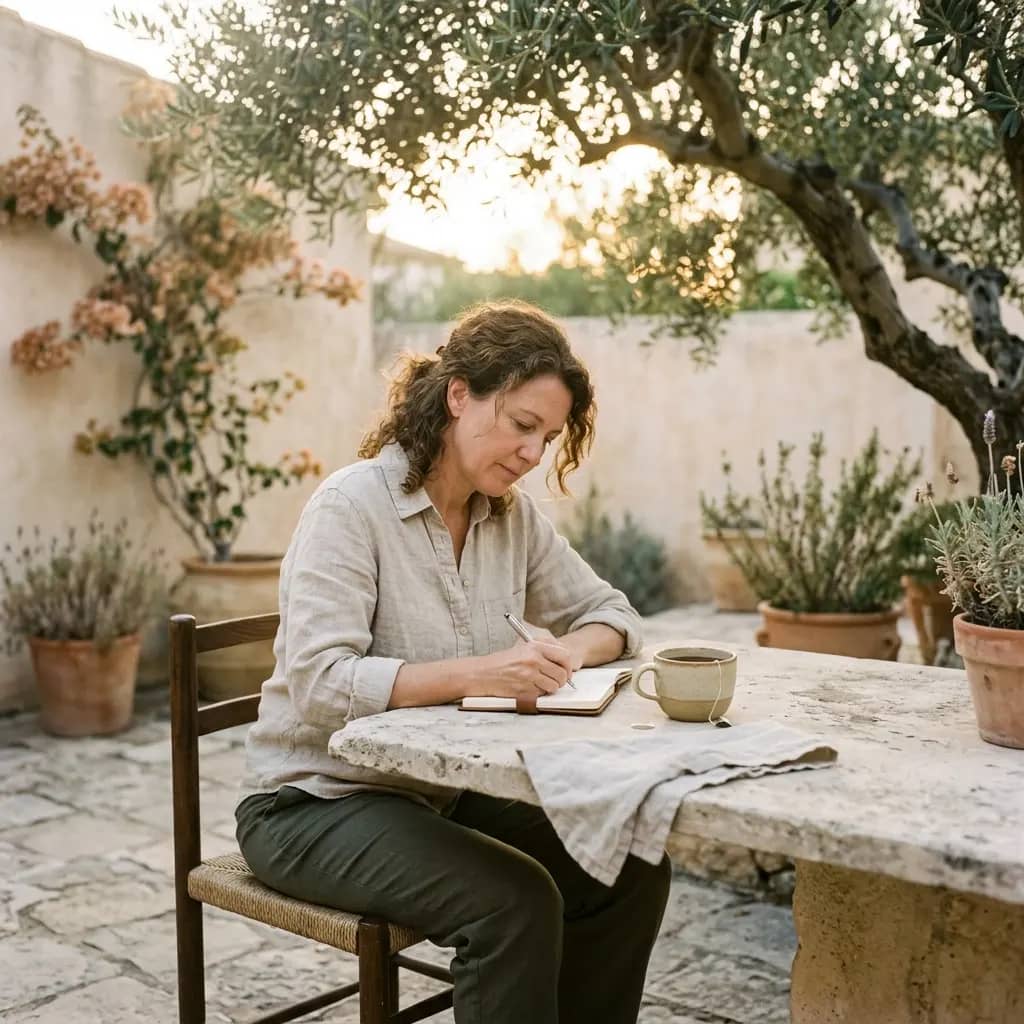
A 30-day gratitude challenge is simple: for a month, you write down something you are grateful for. What makes it work is how you write. One specific moment ("the bus driver waited when he saw me running") does more than a list of big categories ("family, health, home"), and a habit small enough to keep beats an ambitious one you drop on day nine.
This plan is built around those two ideas. Most evenings you write one specific line, which takes about two minutes. Once a week you write a longer entry on a prompt. On day 30 you look back. Below you will find the rule for writing a good entry, before-and-after examples, a printable prompt table for all 30 days, and what to do when the practice starts to feel forced.
The one rule: specific moments, not categories
Gratitude lists tend to go stale fast because they repeat. By day five, "my family" no longer feels like anything. A specific moment is different every day, and writing it makes you replay it.
Research-based advice points the same way. Tips drawn from gratitude researcher Robert Emmons recommend depth over breadth: elaborating on one thing in detail rather than listing many things quickly. The same advice notes a study in which people who wrote in a gratitude journal once a week felt a boost in happiness, while people who wrote three times a week did not, a reminder that more is not automatically better.
Here is the difference in practice:
Before (category): "Grateful for my kids, my health and my job."
After (specific moment): "Grateful that my daughter texted a photo of her lunch just to show me. It made me laugh in the middle of a long meeting."
Before: "Grateful for nature."
After: "Grateful for the five minutes of sun on the bench outside the pharmacy. My shoulders actually dropped."
A quick test for any entry: could you have written it yesterday? If yes, make it more specific. Who, what exactly, and how did it feel?
Why evenings work well
There is no proven best time of day, so choose the slot you will keep. That said, the evening has two practical advantages. First, you have a whole day of raw material, so finding a specific moment is easier than at 6 am. Second, it gives you something to do in the last hour before bed that is not a screen, and it ends the day on a concrete good thing rather than tomorrow's worries. That makes it an easy step in a sleep hygiene routine or an evening wind-down to lower cortisol.
If mornings suit you better, write about yesterday. The rule stays the same.
How the 30 days work
- Days 1 to 6, 8 to 13, 15 to 20, 22 to 27: the short entry. One specific moment, one or two sentences, about two minutes. Use the day's prompt if you are stuck, or ignore it if something else stands out.
- Days 7, 14, 21 and 28: the weekly deep entry. Ten minutes, a paragraph or more, on the prompt.
- Days 29 and 30: a look back and a decision about what to keep.
Keep the notebook and a pen on your pillow or nightstand. If you miss a day, skip it and carry on with today's prompt. Do not write two entries to catch up.
The 30-day prompt table
Print this or copy it into the front of your notebook.
| Week | Day | Prompt |
|---|---|---|
| 1: Noticing | 1 | One small pleasure from today, described with at least two senses |
| 2 | Something someone did for you today, however small | |
| 3 | A moment your body did something well (a stair, a stretch, a laugh) | |
| 4 | Something in your home that made today easier | |
| 5 | A moment outdoors, even a short one | |
| 6 | A food or drink you enjoyed today, and who made it possible | |
| 7 | Deep entry: write a thank-you letter (you do not have to send it) to someone who helped you, describing exactly what they did and what changed because of it | |
| 2: People | 8 | A kindness from a stranger or near-stranger you noticed recently |
| 9 | A conversation from this week that you are glad happened | |
| 10 | Someone who made your work or daily tasks easier | |
| 11 | A friend's habit or quality you appreciate, with one recent example | |
| 12 | Someone from your past who shaped you, and one memory of them | |
| 13 | A moment of being understood | |
| 14 | Deep entry: pick one close relationship. Write three specific moments from the past year that show what you value in that person | |
| 3: Yourself | 15 | Something you handled well today |
| 16 | A skill you have that you use without thinking | |
| 17 | A difficulty you got through, and one thing it taught you | |
| 18 | A choice you made this week that your future self will thank you for | |
| 19 | A part of your routine that looks after you | |
| 20 | Something you are learning, and one moment of progress | |
| 21 | Deep entry: write a kind, honest letter to yourself about how you have grown in the past year, with examples | |
| 4: Wider world | 22 | A book, song or film that has stayed with you, and why |
| 23 | Something in your community you are glad exists (a library, a park, a shop) | |
| 24 | An ordinary convenience you would miss if it disappeared tomorrow | |
| 25 | A tradition or custom that matters to you | |
| 26 | Something unexpected that turned out well | |
| 27 | Someone whose work you rely on but rarely see | |
| 28 | Deep entry: imagine one good thing in your life had never happened. Describe how your life would be different, then what it adds | |
| Review | 29 | Read every entry. Which moments surprised you? Which kind of moment shows up most? |
| 30 | Decide what to keep: daily, weekly, or a mix. Write your plan for next month in one sentence |
Day 28 uses a technique sometimes called "mental subtraction": imagining the absence of something good often makes it feel fresh again. If day 5 becomes your favorite prompt, eco spirituality builds a whole practice around returning to one outdoor spot.
Keeping it going after day 30
Thirty days is long enough to find out what suits you. If you enjoyed the format, the 30-day holistic wellness challenge applies the same small-steps idea to movement and calm. Some people keep the nightly line; others move to two or three longer entries a week. Both are fine. A few ways to make it last:
- Attach it to something you already do, like brushing your teeth or turning off the bedside lamp.
- Keep it short on bad days. One honest line beats a skipped day.
- Reread once a month. Old entries are where much of the pleasure is.
- Share one entry. Tell the person you wrote about. It often means more to them than you expect.
- Vary the format. A photo, a voice note or a sketch counts. If drawing appeals, our guide to healing through art has a simple 15-minute mandala practice.
If you would like to bring gratitude into a quiet sitting practice rather than a notebook, our guide to gratitude meditation covers that side. This page stays with writing and habit.
When gratitude feels forced
Some days, writing something you are thankful for can feel false, especially during grief, illness or a hard season. A few honest adjustments:
- Go smaller. A warm drink, a text, a few minutes of quiet. Small is still real.
- Hold both. "Today was awful, and the neighbor bringing soup helped." Gratitude does not have to cancel out pain. If the hard feelings want attention of their own, shadow work prompts give them a separate page.
- Take a break. The practice should not become one more thing you are failing at.
Gratitude journaling is a wellbeing habit, not a treatment. If low mood, anxiety or numbness last for weeks, talk to your doctor or a mental health professional.
Do you need a special journal?
No. Any notebook works, and a cheap one you are not afraid to write badly in is often best. Our wider comparison of mindfulness journals covers more formats. If a structured journal would help you show up, these two take different approaches:
- The Five Minute Journal by Intelligent Change. Pick this if you like a fixed morning and evening format with set questions. Downside: the morning section asks for several items each day, which can tempt you back toward quick lists; try answering one line in detail instead.
- Gratitude: A Day and Night Reflection Journal (90 Days). As the title says, it is built around a day and a night reflection and runs for 90 days. Pick this if you want a guided structure for longer than one month. Downside: as a 90-day book, it ends, so it suits a defined challenge more than an open-ended habit.
Pairing it with other calm habits
Gratitude journaling slots easily into an evening wind-down. If you are cutting back on late scrolling, it makes a natural swap in a 7-day digital detox. Some people follow their entry with a two-minute rehearsal of tomorrow's first step, the approach we describe in visualization for goals. For more gentle practices, browse healing and spirituality.
Frequently Asked Questions
How do you do a 30-day gratitude challenge?
Write one specific moment you are grateful for on most evenings, using a prompt if you are stuck, and one longer entry once a week. Keep each daily entry to a sentence or two so the habit stays easy. On the last two days, reread everything and decide what to keep.
Is it better to write in a gratitude journal every day?
Not necessarily. Advice based on gratitude research favors depth over volume, and one study found weekly journaling lifted happiness while three times a week did not. A short daily line with a weekly deep entry is a good balance; if daily starts to feel like a chore, cut back.
What should I write in a gratitude journal?
One specific moment rather than a broad category: who was involved, what exactly happened, and how it felt. "My coworker covered my call so I could leave early" works better than "my job". If you could have written the same entry yesterday, make it more specific.
What if I miss a day of the challenge?
Skip it and carry on with today's prompt. Do not write extra entries to catch up, which turns the practice into a chore. Missing a few days does not undo the month.
What is the difference between gratitude journaling and gratitude meditation?
Journaling is written: you record specific moments and can reread them later. Gratitude meditation is a quiet sitting practice in which you bring people or moments to mind and stay with the feeling. Many people enjoy both, and they work well together.