When you purchase through links on our site, we may earn an affiliate commission. Here's how it works.
A sound bath meditation is a guided rest in which you lie still while a practitioner plays singing bowls, gongs, chimes or drums around you. There are no melodies to follow; the long, overlapping tones simply give your attention somewhere to rest, which many people find easier than silent meditation. Small studies suggest it may ease tension and low mood for a while afterwards, but the research is limited.
You will often hear that sound baths "heal through vibration." We prefer to describe what people actually experience and what the evidence can support. This guide covers what happens in a first session, who should be careful, how to choose an instrument if you want one, and a 15-minute version you can do at home.
What is a sound bath meditation?
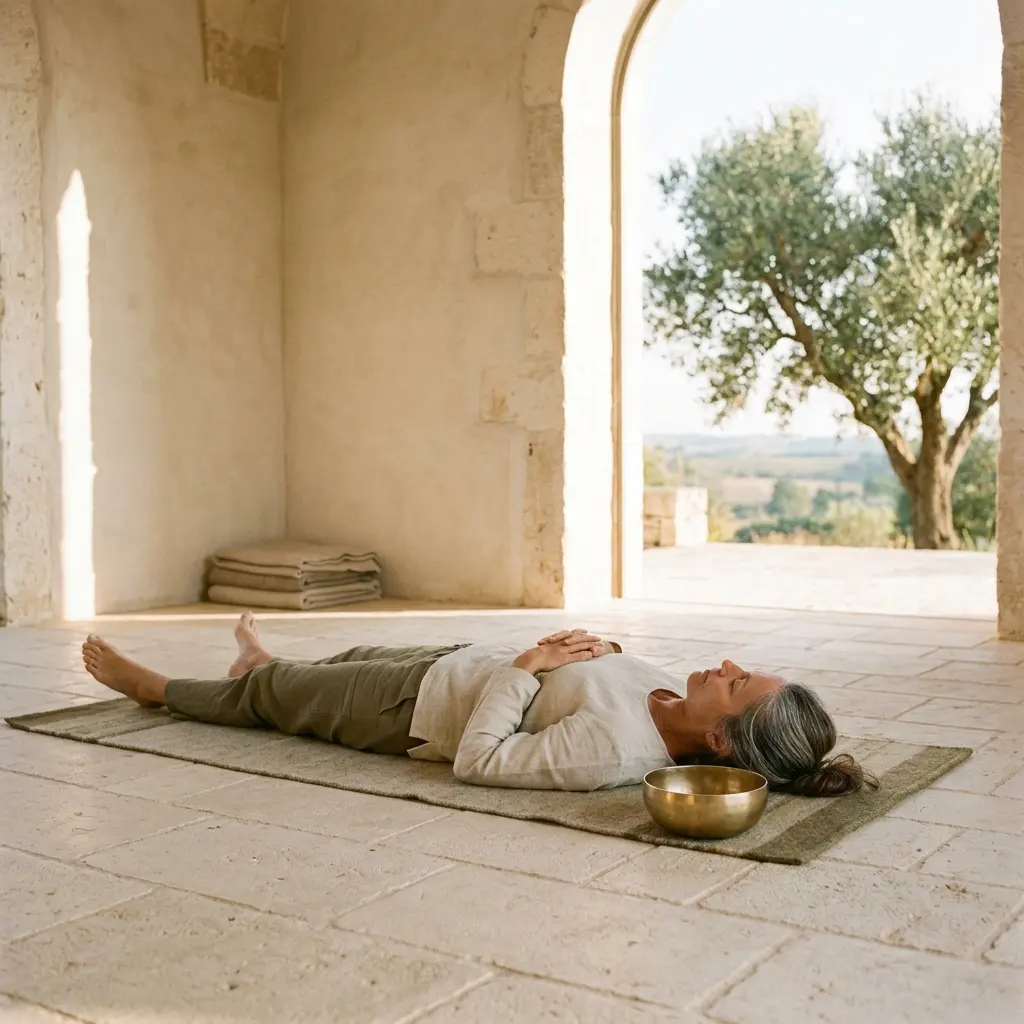
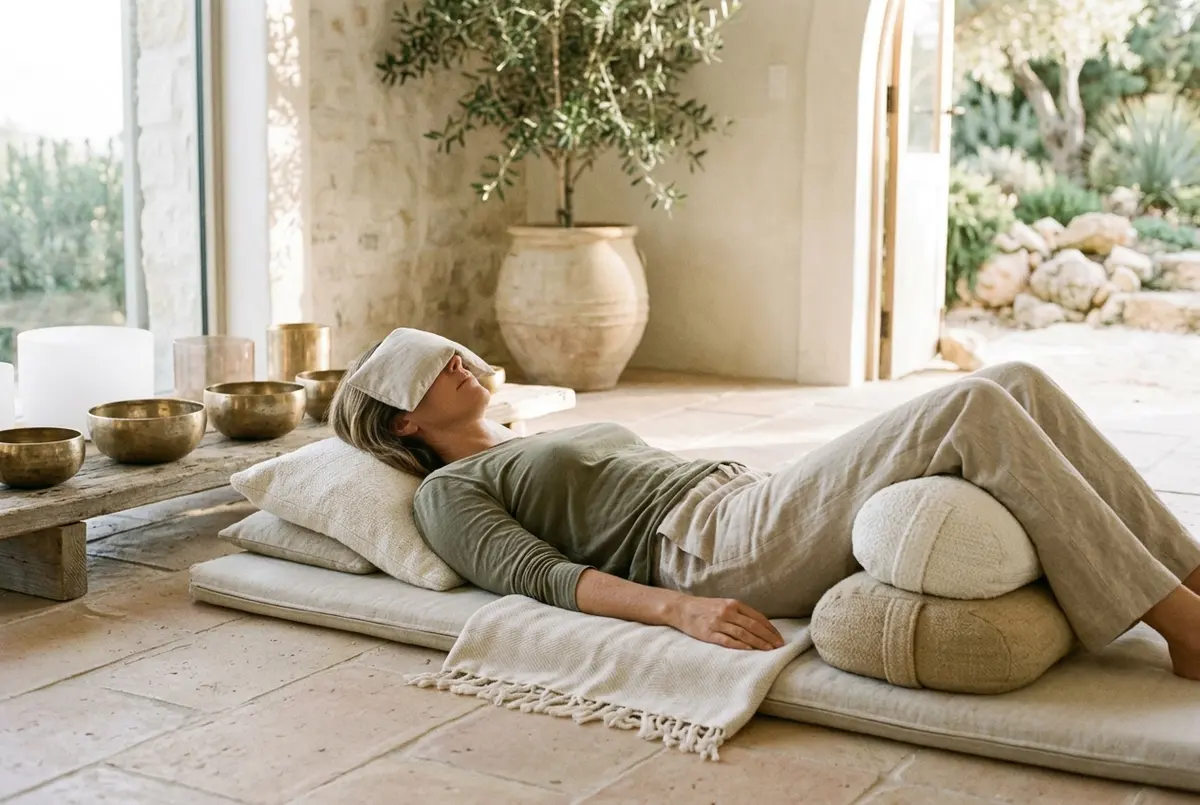
"Bath" refers to being surrounded by sound, not water. You lie on a mat, usually with a blanket and something under your head, and the practitioner plays instruments slowly, letting each tone ring until it fades. Sessions are often guided at the start with a few minutes of breathing, then move into sound with little or no talking.
Many people describe feeling heavy, drowsy or deeply still. Some notice the sound physically, especially low gong tones, which can feel like a hum in the chest. Others fall asleep. All of this is normal. If you like the lying-down part but would rather follow a voice than sound, yoga nidra for beginners has a similar feel.
What happens in your first session
| Stage | What usually happens | Tip for first-timers |
|---|---|---|
| Arrival | You choose a spot, set up a mat, blanket and pillow | Arrive early and choose a spot away from the loudest instruments if you are sound-sensitive |
| Settling | The guide leads a few minutes of slow breathing | Loosen tight clothing; take your shoes off |
| Sound | Bowls, gongs and chimes, often building and fading in waves | Let your attention follow one tone until it fades, then the next |
| Silence | The sound fades and you rest in quiet | Do not rush to sit up |
| Return | The guide invites you to move, roll to your side and sit up slowly | Sit for a minute before standing; you may feel lightheaded |
Session lengths vary, and many run about an hour. Group sessions are usually much less expensive than private ones. Check the listing for length, and ask whether there will be loud gong sections if that concerns you.
What does the research say?
Very little high-quality research exists. The study most often cited is an observational study of singing bowl meditation published in 2017 in the Journal of Evidence-Based Complementary and Alternative Medicine. Sixty-two adults rated their mood before and after a session, and they reported less tension, anger, fatigue and depressed mood afterwards. People new to this kind of meditation reported a larger drop in tension.
That is encouraging, but there was no comparison group, so we cannot tell how much came from the sound itself and how much from simply lying down for an hour in a calm room. It is fair to say a sound bath may help you relax for a while. It is not fair to say that vibrations repair cells, cure pain or balance anything in the body. Use it as a complement to care, never instead of it. The same honest reading applies to Reiki healing and other gentle practices, and our look at the physical benefits of meditation sorts the better-supported effects from the hype.
Who should be careful
- Tinnitus or sound sensitivity: loud gongs and bowls close to your head can be uncomfortable. Choose a spot farther from the instruments, bring earplugs, and tell the practitioner.
- Trauma or panic: lying in the dark with your eyes closed can feel exposed for some people. Keep your eyes open, lie on your side, or sit up. It is fine to leave.
- Pregnancy, epilepsy, a pacemaker or recent surgery: ask your doctor first and tell the practitioner. Some practitioners avoid placing bowls on the body in these cases.
- Low blood pressure or dizziness: sit up slowly at the end.
If lying still is not for you, a seated grounding exercise or a few minutes with the breathing pacer can give a similar sense of settling.
A 15-minute sound bath at home
You do not need a collection of instruments. One bowl, one chime, or even a recording works. If you are using a recording, our guide to choosing meditation music explains what to look for.
- Set up (2 minutes): dim the lights, silence your phone, lie on a mat or bed with a pillow under your knees and a blanket over you. The same comfortable setup is described in our guide to yoga nidra props.
- Breathe (3 minutes): slow breaths with a longer exhale. Feel your back sink into the floor.
- Sound (7 minutes): strike or rim your bowl (or play a track) once, and listen until the tone is completely gone. Wait a breath, then play again. Between tones, notice the silence. If you have no instrument, hum on each exhale and feel where the vibration sits in your chest, throat or face.
- Rest (2 minutes): stop playing and lie still. Notice how your body feels compared with the start.
- Return (1 minute): wiggle fingers and toes, roll to your side, and sit up slowly.
At bedtime, skip the return step and let yourself drift. For other sound-based ways to fall asleep, see sound anchoring in our mindfulness techniques for sleep.
Choosing an instrument for home practice
If you enjoy the home routine and want an instrument, start with one. Each option below has a different sound and a real downside.
For a first instrument: Meditation Sound Bowl Handcrafted in Nepal
Meditation Sound Bowl Handcrafted in Nepal
A single metal singing bowl is the most versatile choice: you can strike it for a clear tone or circle the rim with the mallet for a sustained one. Why this pick: one bowl is enough for the home routine above. Con: rimming takes practice; at first the bowl may rattle or buzz instead of singing.
For layered tones: Tibetan Singing Bowl Set
A set lets you alternate pitches, which comes closer to the overlapping sound of a group session. Why this pick: variety once you know you like bowls. Con: more to store and more to learn; buy a single bowl first if you are unsure.
For a deeper sound: Arborea Mini Gong 6"
A small gong gives a shimmering, low-ish wash of sound. Why this pick: if bowls feel too bright for you. Con: gongs carry, so it is not ideal in an apartment with thin walls, and it is not a good choice if you have tinnitus.
For a gentle start and end signal: Three Tone Chime for Mindfulness
Three Tone Chime for Mindfulness
A small mallet-struck chime is quieter than a gong and useful to mark the beginning and end of any meditation, such as a gratitude meditation or a morning sit. Why this pick: the most neighbor-friendly option. Con: a high, short tone, so it does not create the long wash of a bowl or gong.
For rhythm instead of tone: Remo Fiberskyn Frame Drum
Remo HD-8512-00 Fiberskyn Frame Drum
A frame drum played with a slow, steady beat suits people who settle better with rhythm than with sustained tones. Why this pick: a warm sound you can play softly with your hand. Con: you are playing, not just listening, so it is more active than a classic sound bath.
Frequently Asked Questions
What does a sound bath feel like?
Most people describe deep relaxation, heaviness or drowsiness, and some feel low tones as a gentle hum in the body. Some people fall asleep, and others find their mind busy at first. If falling asleep is your main goal, a guided sleep meditation may suit you better. There is no right way to experience it.
Is a sound bath the same as meditation?
It is a form of meditation in which sound gives your attention an anchor, similar to how the breath does in mindfulness practice. Many people who struggle with silent meditation find it easier because there is always something to listen to.
Are sound baths scientifically proven to heal?
No. A few small studies report that people feel less tense and in a better mood after a session, but they lacked comparison groups. Sound baths may support relaxation; they are not a treatment and should not replace medical care.
Can I do a sound bath without instruments?
Yes. Humming on the exhale, a recording of bowls, or simply listening closely to natural sounds can follow the same structure: settle, listen to one sound at a time, rest in the silence, then return slowly.
Who should avoid sound baths?
People with tinnitus, strong sound sensitivity or a history of trauma may find them uncomfortable, and anyone who is pregnant, has epilepsy or a pacemaker should check with a doctor first. You can always sit farther from the instruments, keep your eyes open or leave.