The quickest exercises for busy women are short, low-impact "movement snacks": a 6-minute mobility flow in the morning, a 3-minute desk reset every 30 to 60 minutes of sitting (at least once an hour), and a 10-minute strength circuit at home a few times a week. None of them need equipment, a change of clothes or jumping, and together they keep you moving on days when a full workout is not going to happen.
Short sessions are not second best. The CDC notes that weekly activity can be broken up into smaller chunks of time. Below are three ready-to-use routines with reps, timings and modifications for stiff mornings, sore knees or a cramped office.
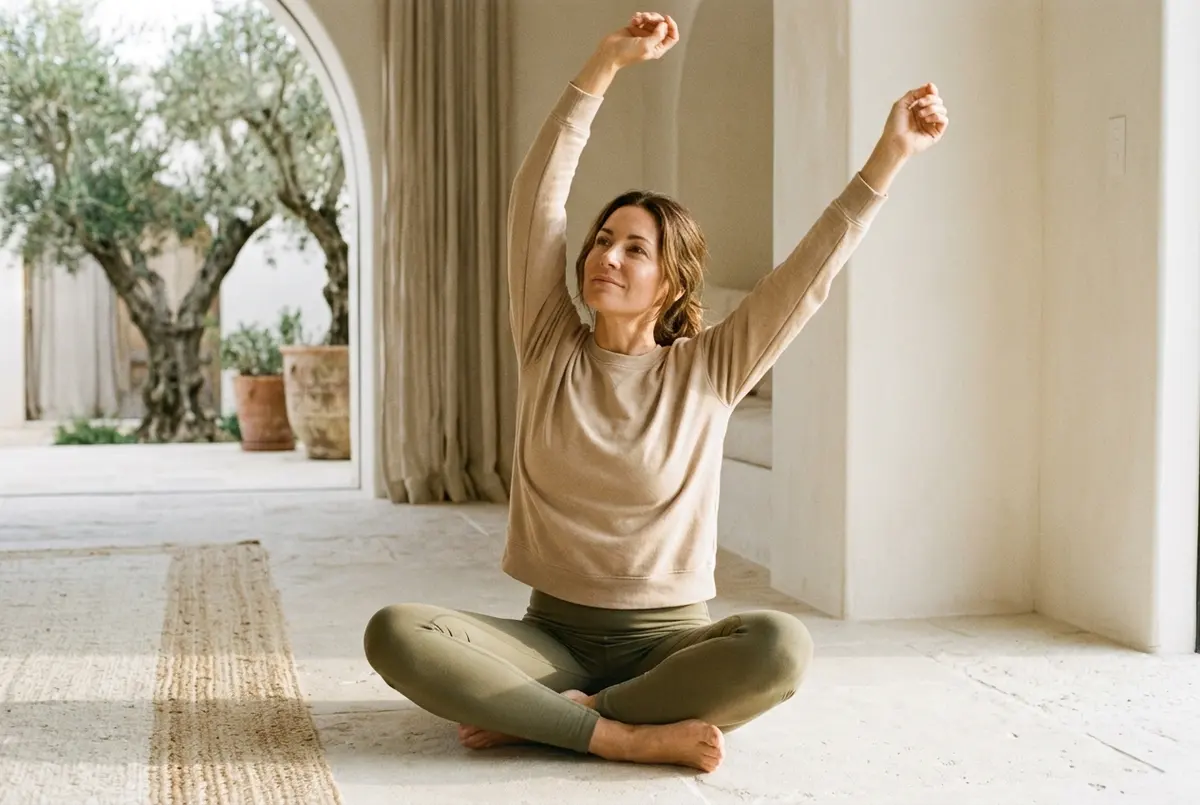
The three movement snacks at a glance
| Routine | When | Time | Moves | Easier | Harder |
|---|---|---|---|---|---|
| Morning wake-up flow | Before breakfast or after coffee | 6 min | Neck turns, shoulder rolls, standing cat-cow, hip circles, sit-to-stand, heel raises | Do it seated; skip sit-to-stand | Add a second round |
| Desk reset | Every 30 to 60 minutes of sitting | 3 min | Chin tucks, seated twist, shoulder blade squeeze, march in place, hip flexor stretch | Stay seated for all but the march | Swap the march for 10 calf raises and 10 sit-to-stands |
| Home strength snack | 2 to 3 times a week | 10 min | Wall push-up, supported reverse lunge, glute bridge, bird dog, wall sit | Smaller range, fewer reps | Three rounds instead of two |
Routine 1: the 6-minute morning wake-up flow
Mornings are when many women over 40 feel stiffest, and if tiredness is part of it, our guide to menopause fatigue looks at sleep, movement and stress together. This flow moves every major joint gently before you ask much of it, and it pairs well with a 5-minute morning mindfulness meditation if you want a calm start as well as a loose one.
- Neck turns, 1 minute. Slowly turn your head right and left, 5 times each way, then tip your ear toward each shoulder 3 times. Move only as far as feels easy.
- Shoulder rolls, 30 seconds. Ten slow rolls backward, lifting the shoulders up, back and down.
- Standing cat-cow, 1 minute. Hands on your thighs, knees soft. Round your back as you breathe out, then gently lift your chest as you breathe in. Six slow repeats. With osteoporosis or low bone density, skip the rounding and do only the gentle chest lift.
- Hip circles, 1 minute. Hands on hips, draw 5 slow circles each direction.
- Sit-to-stand, 1 minute. From a sturdy chair, stand up and sit down with control, 8 times. Pressing your hands on your thighs is fine.
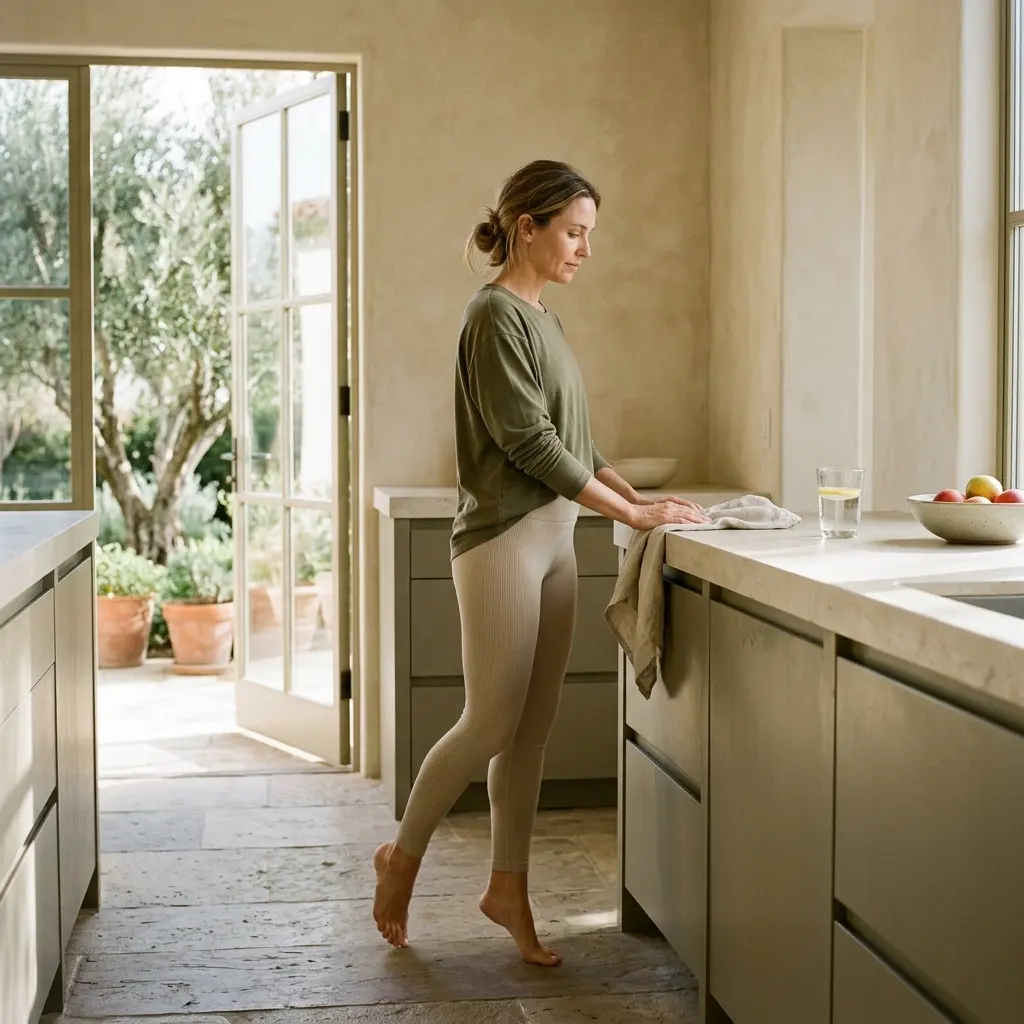
- Heel raises, 1 minute. Hold a counter, rise onto the balls of your feet, lower slowly, 12 times.
- Reach and side bend, 30 seconds. Reach one arm overhead and lean gently away, 4 per side.
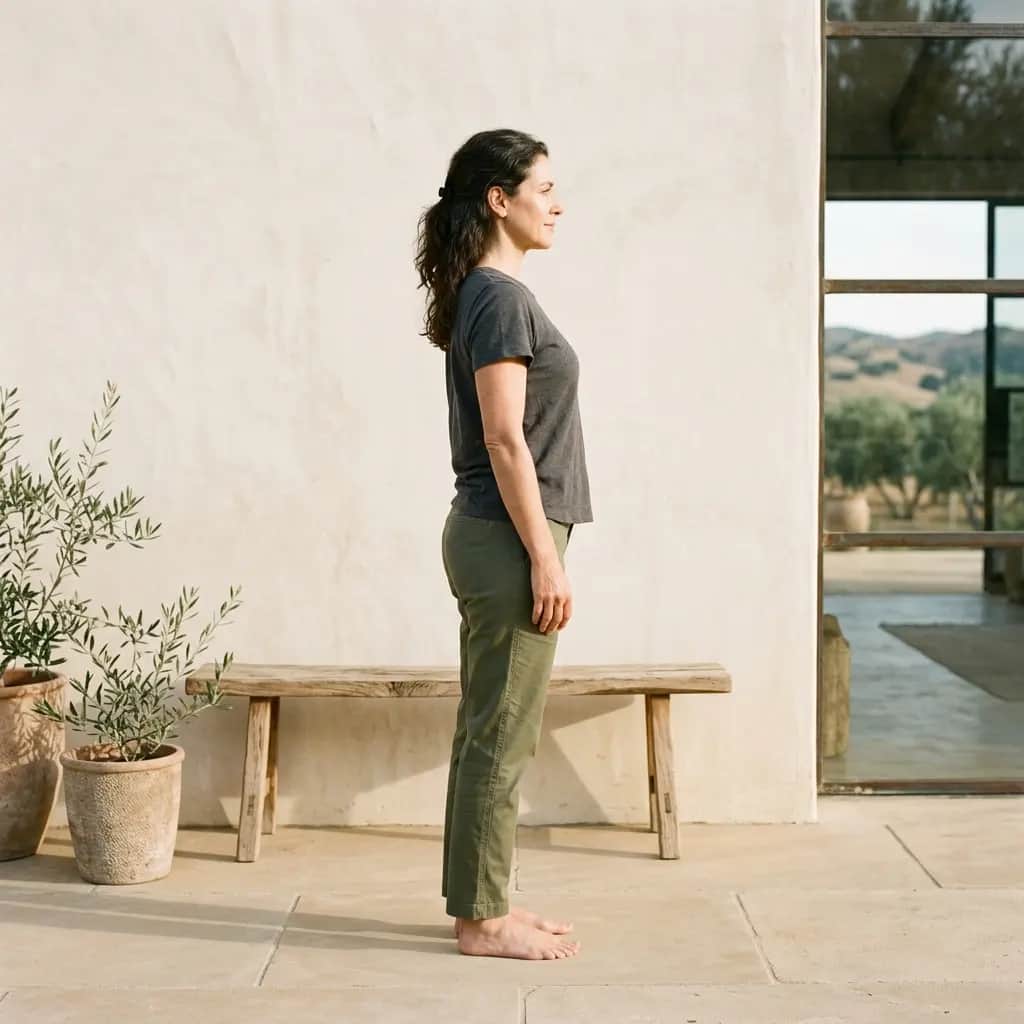
Cue to remember: slow and smooth. If a move pinches rather than stretches, make it smaller.
Routine 2: the 3-minute desk reset
Use this every 30 to 60 minutes of sitting, and at least once an hour; Mayo Clinic suggests a break from sitting about every 30 minutes. On a packed day, even standing up and doing the march alone counts. Set a quiet reminder, or tie it to something you already do, such as refilling your water. For a calmer, stretch-only version, our desk yoga poses are a good swap.
- Chin tucks, 8 reps. Sitting tall, glide your chin straight back as if making a double chin, hold 2 seconds, release. Our posture correction routine builds on this move.
- Seated twist, 5 per side. Hand on the opposite knee, turn your ribs (not just your head) and breathe out as you turn.
- Shoulder blade squeeze, 10 reps. Draw your shoulder blades back and slightly down, hold 2 seconds.
- March in place, 60 seconds. Stand up and march, swinging your arms. This is the part that matters most: getting out of the chair.
- Standing hip flexor stretch, 30 seconds per side. Step one foot back, tuck your tailbone slightly and feel the front of the back hip open.
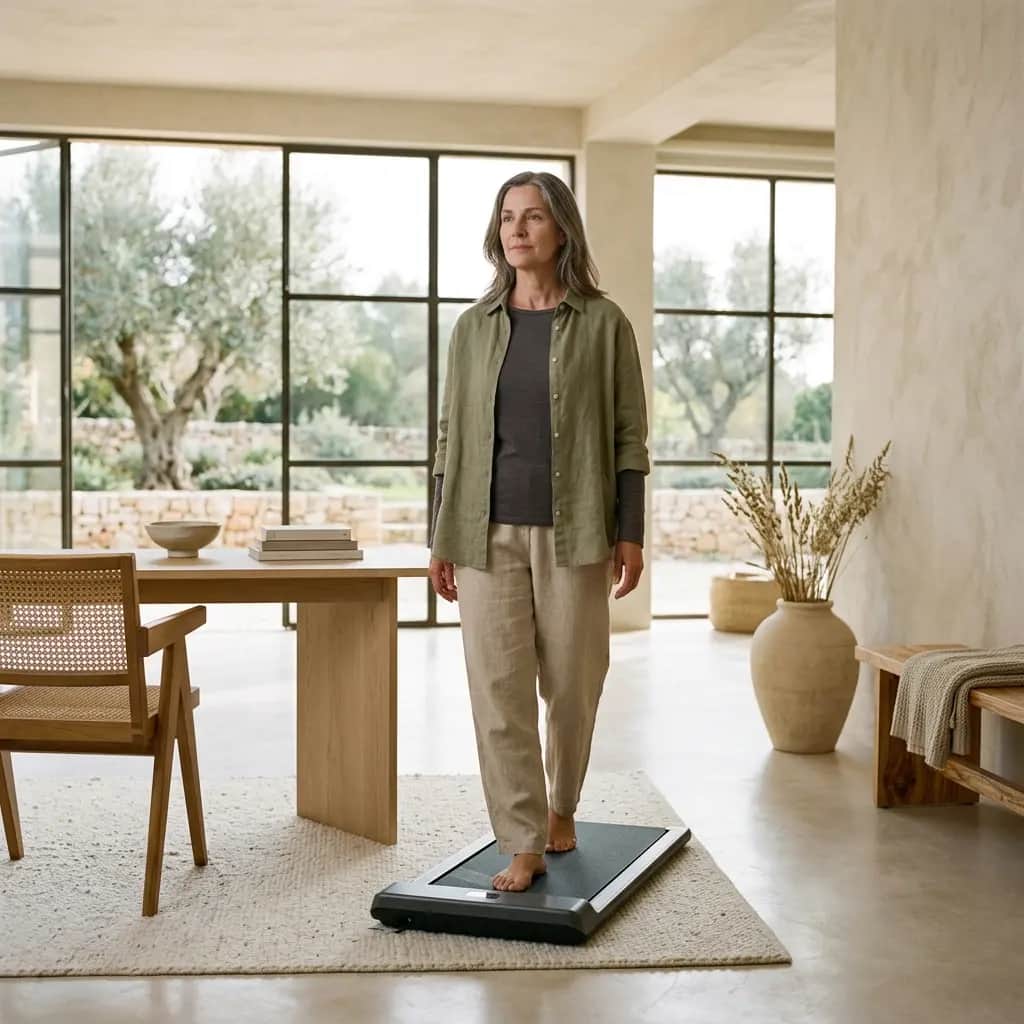
If you work from home, a short walk to the mailbox or a few minutes on a walking pad can replace the march. When you have a little longer, the 10-minute walking workout at home needs no equipment at all.
Routine 3: the 10-minute home strength snack
Do two rounds, resting about 30 seconds between moves. Two to three times a week is enough for this to feel noticeably easier within a few weeks. For strength moves tied to chores instead of a set time, see our functional fitness guide for daily life.
- Wall push-up, 10 reps. Hands on the wall at shoulder height, body in one straight line. Bend your elbows to bring your chest toward the wall, then press away. Harder: use a kitchen counter.
- Supported reverse lunge, 6 per side. Hold a chair back. Step one foot back and bend both knees a little, then step back up. Go only as low as your knees are comfortable. Easier: a smaller step.
- Glute bridge, 10 reps. Lie on your back, knees bent, feet flat. Press through your heels to lift your hips, hold 2 seconds, lower slowly.
- Bird dog, 5 per side. On hands and knees, reach one arm forward and the opposite leg back, hold 3 seconds. Keep your hips level. Easier: move only the leg.
- Wall sit, 20 to 30 seconds. Back against the wall, slide down only until your knees bend slightly. Easier: a higher position and a shorter hold.
If you want to make floor moves like bridges a little harder later, light ankle weights can help: start at 1 lb per ankle and use our ankle weight calculator for a sensible starting point. Our ankle weight exercises for glutes and legs show how to add them to bridges and leg lifts.
How to fit movement snacks into a packed day
- Anchor each routine to something fixed. Morning flow after the kettle, desk reset after each meeting, strength snack before dinner.
- Keep the bar low. One round of the strength snack still counts. The habit is worth more than the perfect session.
- Stack a short walk on top. A 10-minute walk after lunch adds up fast. When you are ready to build it into a habit, try our 30-day walking challenge, or the indoor walking challenge on days you cannot get outside.
- Use the wall. If floor work is hard to fit in, wall Pilates for busy professionals shows a lunch-break format that needs no mat.
Why we left out jumping and HIIT
Many "quick workout" lists lean on jumping jacks, burpees and high-intensity intervals. Those can work for some people, but the impact and intensity are a poor fit for sore knees, pelvic floor concerns or a body that has not exercised in a while. Everything here is low impact by design. If you want to raise your heart rate without jumping, brisk walking intervals like the Japanese walking method are a gentler option, and the free Japanese walking timer handles the 3-minute switches for you.
Who should be careful
Skip or shrink any move that causes sharp pain, and talk to your doctor or a physical therapist first if you have a recent injury, joint replacement, osteoporosis, or are pregnant or postpartum.
Frequently Asked Questions
Do short bursts of exercise really make a difference?
They can. Health guidelines allow weekly activity to be spread across shorter sessions, and frequent movement breaks also interrupt long stretches of sitting. The key is doing them most days rather than occasionally.
What is the best quick exercise if I only have 2 minutes?
Stand up and march in place with a strong arm swing for 60 seconds, then do 8 sit-to-stands from your chair. It wakes up your legs and gets you out of the sitting position, which is the main goal.
Can I do all three routines on the same day?
Yes. The morning flow and desk resets are gentle enough for every day. Keep the strength snack to 2 or 3 non-consecutive days a week so your muscles have time to recover.
Are these exercises suitable for women over 50?
They were chosen with that in mind: no jumping, a support option for balance moves, and an easier version of each exercise. Start with the easier versions and progress when a move feels comfortable.
Will these quick exercises help me lose weight?
They are designed for energy, mobility and strength rather than weight loss. Any extra movement adds to your day, but food, sleep and stress usually have more influence on weight than a few short routines.