When you purchase through links on our site, we may earn an affiliate commission. Here's how it works.
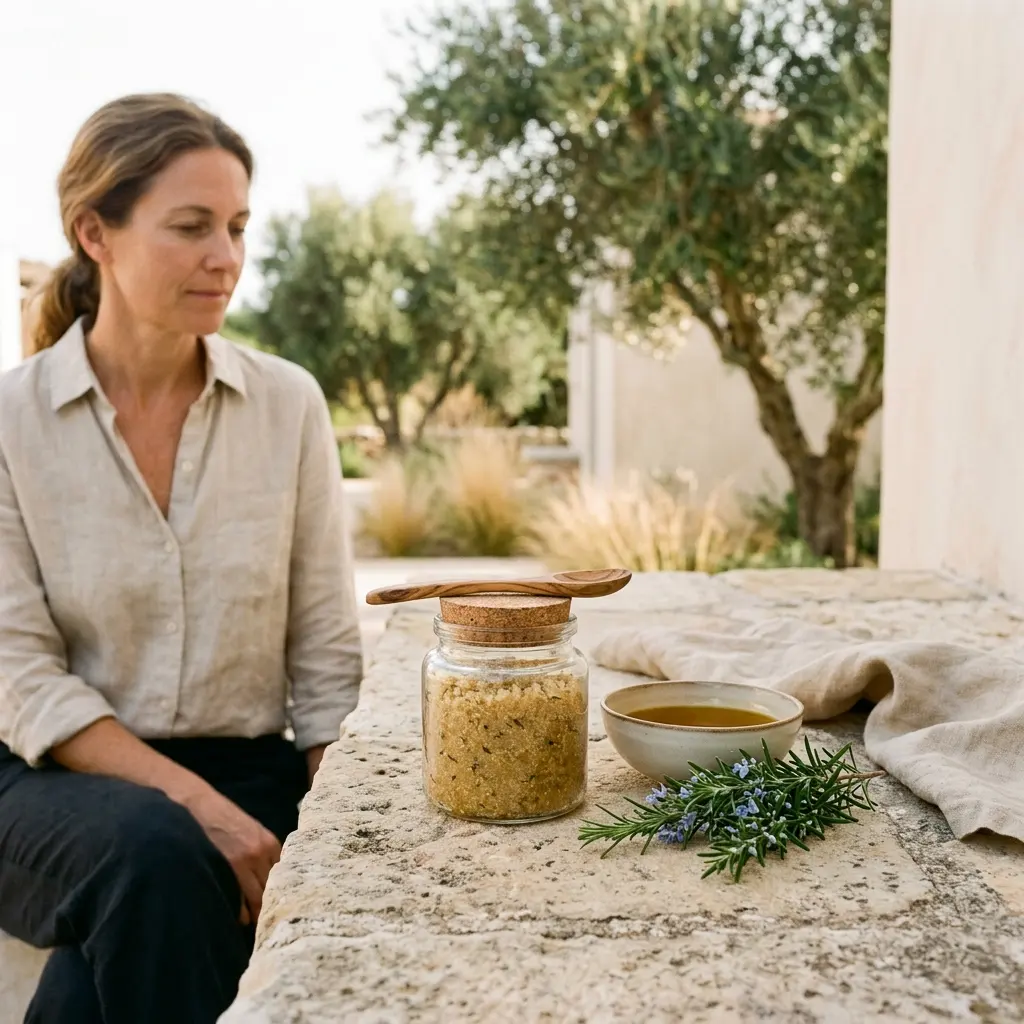
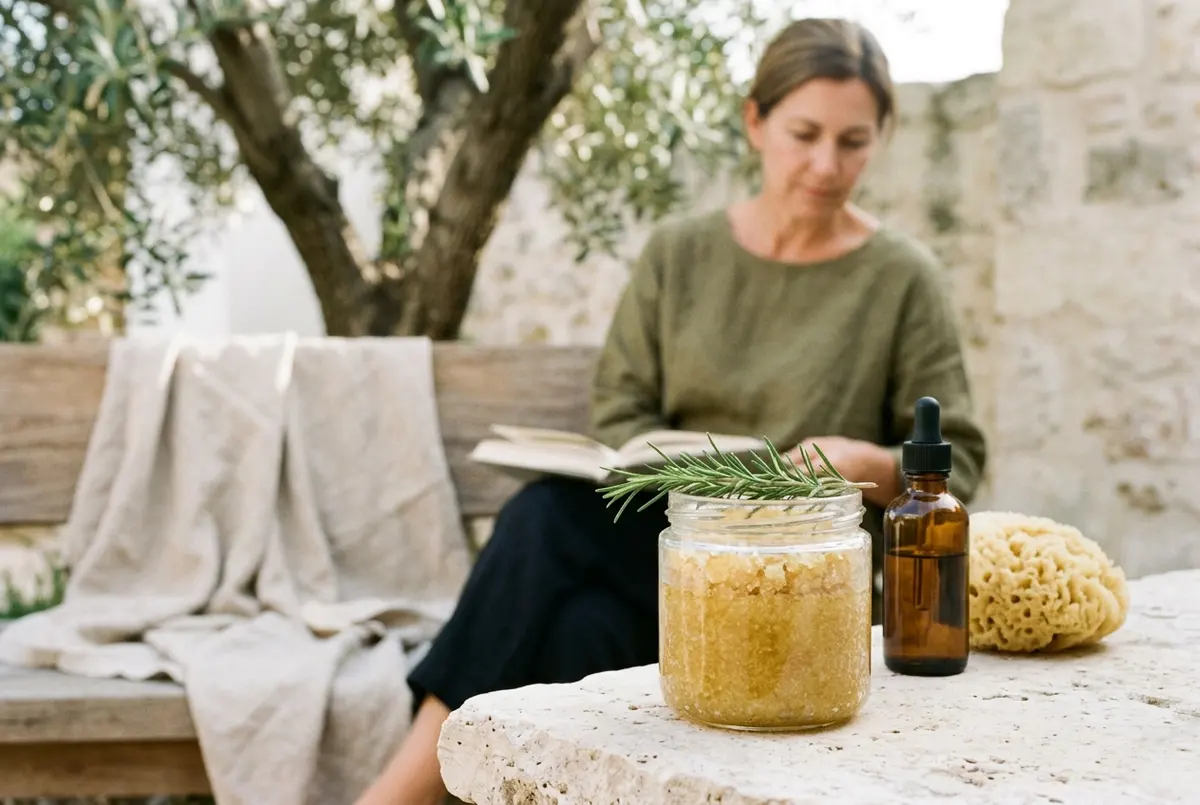
A homemade sugar scrub needs just one ratio: two parts sugar to one part carrier oil. Stir them together until the mix looks like damp sand, massage it onto damp skin for about 30 seconds per area, rinse and moisturize. It takes five minutes to make and costs very little.
Below you will find three recipes that all use that same 2:1 ratio, a table to match the oil to your skin, one clear shelf-life rule, and an honest note on faces, because sugar is not right for every complexion.
The basic sugar scrub ratio
| Batch size | Sugar | Carrier oil | Essential oil (optional) |
|---|---|---|---|
| One use (lips) | 2 teaspoons | 1 teaspoon | None |
| One use (body) | 4 tablespoons | 2 tablespoons | 1 drop |
| Small jar | 1 cup | 1/2 cup | Up to 5 drops |
If the mix looks dry and crumbly, add oil a teaspoon at a time. If oil pools on top, add a spoonful of sugar. The texture you want is wet sand that holds together when pressed.
Which sugar? Fine white or brown sugar is gentler and melts faster on the skin. Coarse raw or turbinado sugar scrubs harder and suits feet, knees and elbows. Salt works for feet too, but it stings on any small cut or freshly shaved skin, so we leave it for tough areas only.
Which oil should you use for your skin type?
| Skin type | Good carrier oils | Why |
|---|---|---|
| Dry or mature body skin | Coconut, macadamia, olive | Rich, leaves a soft film after rinsing |
| Normal body skin | Sweet almond, sunflower | Light and easy to rinse |
| Oily or breakout-prone body skin | Sunflower, grapeseed, jojoba | Lighter; coconut can clog pores for some people |
| Lips | Sweet almond, olive | Gentle, and both are food oils if a little ends up in your mouth |
| Nut allergy | Sunflower, olive, grapeseed | Skip almond and macadamia |
Coconut oil turns solid below about 76°F, so a coconut scrub sets firm in a cool bathroom. Scoop it with a spoon and it melts on contact with warm skin, or mix half coconut with half liquid oil to keep it soft.
Recipe 1: Everyday body sugar scrub
- 1 cup fine white or brown sugar
- 1/2 cup sweet almond or melted coconut oil
- Optional: up to 5 drops of lavender or sweet orange essential oil
Stir the sugar and oil in a clean bowl until evenly coated, add the essential oil, and spoon into a clean, dry glass jar with a lid.
Recipe 2: Lip scrub (single use)
- 2 teaspoons fine white sugar
- 1 teaspoon sweet almond or olive oil
- Optional: 1/2 teaspoon honey for stickiness
Mix in a small dish, rub gently over closed lips with a fingertip for 20 to 30 seconds, then wipe off with a warm damp cloth and apply lip balm. Make it fresh each time.
Recipe 3: Rough feet and elbows scrub
- 1/2 cup coarse raw sugar
- 1/4 cup olive or macadamia oil
- Optional: 2 drops peppermint essential oil (feet only)
Use on heels, the balls of the feet, knees and elbows. It is a nice reward for feet that have taken up daily brisk walks, such as the Japanese walking method. Work in small firm circles for a minute, rinse, then put on a rich cream and cotton socks overnight.
How to use a sugar scrub safely
- Patch test first. Rub a little scrub on your inner forearm, rinse, and check the spot over the next 24 hours. Skip the recipe if it turns red, itchy or bumpy, especially if you added essential oil.
- Start on damp, not dripping, skin. Step out of the shower stream so the water does not dissolve the sugar before it works.
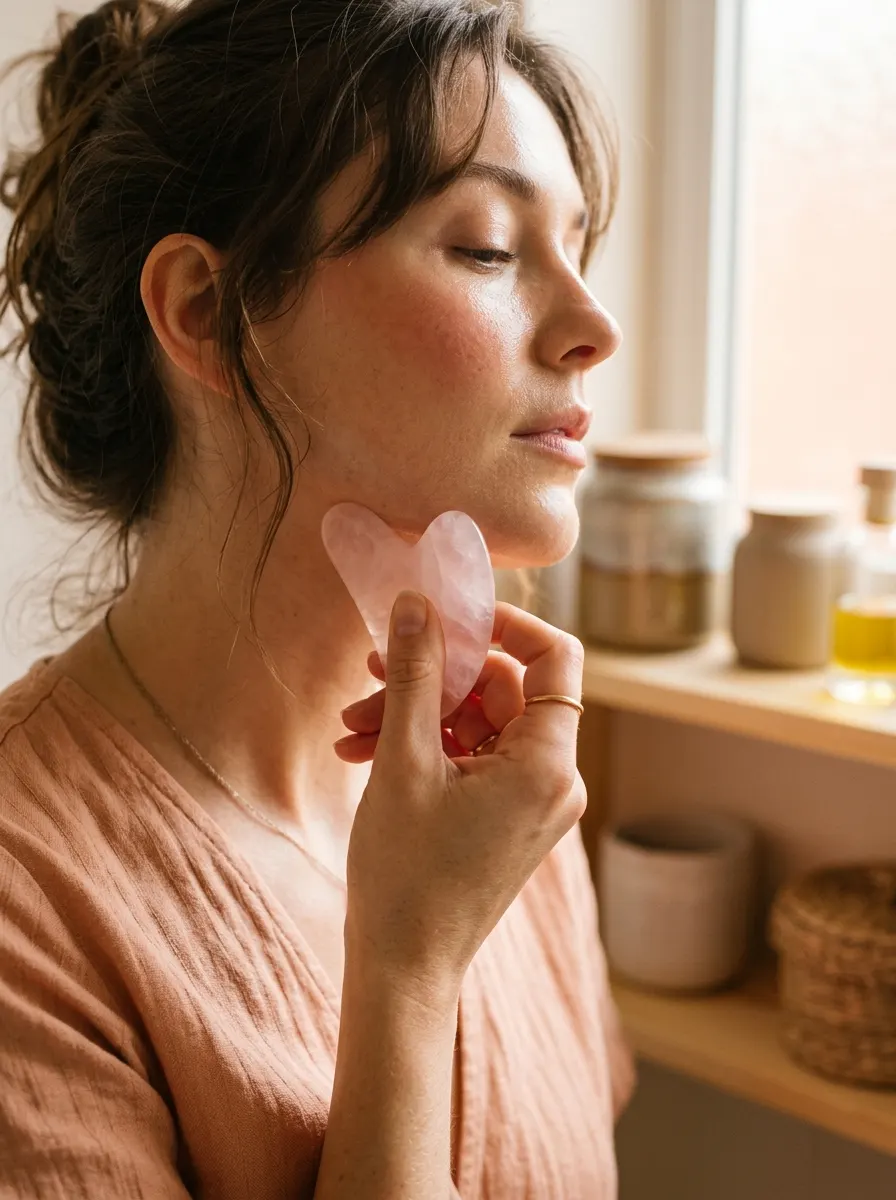
- Massage lightly in small circles for about 30 seconds per area. Let the sugar do the work; do not scrub hard. If you enjoy the massage part, our gua sha guide explains a slower, tool-based version for the face.
- Rinse with lukewarm water and pat dry.
- Moisturize while skin is still slightly damp.
- Wipe the shower floor. Oil makes tiles slippery, so rinse the floor or stand on a mat.
Once or twice a week is plenty for the body. More often can leave skin raw and dry. A scrub is an occasional extra in a holistic skincare routine, not a daily step.
Can you use a sugar scrub on your face?
It depends on your skin, and for many people the answer is no. The American Academy of Dermatology notes that people with dry, sensitive or acne-prone skin may do better with a washcloth and a mild chemical exfoliant than with a scrub, and that darker skin tones prone to dark spots should avoid strong exfoliation.
- Skip sugar on your face if you have sensitive skin, rosacea, active acne or eczema, or if you use a retinoid, retinol or benzoyl peroxide.
- If your facial skin is resilient, use only very fine sugar, the lightest touch and no more than once a week, and keep it away from the eye area.
- A gentler swap: blend 1 tablespoon of finely ground oats with a little water or plain yogurt into a paste, massage softly for 30 seconds and rinse. Our DIY facial mask recipes include an oat mask for sensitive skin, and our guide to glycolic acid toner covers chemical exfoliation.
Who should skip a sugar scrub?
- Broken, cut or sunburned skin
- Freshly shaved or waxed skin: wait at least a day
- Eczema or psoriasis flares
- Any area with an active rash or infection
Tip for ingrown hairs: exfoliating the legs a day or two before shaving or waxing can help lift trapped hairs. Avoid scrubbing right after hair removal.
How long does homemade sugar scrub last?
Our one rule: a scrub made only of sugar and oil, kept in a clean, dry, closed jar and scooped with a clean dry spoon, should be used within three months. Throw it out sooner if it smells stale, changes color or water got into the jar. Anything with fresh or watery ingredients, such as fruit, coffee grounds, aloe or yogurt, is single use: make it, use it, discard the rest.
Essential oils deserve one extra caution. Some citrus oils, such as bergamot and cold-pressed lime, can make skin react to sunlight, so keep citrus-scented scrubs for evenings and areas you will cover. If you also use an LED device, our guide to at-home LED and red light safety explains which medications and conditions make skin more light-sensitive. An evening scrub in a warm shower also makes a good start to a beauty sleep night routine.
Three oils we would pick
We have not tested these ourselves; they are simply good examples of each oil type.
Viva Naturals Organic Coconut Oil. Best for dry body skin and doubles as a kitchen oil. Downside: sets solid when cool and can clog pores for some, so keep it off breakout-prone areas.
NOW Solutions Sweet Almond Oil. The easiest all-rounder for body and lip scrubs: light, liquid at room temperature and rinses cleanly. Downside: not for anyone with a tree-nut allergy.
Cococare Macadamia Oil. Richer and silky, good for very dry legs, feet and elbows. Downside: a tree-nut oil, and usually pricier than almond for the same job.
For the jar, any clean glass jar with a tight lid works. Glass is easy to wash and dry completely. If you are building a small at-home self-care routine, our kitchen-ingredient beauty guide and our winter skincare tips pair well with this scrub, and our beauty section has more simple rituals.
Frequently Asked Questions
What is the best ratio for a homemade sugar scrub?
Two parts sugar to one part oil, for example 1 cup sugar and 1/2 cup oil. It gives a damp-sand texture that holds together without pooling oil. Adjust by a spoonful either way to suit your preference.
Brown sugar or white sugar for a scrub?
Both work. Brown sugar is slightly softer and smells warmer; fine white sugar is the most gentle. Choose coarse raw sugar only for feet, knees and elbows.
Can I use a sugar scrub every day?
No. Daily scrubbing can leave skin irritated and dry. Once or twice a week is enough for the body, and lips need it at most once a week.
Why did my sugar scrub harden?
Coconut oil goes solid below about 76°F. Warm the closed jar in a bowl of warm water, or remake it with half coconut oil and half liquid oil such as almond.
Is a homemade scrub better than a store-bought one?
Not necessarily better, but simpler and fresher, and you know every ingredient. Store-bought scrubs contain preservatives that let them last longer once water gets in. A homemade scrub needs to stay dry and be used up quickly.