When you purchase through links on our site, we may earn an affiliate commission. Here's how it works.
A holistic skincare routine has two halves. The first is a short daily routine: a gentle cleanser, a moisturizer that suits your skin and a broad-spectrum sunscreen in the morning. The second is the set of habits that show up on your face whether you like it or not: how you sleep, how stressed you are, how much sun you get and how much you move.
That is the whole idea. Holistic does not mean expensive botanicals, it does not mean avoiding "chemicals" (everything in a jar is a chemical, including water), and it does not mean skincare can treat illness. It means looking at the few things that genuinely move the needle and doing them often, in small, calm steps. This page is the broad guide; for single topics we link out to our narrower pages as we go.
What does a holistic skincare routine look like day to day?
Three steps in the morning, two in the evening. If that sounds too simple, that is the point: a routine you can keep for a year does more than a ten-step routine you keep for a week.
Morning (about 3 minutes)
- Rinse or gently cleanse. Lukewarm water is enough for many people in the morning. Use a mild, non-foaming cleanser if your skin is oily or you wore a rich night cream.
- Moisturize. Light lotion or gel for oily skin, a cream for normal to dry skin.
- Sunscreen. Broad-spectrum SPF 30 or higher on face, neck and the backs of your hands, every day, including cloudy ones.
Evening (about 3 to 5 minutes)
- Cleanse. Remove sunscreen and makeup properly. A cleansing balm or oil followed by your gentle cleanser works well if you wear long-wear makeup.
- Moisturize. On slightly damp skin, so the cream helps hold the water in.
Optional extras come after the basics are steady for a month: one active ingredient at a time (for example a gentle exfoliating acid such as a glycolic acid toner two nights a week, or a retinoid introduced slowly), never several at once. If you are curious about botanical extras such as ashwagandha or ginseng in creams, our adaptogens in skincare guide grades each one on its evidence.
Which habits show up on your skin?
These four carry more weight than any single product.
1. Sleep
Short or broken sleep shows up as dullness, puffiness and a skin barrier that recovers more slowly. In a small study of healthy women, both a stressful interview task and sleep deprivation slowed the skin barrier's recovery after it had been lightly disrupted. Aim for a regular bedtime more than a perfect number of hours, and keep your evening routine short enough that you actually do it. Our beauty sleep night routine goes step by step.
2. Stress
The same study found that the stressful task delayed barrier recovery, which fits what many people notice: dryness, sensitivity or breakouts during hard weeks. You cannot remove stress, but a daily calm habit can lower how hard it hits. Two to five minutes of slow breathing while your moisturizer sinks in is a realistic place to start, and our anti-stress toolkit suggests other calming tools by stress type.
3. Sun
Daily sunscreen is the single most evidence-backed habit for how skin looks over the years. Make it automatic: keep the bottle next to your toothbrush and apply it before you leave the bathroom.
4. Gentle movement and real food
Regular movement, such as a daily walk, supports overall health, mood and sleep, and many people feel it in how rested they look. A varied diet with plenty of vegetables, fruit, healthy fats and enough protein supports your body overall. Neither needs to be extreme. If walking is your movement, our Japanese walking method is a gentle, structured way to start.
A weekly ritual plan you can actually keep
Here is a simple week that layers small rituals on top of the daily routine. Each takes ten minutes or less.
| Day | Ritual | Time | Why it helps |
|---|---|---|---|
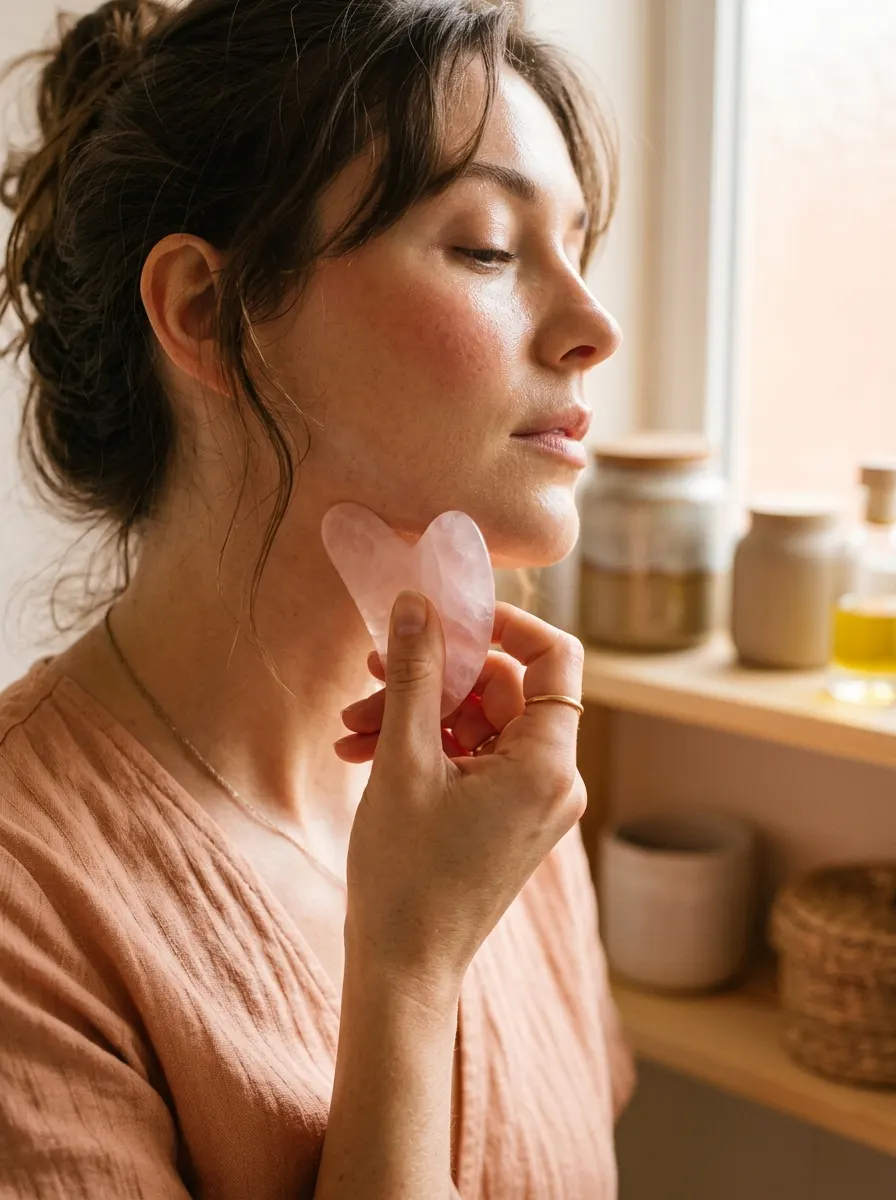
| Monday | 5-minute gua sha or facial massage after moisturizer | 5 min | A calming, hands-on moment; may ease morning puffiness |
| Tuesday | Walk outdoors without your phone (sunscreen on) | 10 min | Movement plus a mental reset |
| Wednesday | Breathing practice during your evening routine | 3 min | Builds the daily calm habit |
| Thursday | Gentle exfoliation, only if your skin tolerates it | 2 min | Smoother texture; skip in winter if skin is tight |
| Friday | Clean your phone screen and wash makeup brushes | 10 min | Fewer bacteria and less residue near your face |
| Saturday | A simple kitchen-ingredient mask, such as honey and oats | 10 min | A slow, pleasant ritual for dry skin |
| Sunday | Change your pillowcase and set out the week's products | 5 min | A tidy reset for the week ahead |
For the Monday ritual, our 5-minute gua sha routine shows the strokes in order. For Saturday, our guide to kitchen ingredients for skin explains which ones are worth using and which to skip, and our DIY facial masks give full recipes by skin type.
What can you leave out?
A holistic approach is as much about subtraction as addition. These are common add-ons that you can safely skip or keep purely for pleasure:
- Essential oils on the face. They smell lovely but are a frequent cause of irritation, especially for sensitive skin. Enjoy them in a diffuser instead.
- Dry brushing to "drain" the body or boost immunity. There is no good evidence that it does either. As a body exfoliation ritual it is fine if you enjoy it (a homemade sugar scrub does the same job), but skip it on sensitive, eczema-prone or broken skin.
- Herbal steaming for the face. Hot steam can aggravate redness and rosacea. A warm washcloth for a few seconds gives the same cozy feeling more gently.
- Many products with the same job. Two serums for "glow" rarely beat one moisturizer and sunscreen used well.
- Tongue scraping as a beauty ritual. It is often sold as an Ayurvedic secret for glowing skin, but it is a hygiene step for fresher breath, not a skin treatment. If you enjoy it, here is how to scrape your tongue gently.
- Gadgets you feel you should own. At-home LED masks and red light wands are optional extras, not part of the basics. If you are curious, read whether at-home LED and red light devices are safe before you buy.
Troubleshooting: what your skin may be telling you
| What you notice | Likely cause | First thing to try |
|---|---|---|
| Tight, squeaky skin after washing | Cleanser too strong or water too hot | Switch to a gentle cleanser and lukewarm water |
| Stinging when you apply products | Barrier is irritated | Pause actives and exfoliants for two weeks |
| New breakouts after a new product | Product too rich, or irritation | Stop the newest product first |
| Dull, tired look | Short sleep, dehydration, dead skin buildup | Steady bedtime first, then gentle exfoliation once a week |
| Flaky patches in winter | Dry air and hot showers | See our winter barrier routine |
See a dermatologist if a rash spreads or does not settle within a couple of weeks, if acne is painful or leaves marks, or if a mole or spot changes in size, shape or color.
Explore more simple rituals in our beauty section.
Frequently Asked Questions
What is a holistic skincare routine?
It is a short daily routine of cleanser, moisturizer and sunscreen combined with the lifestyle habits that affect skin, mainly sleep, stress, sun exposure and movement. The focus is on doing a few things consistently rather than adding more products. It does not require natural-only or expensive products.
Is holistic skincare the same as natural or clean beauty?
No. Natural and clean are marketing labels without a fixed definition, and natural ingredients can irritate skin too. Holistic skincare is about the whole picture of what affects your skin, and it can include well-tested synthetic ingredients such as sunscreen filters or ceramides.
How long before a simpler routine shows results?
Give it about four to six weeks, since skin renews itself gradually. Comfort usually improves first: less tightness and less stinging within a week or two. Keep the routine the same during that time so you can tell what is working.
Can stress really affect my skin?
Research suggests it can. Studies have linked psychological stress with a weaker skin barrier and slower barrier recovery, which may show up as dryness or sensitivity. A short daily calm practice and steady sleep are practical ways to support your skin during stressful periods.
Do I need toner, serum and eye cream?
Not necessarily. Many people do well with a cleanser, a moisturizer and sunscreen alone. Add a serum or toner only when you have a specific goal and the basics are already steady, and introduce one new product at a time.