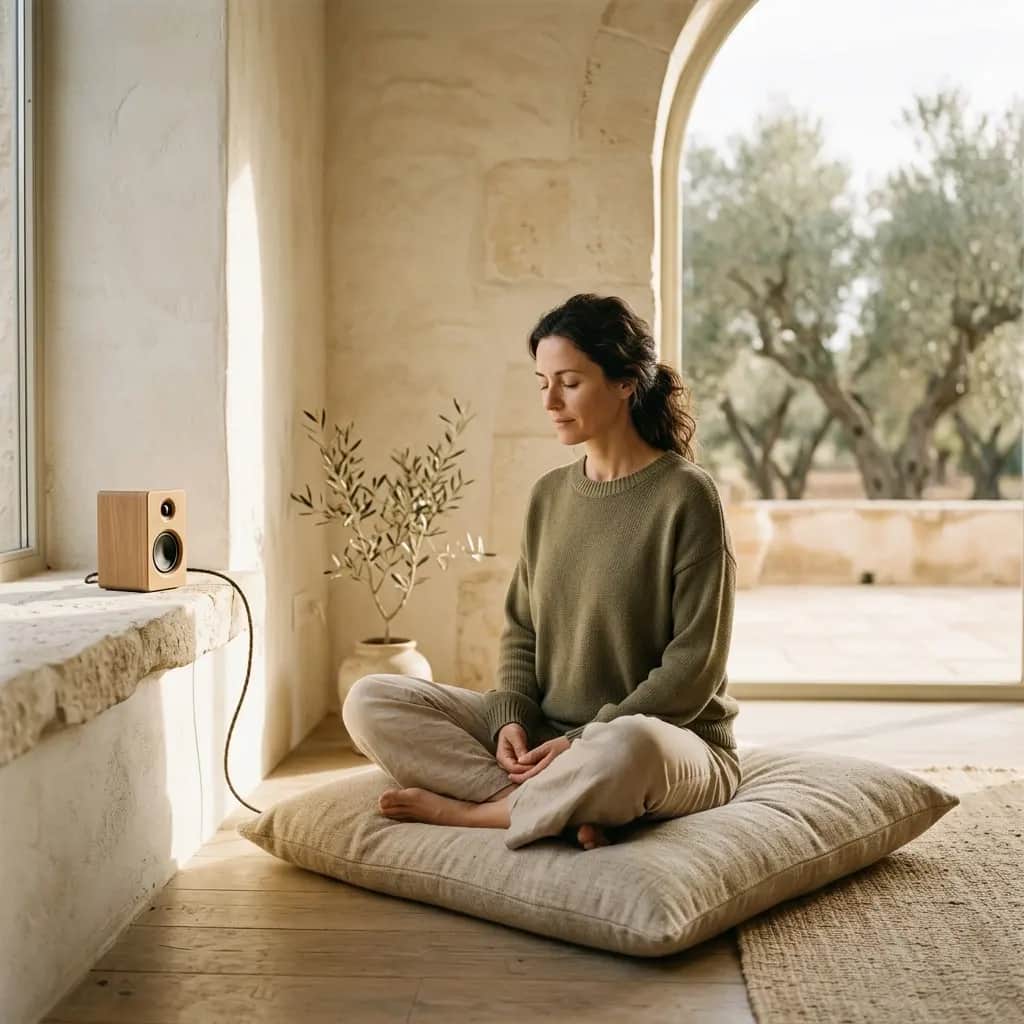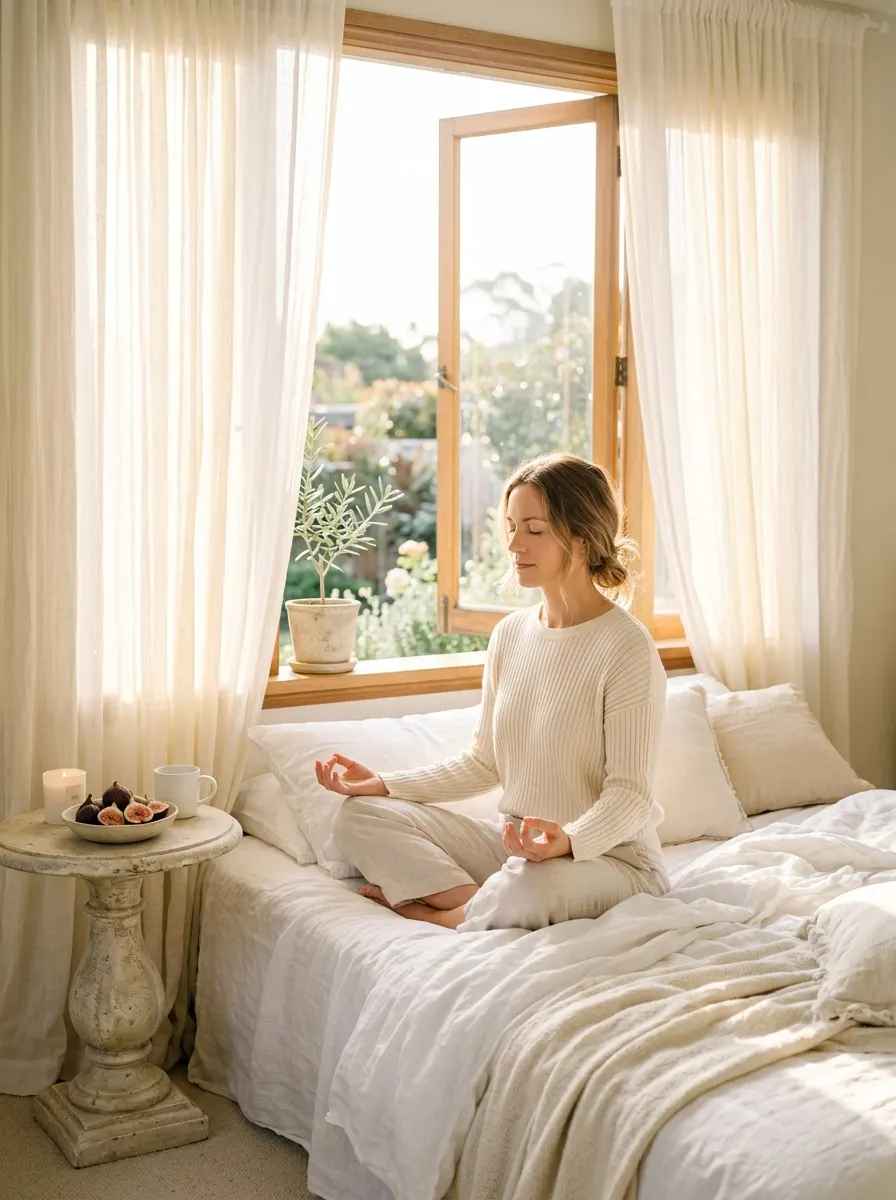
A guided sleep meditation for insomnia is a spoken practice, recorded or read from a script, that leads you through slow breathing, relaxing the body and resting your attention on something calm, so your mind stops replaying the day. The ten-minute script below is ready to use tonight or to record in your own voice. It can make nights easier, but it is a support, not a cure: if you struggle to sleep most nights, there is a proven treatment, and we cover when to ask for it.
You will find the full script with timings, a simple rule for when a guided practice suits you better than a silent one, how to record your own version, and what to do if you are still awake when it ends.
How does guided sleep meditation help with insomnia?
Lying awake usually is not about the body; it is about attention. Thoughts about tomorrow, replays of today, and "why am I still awake?" keep the mind switched on. A guided practice gives your attention a steady, low-effort job, such as following a voice, a breath or a body part, and that can make it easier for sleep to arrive on its own.
Research on mindfulness and sleep is encouraging but modest. A small randomized trial in older adults with sleep problems found that a six-week mindfulness program improved sleep quality more than a sleep hygiene class. That is a useful signal, not proof that a recording will fix insomnia. The most important mindset shift: the goal of the practice is to rest, not to force sleep. Trying hard to fall asleep is one of the things that keeps people awake. Once you are asleep, the body handles the rest, including the slow wave sleep that mostly comes in the first half of the night.
Guided or silent: which should you choose?
Use this rule of thumb:
| Your situation | Best choice | Why |
|---|---|---|
| Racing thoughts, new to meditation | Guided, with a voice | Following a voice takes less effort than directing yourself |
| You already meditate and find voices distracting | Silent, breath or body focus | Nothing new to process; you already know the steps |
| Physical tension, tight jaw or shoulders | Guided body scan | Systematic cues reach areas you would skip on your own |
| Waking at 3 am | Silent, or a very short guided track at low volume | Fewer screens and less stimulation in the middle of the night |
| You like counting and structure | Paced breathing | A visual or counted rhythm is the anchor |
Most people do best with guided practice for the first few weeks, then shift to silent practice once the steps are familiar. For a menu of short silent techniques, see our mindfulness techniques for sleep. If you enjoy longer guided rest, yoga nidra for beginners uses a similar voice-led structure over about 20 minutes.
Before you start
- Lie down in bed, lights out, phone face-down or across the room if you are using a speaker. If the phone tends to pull you back in, a 7-day digital detox can help reset evening habits.
- Set the volume low, just loud enough to hear. You want to be able to drift off without it jolting you.
- Use a track or timer that ends on its own. Endless playlists keep the mind half-listening.
- Let go of the outcome. If you fall asleep in minute four, perfect. If you are still awake at the end, you have still rested.
The 10-minute guided sleep meditation script
Read this slowly, or record it (see below). The pauses matter as much as the words. Times are approximate.
Minute 0 to 1: Settle
"Let your body sink into the bed. Notice the weight of your head on the pillow, your back, your legs. There is nothing to do right now and nowhere to go. For the next few minutes, your only job is to rest."
Minute 1 to 3: Slow the breath
"Breathe in gently through your nose for a count of four. Breathe out slowly for a count of six. In for four... out for six. Let the out-breath be soft, like a sigh. If counting feels like effort, simply let each exhale be a little longer than the inhale."
Repeat for about ten breaths. A longer exhale than inhale is a simple way to signal calm to your body.
Minute 3 to 6: Body scan
"Bring your attention to your feet. Notice them without changing anything. On your next out-breath, let them grow heavy. Now your calves and knees... heavy and warm. Your thighs and hips, sinking into the mattress. Your belly, rising and falling on its own. Your chest. Your shoulders: let them drop away from your ears. Your arms and hands, loose. Your jaw: let the teeth part slightly. Your forehead and the space between your eyebrows, smooth."
Pause on each area for one or two breaths.
Minute 6 to 9: A quiet scene
"Picture a place where you feel safe and at ease. It might be a beach at dusk, a quiet cabin, or a room you loved as a child. Notice what you can see: the colors, the light. Notice what you can hear. Notice the temperature of the air on your skin. You do not need to make it vivid. A hazy, half-formed picture is perfect."
"If a thought pulls you away, that is normal. Notice it, say 'thinking' quietly to yourself, and come back to the scene."
Unlike visualization for goals, this scene has no task attached. It is only somewhere to rest.
Minute 9 to 10: Let go
"Now you can let the scene fade. Let your breath breathe itself. There is nothing more to follow. If you are drifting, let yourself drift. If you are awake, simply rest here, warm and heavy."
Then stay silent. Do not add a wake-up cue.
How to record your own sleep meditation
Your own voice, or a partner's, can be more soothing than a stranger's, and you can tailor the scene.
- Use the voice memo app on your phone.
- Read about half as fast as you normally speak, in a low, flat tone.
- Leave real silence: count to five in your head at every line break and ten between sections.
- Record in a quiet room, holding the phone at chest height so breath sounds do not dominate.
- Listen once in the daytime and re-record any parts that sound rushed.
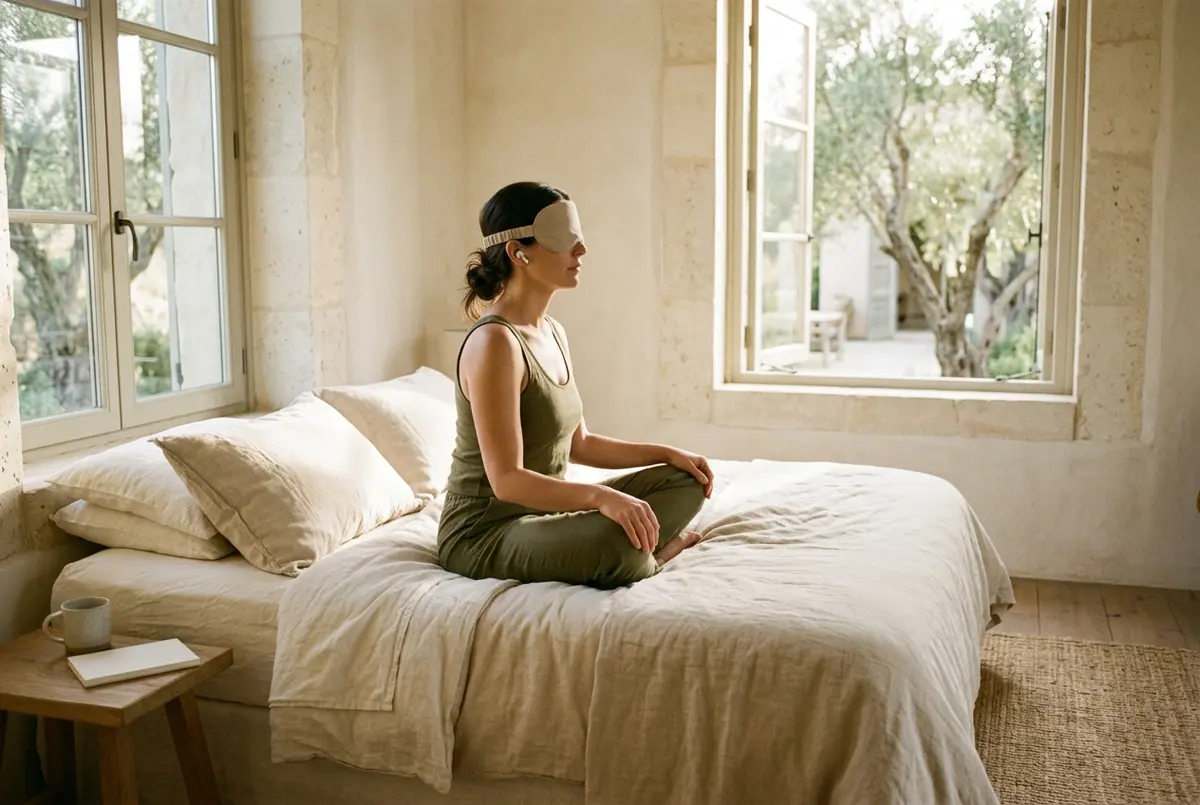
If you prefer a ready-made recording, choose one with a calm voice, little or no music, and a clear end. Our guide to what meditation music does explains which kinds of sound tend to settle rather than stimulate. Sleep headphones in a soft headband style are more comfortable than earbuds if you sleep on your side.
What if you are still awake when it ends?
That is fine and common, especially at first. Try this:
- Repeat only the breathing section, silently, for a few minutes.
- If you have been awake for what feels like about 20 minutes, get up and go to a dim room. Read something calm on paper until you feel sleepy, then return to bed.
- Use the same practice the next night. It usually works better once it is familiar.
A simple breathing rhythm can also be your anchor. The breathing pacer lets you set a gentle pattern, such as coherent breathing at about 5.5 seconds in and 5.5 seconds out.
When does insomnia need more than meditation?
Talk to your doctor if trouble falling or staying asleep happens on most nights for more than a few weeks, or if it affects your mood, work or driving. The American College of Physicians recommends cognitive behavioral therapy for insomnia (CBT-I) as the first treatment for chronic insomnia in adults. CBT-I is a structured program, usually over several weeks, that works on sleep timing, habits and the worry that builds up around sleep. It is available through clinicians and in some digital programs.
Also mention loud snoring, gasping at night, restless legs or low mood, since these can drive insomnia and need their own care. Night sweats in midlife are another common cause; our guide to menopause fatigue covers the sleep side. Meditation fits alongside all of this as a calming habit.
Good habits during the day make any meditation work better. Start with our sleep hygiene checklist and a calm beauty sleep night routine, and if stress is the main thing keeping you up, follow the timed evening routine to lower cortisol for sleep. If bad dreams are part of the problem, see our guide to sleep meditation techniques for nightmares.
Frequently Asked Questions
How long should a guided sleep meditation be?
Ten to twenty minutes suits most people. Shorter practices are easier to keep up every night, and a track that ends on its own is better than an endless one. If you often fall asleep within five minutes, a short practice is all you need.
Is it okay to fall asleep during the meditation?
Yes, that is the point of a sleep meditation. Unlike daytime meditation, where you try to stay alert, here drifting off means the practice has done its job. Keep the volume low so the end of the track does not wake you.
Can guided sleep meditation cure insomnia?
No. It can help you relax and may make falling asleep easier, but it is not a treatment for chronic insomnia on its own. If you have trouble sleeping most nights for several weeks, ask your doctor about CBT-I, the recommended first treatment.
Is it better to listen with headphones or a speaker?
A small speaker at low volume avoids anything in your ears and is easiest if you share a bed with someone who does not mind the sound. Soft headband headphones suit side sleepers and people with a partner who prefers silence. Avoid hard earbuds that press into your ear when you lie on your side.
What if a guided meditation makes me more alert?
Some voices, music or scripts simply do not suit everyone. Try a different voice, a version without music, or record your own. If any guided practice keeps you alert, switch to silent paced breathing or a body scan instead.