When you purchase through links on our site, we may earn an affiliate commission. Here's how it works.
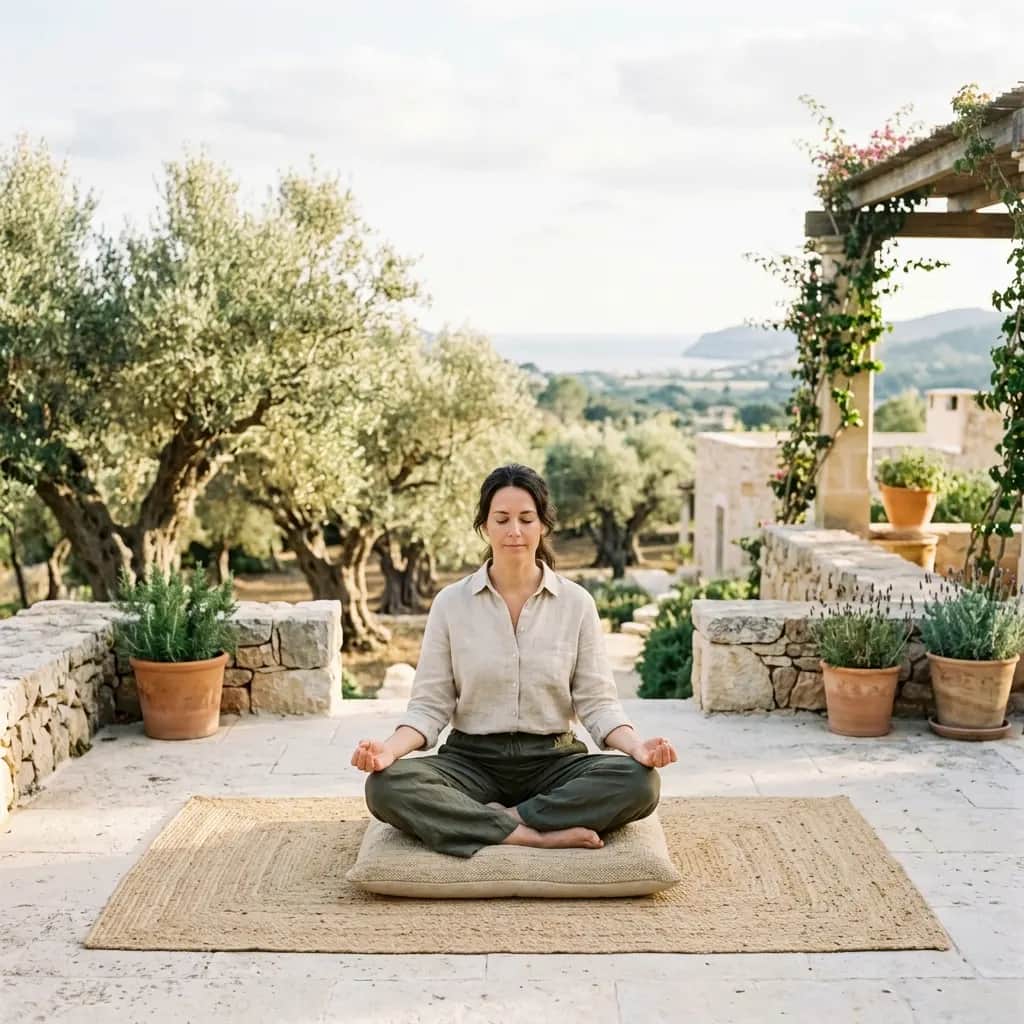
Meditation music does three practical things: it masks sudden, unpredictable noise, it gives your attention a steady sound to come back to, and over time it becomes a cue that tells your body it is time to settle. For most people, slow instrumental music or nature sound without lyrics works best, because words tend to pull the mind back into thinking.
What it does not do, as far as good evidence shows, is heal the body through special frequencies or "tune" your brainwaves on demand. Below we cover what to choose for sleep, focus or breathwork, what to avoid, and how to build a simple 20-minute playlist.
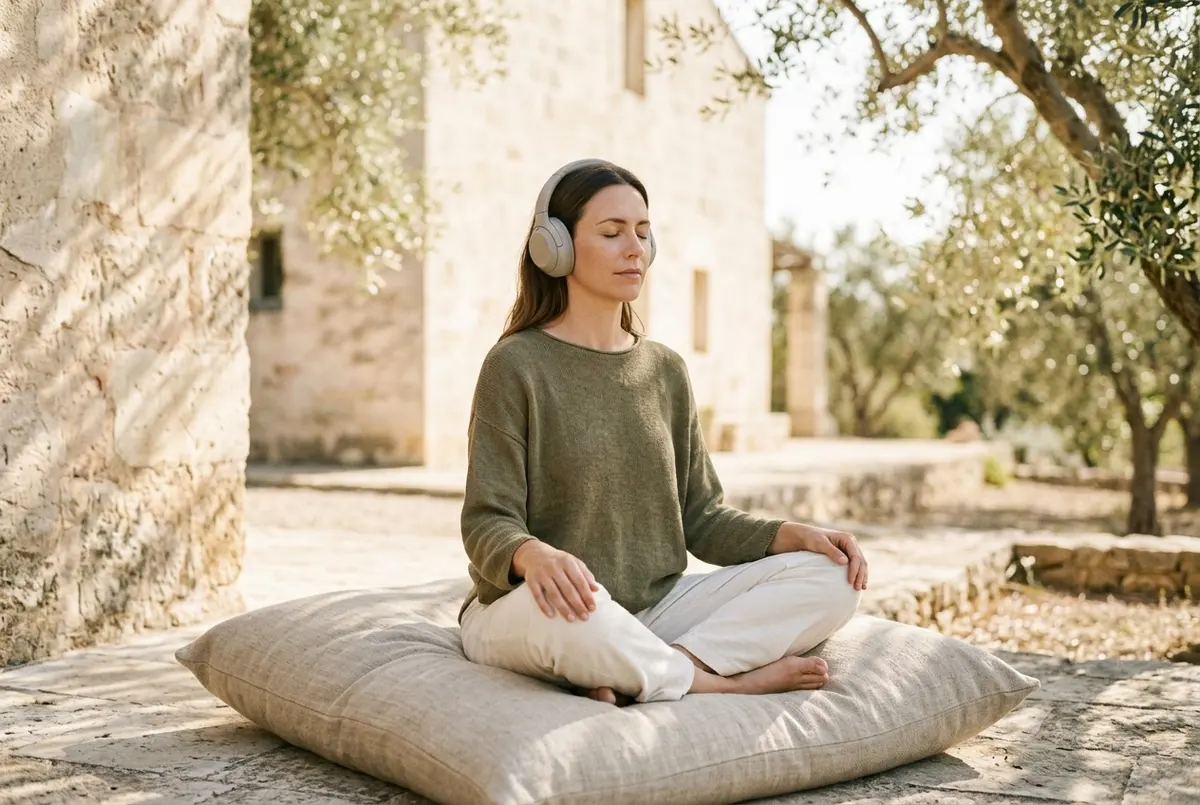
What does meditation music actually do?
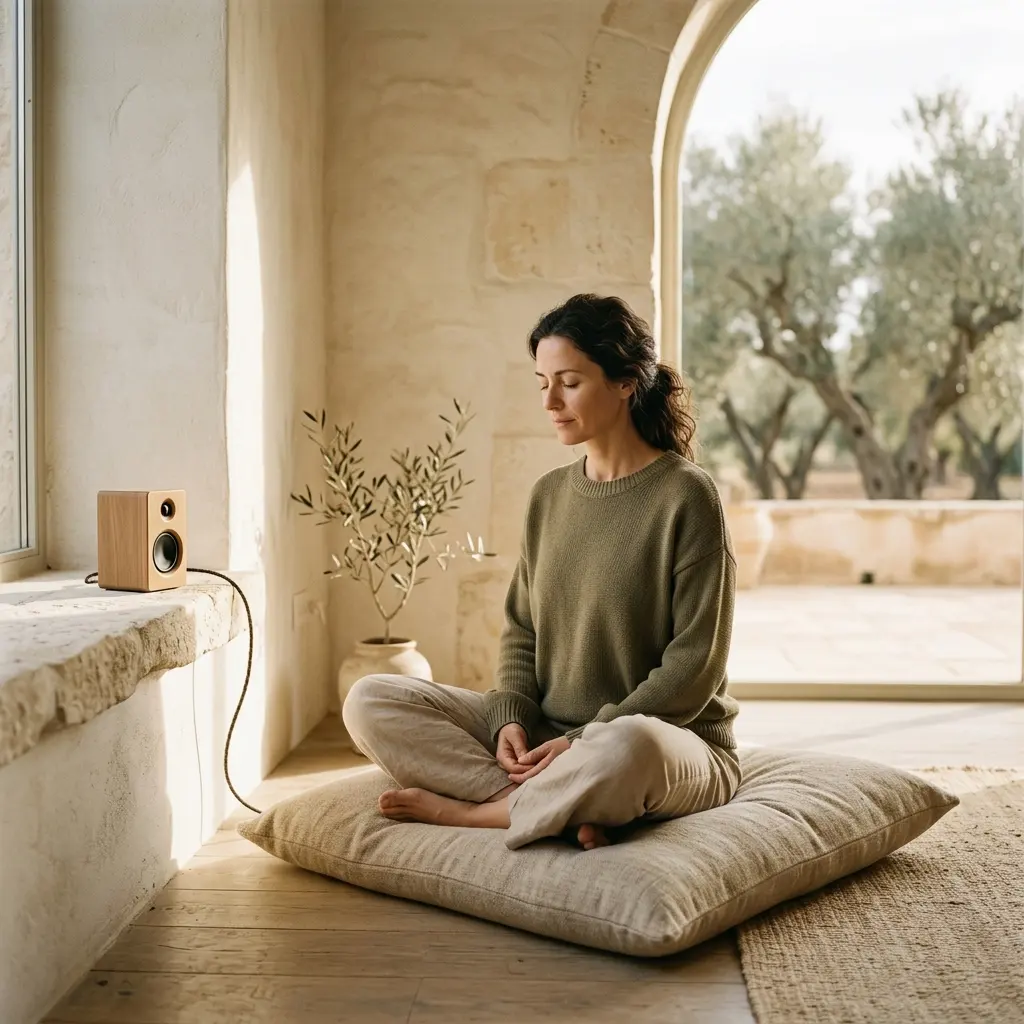
1. It masks noise. A dog barking, a door, traffic: sudden sounds grab attention because they are unpredictable. A steady layer of soft sound makes them less jarring, which is the same idea behind the white noise machine in our anti-stress toolkit.
2. It gives attention an anchor. In mindfulness practice the anchor is usually the breath. Some people find the breath too subtle, especially when they are wound up. A slow, sustained tone or a gentle rain track is easier to follow, and when your mind wanders you have something clear to return to. Sound anchoring is one of our mindfulness techniques for sleep for exactly this reason.
3. It becomes a cue. Play the same track every time you sit down, and after a couple of weeks the first notes alone start to signal "we are slowing down now." This conditioning effect is one of the most useful and least talked-about reasons to use music.
For sleep specifically, the evidence is reasonably encouraging. A 2022 Cochrane review of music for insomnia pooled 13 trials and found that listening to music improved self-reported sleep quality in adults with insomnia, though evidence for other sleep outcomes was too limited to draw conclusions.
What meditation music does not do
You will find many tracks promising to heal, detox or "activate" something with a specific frequency. We found no good evidence that particular frequencies heal the body or reliably change brain states in the way these titles suggest. If a 432 Hz track or a binaural beat relaxes you, enjoy it. Choose it because you like how it sounds, not because of what the title claims.
Music is also not a treatment for anxiety or insomnia. It works best alongside the basics in our sleep hygiene checklist. If either is affecting your daily life, talk to your doctor.
Which type of meditation music should you choose?
Match the music to what you are using it for. The table below is our quick guide.
| Use | Good choices | Look for | Avoid |
|---|---|---|---|
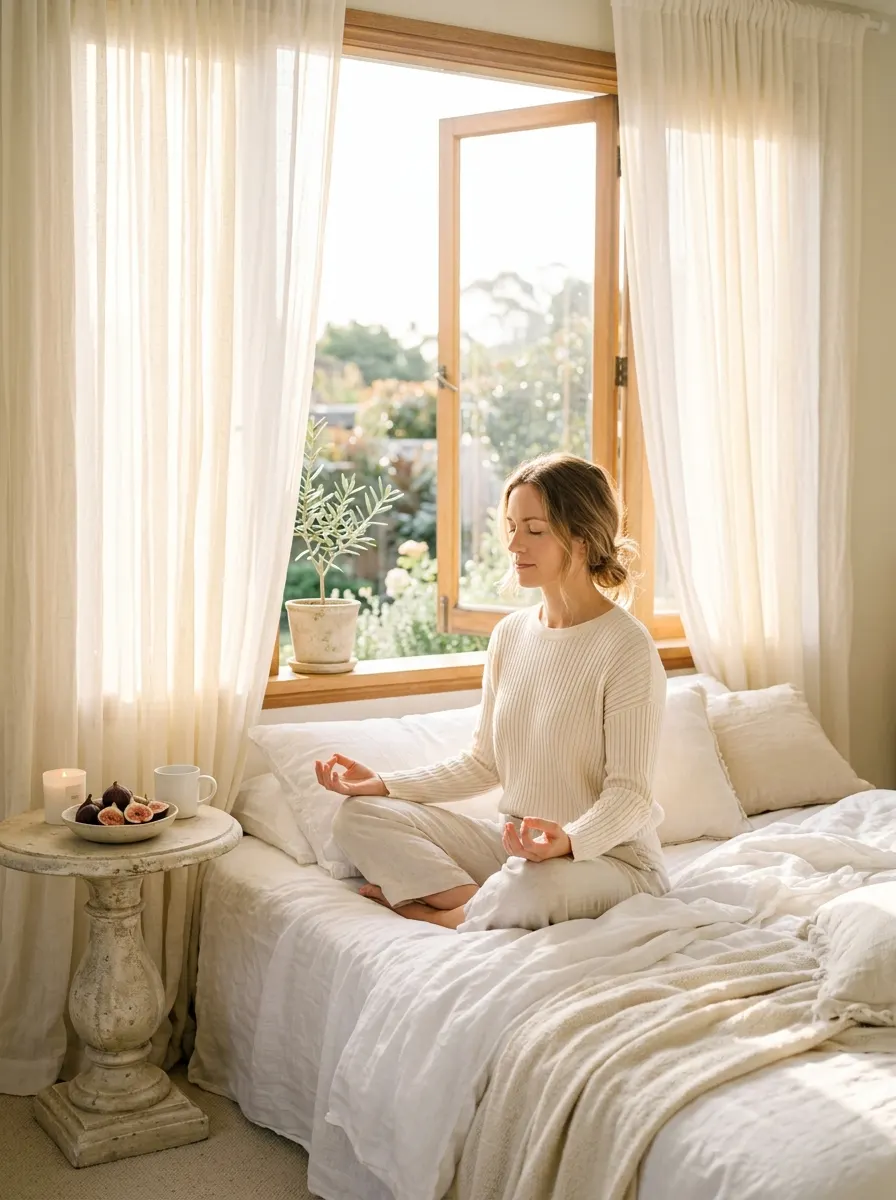
| Falling asleep | Soft ambient pads, rain, slow piano | Very slow or no beat, steady volume, long track or sleep timer | Lyrics, sudden crescendos, ads between tracks |
| Breath practice | Sustained tones, singing bowls, slow drones | A tempo slow enough to breathe with, or no beat at all | Busy rhythms that compete with your breathing |
| Morning meditation | Gentle acoustic instrumentals, birdsong | Calm but not sleepy; a clear start and end | Anything that makes you drowsy before work |
| Focus while working | Ambient electronic, quiet instrumental, nature sound | Low volume, predictable structure | Songs you know the words to |
| Body scan or yoga nidra | Soft drones, very quiet nature sound | Barely-there background so a voice can lead | Music louder than the guide's voice |
Three rules that hold across all uses:
- No lyrics. Many people find that voices grab attention, even in a language they do not speak. Wordless humming or chant is a gray area: try it and notice.
- Steady volume. Sudden swells or drops pull you out of the practice. Keep the volume just loud enough to cover background noise.
- No interruptions. Free streaming tiers often play ads between tracks. Download the playlist or use a single long track.
For a body scan or yoga nidra, keep music so quiet that the voice always leads. For focus at work, low background sound pairs well with the short resets in our guide to reducing stress at work.
How to build a 20-minute meditation playlist
You can do this once in about 15 minutes, and then reuse it for months.
- Pick one sound family. Piano, bowls, rain or ambient pads. Mixing styles makes the transitions noticeable.
- Choose an opener (about 3 minutes): the gentlest track you have. This becomes your "settling" cue.
- Add the middle (about 14 minutes): two or three tracks with a similar tempo and feel. Listen to the joins between them; if one jumps in volume or tempo, swap it.
- Add a closer (about 3 minutes): something slightly brighter if it is a morning practice, or the quietest track you have if it is for bedtime.
- Test it once while meditating. Note any moment that pulled you out, and replace that track.
- Keep it the same for two weeks. Familiarity is what turns it into a cue.
If you prefer to breathe to a visual rhythm instead, the free breathing pacer can run alongside your playlist.
Two albums worth trying
If you would rather buy one well-made album than build a playlist, these two are long, instrumental and consistent in mood.
For a calm, uncluttered sound: Calm Within by Laura Sullivan
Calm Within: Music for Relaxation of Body and Mind
An instrumental album of about an hour, released in 2015, built for relaxation. Who it's for: anyone who wants a single album to press play on for meditation or a wind-down. Downside: the gentle, even style can feel too soft if you need something to mask a noisy room; layer it over a fan if so.
For tone-based practice: Chakra Suite by Steven Halpern
Chakra Suite: Music for Meditation, Healing, and Inner Peace
A reissue of Steven Halpern's 1975 debut, with its first seven pieces each built around a single keynote. Who it's for: people who like sustained, tonal music for breath practice or slow yoga, such as a gentle tantric yoga sequence. Downside: the chakra framing is spiritual rather than scientific; enjoy it as music, and skip it if that framing does not suit you.
Music, sound baths and guided meditation: which fits you?
- Recorded music is the easiest to start with and fits any time of day.
- A sound bath uses live bowls and gongs around you for a longer, deeper rest; see our sound bath guide for what to expect.
- A guided meditation uses a voice to lead you, which many people find easiest at night; our guided sleep meditation guide explains how to use one.
For a short morning practice that works with or without music, try the 5-minute morning mindfulness routine.
Frequently Asked Questions
What does meditation music do to your brain?
The best-supported effects are simple: it masks distracting noise, gives your attention a steady anchor, and with repeated use becomes a cue to relax. Research suggests music may improve self-reported sleep quality for people with insomnia. Claims about specific frequencies changing brainwaves are not well supported.
Is it better to meditate with or without music?
Both are valid. Silence makes it easier to notice your own breath and thoughts, while music helps people who find silence restless or live somewhere noisy. You can start with music and gradually lower the volume over a few weeks if you want to practice in silence.
What kind of music is best for meditation?
Slow, steady instrumental music or nature sound without lyrics suits most people. Choose music with predictable volume and no sudden changes. The best choice is the one you find calming and can use consistently.
Do 432 Hz or binaural beat tracks work better?
We found no good evidence that these tracks heal or work better than other calm music. If you enjoy them and they help you settle, they are fine to use. Choose them for how they sound to you rather than for the claims in the title.
Can I fall asleep to meditation music every night?
Many people do, and research suggests music may help self-reported sleep quality. Use a sleep timer or a single long track so the music does not stop and start, and keep the volume low. Starting it as part of an evening wind-down to lower cortisol helps it become a sleep cue. If sleep problems last for weeks, talk to your doctor.