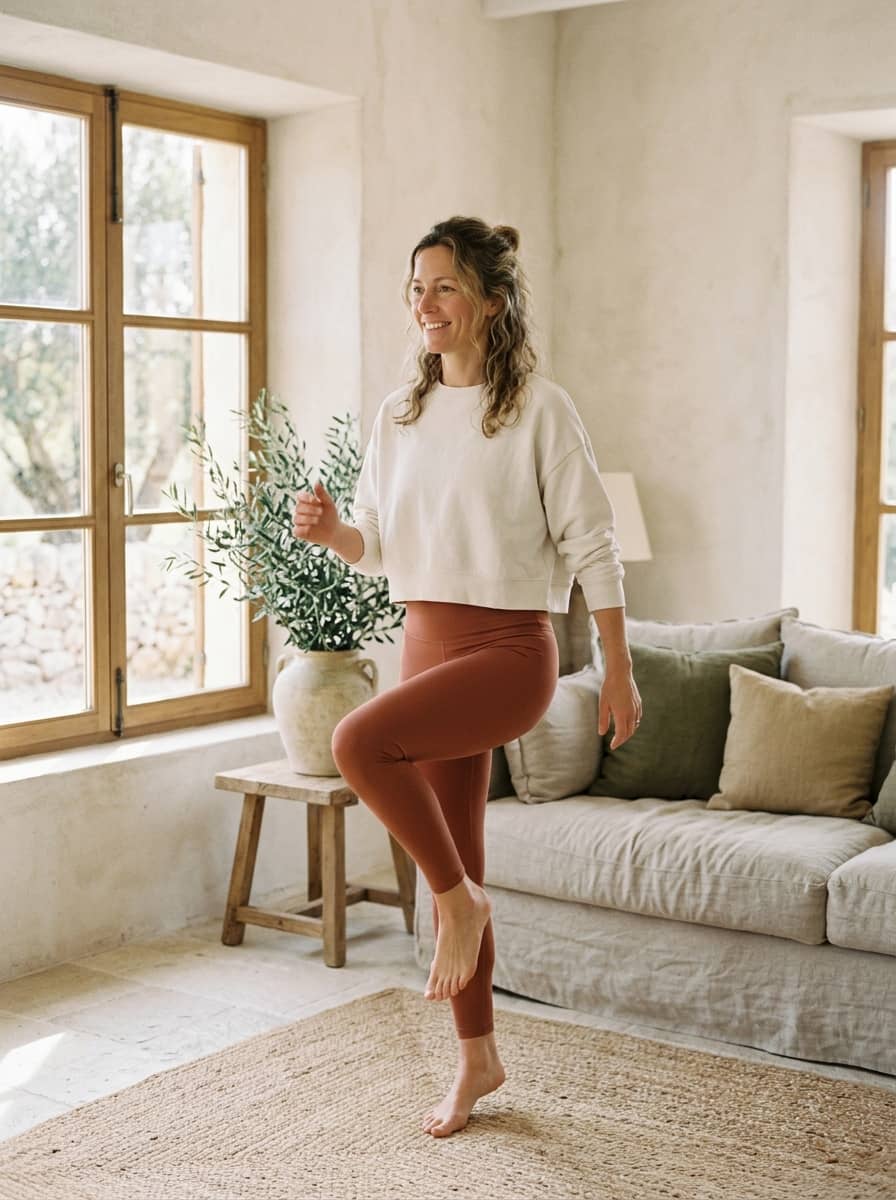
A 10 minute walking workout at home needs no treadmill, no weights and barely any floor space. You march in place to warm up, mix in side steps and knee lifts, then alternate short brisk bursts with easy recovery walking before cooling down. Done most days, this kind of gentle cardio may support heart health, circulation, energy and mood, and it slots neatly into even the busiest morning.
If you came here for a workout you can actually start right now, you are in the right place. Below is one complete follow-along session you can repeat anytime, with form cues for every move, a gentler and a stronger version, a simple timer setting, and ideas for fitting it into small spaces, apartments and busy days. No gear, no gym: just you, a small patch of floor and ten focused minutes.
Why a 10-Minute Walk at Home Is Worth It
Short sessions count. Movement adds up across your day, and many people find that a tidy 10-minute block is far easier to commit to than a long outing. You skip the weather, the drive and the self-consciousness, and you still get your blood moving.
Walking in place engages your legs, core and heart without high impact, which makes it friendly for a wide range of fitness levels. Regular moderate movement may support cardiovascular health, healthy blood sugar and better sleep. As always, if you are new to exercise, pregnant or managing a health condition, check in with your healthcare provider before beginning.
Who This Workout Is For
This session is a good fit if you:
- Are getting back into exercise and want something that feels doable today
- Live in an apartment or small home with no room for a treadmill
- Work from home and want a movement break between calls
- Care for children or a relative and cannot leave the house for long
- Already walk outdoors but want a backup for rain, heat, ice or dark evenings
It is not meant to replace longer walks if you enjoy them. Think of it as the session that keeps your habit alive on the days a longer walk will not happen.
What You Need Before You Start
Almost nothing, which is the point. Gather these quick basics so your 10 minutes stay smooth:
- A space about the size of a bath mat, clear of rugs that slide, toys and cords
- Supportive sneakers (see our guide to the best shoes for Japanese walking and daily walks)
- A glass of water nearby
- A clear timer so you can focus on moving, not counting
Shoes or bare feet? Shoes are kinder to your feet and knees on hard floors, and socks on wood or tile are a slip risk. If you prefer bare feet, use an exercise mat or a carpeted spot and keep the moves low.
Living upstairs? Marching is quiet if you roll through your feet and land softly. Skip any bouncing or jumping, and stand on a rug or mat to soften the sound.
A chair within reach. Place a sturdy chair beside you. You may never touch it, but it is there if you feel unsteady during knee lifts.
The 10-Minute Walking Workout (Follow Along)
Move through these phases in order. Keep your posture tall, shoulders relaxed and core gently engaged throughout. Pump your arms naturally to raise your effort.
| Time | Move | Effort |
|---|---|---|
| 0:00 to 1:30 | Easy march in place | Warm-up |
| 1:30 to 3:00 | March with arm pumps | Light to moderate |
| 3:00 to 4:00 | Side steps (step out and in) | Moderate |
| 4:00 to 4:30 | Brisk march (fast feet) | Brisk interval |
| 4:30 to 5:30 | Easy march | Recovery |
| 5:30 to 6:30 | Knee lifts (alternating) | Moderate |
| 6:30 to 7:00 | Brisk march (fast feet) | Brisk interval |
| 7:00 to 8:00 | Side steps with reach | Moderate |
| 8:00 to 8:30 | Brisk march (fast feet) | Brisk interval |
| 8:30 to 10:00 | Slow march, then gentle stretch | Cool-down |
Minutes 0 to 3: Warm Up and Find Your Rhythm
Start with a relaxed march, lifting each foot just off the floor. After about 90 seconds, add natural arm swings and pick up the pace slightly. You want to feel your body waking up, not working hard yet.
Minutes 3 to 8: Add Variety and Intervals
Now the session gets a little more playful. Step side to side to engage your outer thighs, then alternate knee lifts to fire up your core and hip flexors. Sprinkle in the short 30-second brisk bursts shown in the table. During a brisk interval, quicken your feet and pump your arms until your breathing deepens but you can still speak in short sentences. Then ease back to a comfortable march to recover.
Minutes 8 to 10: Cool Down and Stretch
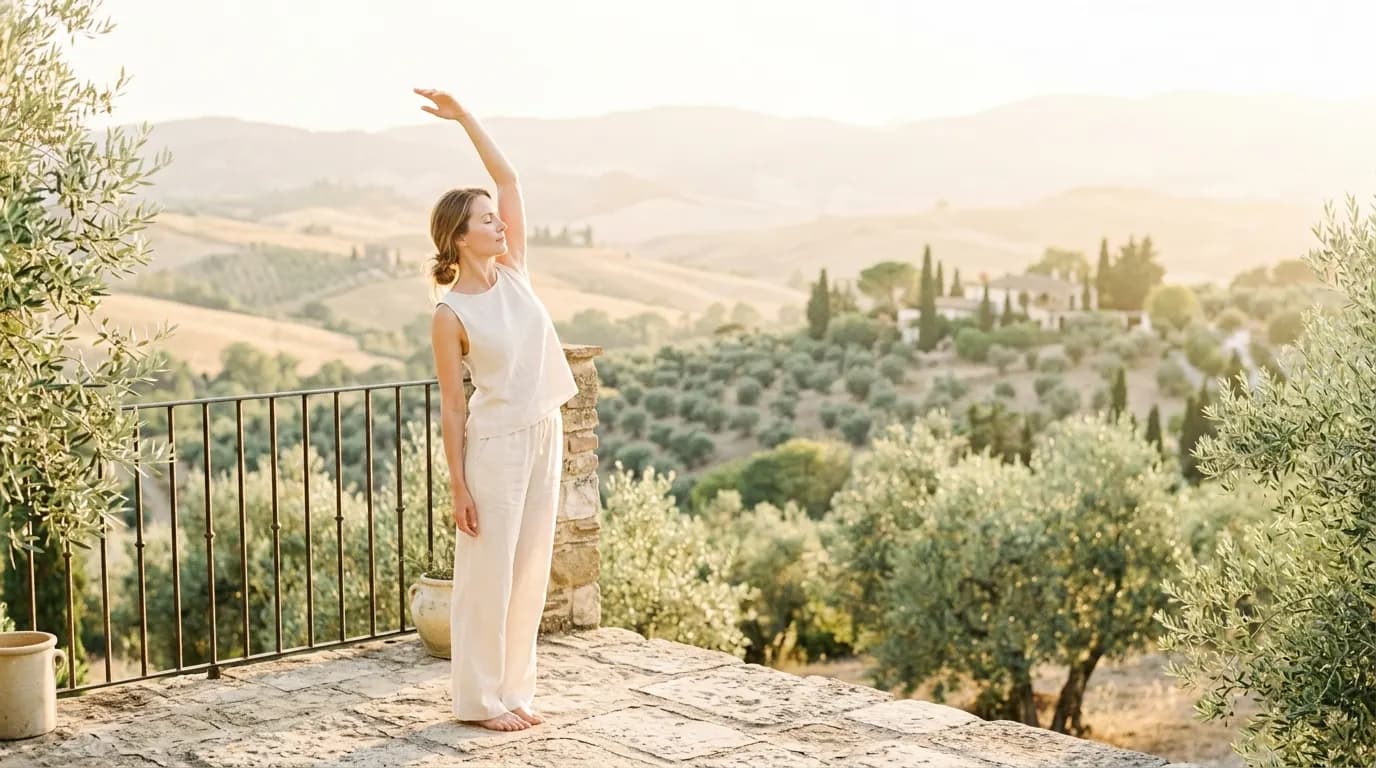
Slow your march gradually so your heart rate settles. Finish with a few easy stretches: reach overhead, roll your shoulders, and gently stretch your calves and hamstrings. This closing minute helps you feel calm and loose rather than rushed.
Form Cues for Each Move
Good form makes a small-space workout feel like real walking and keeps your knees and lower back comfortable.
Easy march. Stand tall, feet hip-width apart. Lift one heel, then the whole foot, and set it down softly, rolling from the ball of the foot to the heel. Arms swing loosely at your sides.
March with arm pumps. Bend your elbows to about a right angle and swing your arms from the shoulder, forward and back, not across your body. Your arms set the pace for your feet, so quicker arms make quicker steps.
Side steps. Step your right foot out to the side, bring the left to meet it, then step back the other way. Keep your toes pointing forward and your knees soft. If space is tight, step out and back in on one side, then switch.
Brisk march. The same as the easy march, only faster and with stronger arms. Aim for breathing that is clearly harder but still lets you say a short sentence. Lifting your knees a little higher raises the effort without needing more speed.
Knee lifts. Lift one knee toward hip height, lower it, then lift the other. Stay tall rather than leaning back. Hold the chair if you wobble; balance improves with practice.
Side steps with reach. As you step to the right, reach both arms up and toward the right. Step back and reach the other way. The reach brings in your upper body and adds a gentle stretch through your side.
For more on standing tall through all of this, our guide to posture correction has simple cues you can use while you march.
Prefer a Timer? Use This Simple Version
If you would rather not follow the table, there is a simpler version that only uses two speeds: a 3-minute easy warm-up, then 30 seconds brisk and 1 minute easy, repeated four times, finished with a minute of slow marching. That is ten minutes in total. Load it in one tap with this preset: 3 min warm-up, 30 seconds brisk, 1 minute easy, 4 rounds. The timer chimes at each change, so you can keep your eyes off the screen.
Three Versions: Gentle, Standard and Stronger
Pick the version that matches your body today. You can switch from day to day.
| Version | How it changes | Good for |
|---|---|---|
| Gentle | Low marches only, no brisk bursts, chair for balance, or march seated | Returning after illness, low-energy days, balance concerns |
| Standard | The follow-along table as written | Most days |
| Stronger | Higher knees, stronger arms, brisk bursts of 1 minute, or two rounds back to back | When the standard version feels easy for a couple of weeks |
To make it gentler
- Keep both feet lower and skip the brisk intervals
- Hold the back of a sturdy chair for balance
- March seated if standing feels like too much, lifting your knees and swinging your arms from the chair
To make it more challenging
- Lift your knees higher and pump your arms with more intention
- Stretch the brisk bursts to a full minute
- Add a second round for a 20-minute session
- Wear a light vest once the moves feel easy, following our gentle weighted vest plan at home
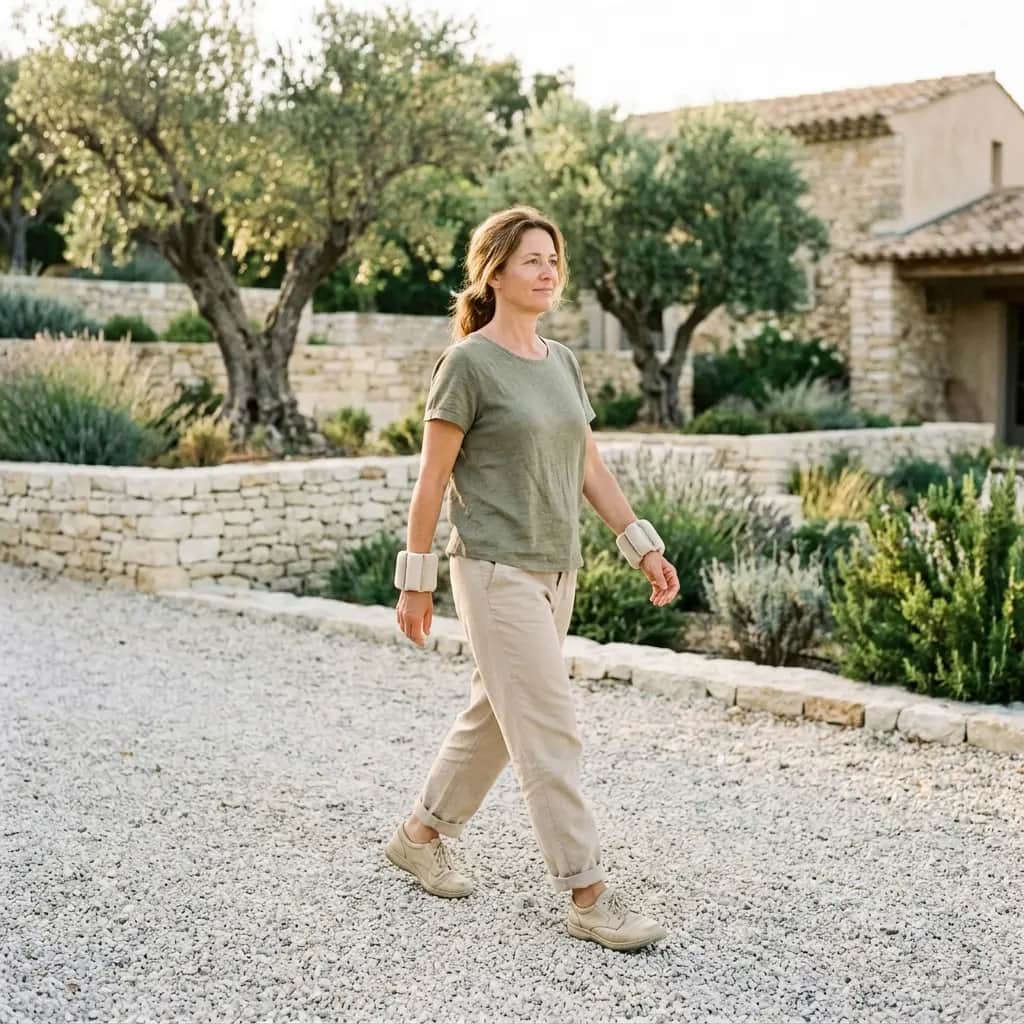
- Introduce light wrist weights once you feel confident, as explained in our look at whether wrist weights are safe for walking
Light ankle or wrist weights can nudge the intensity up, but they are not essential and are best added gradually. If you are curious about what they truly do, our honest breakdown of whether ankle and wrist weights are actually effective separates the hype from the science.
Common Mistakes to Avoid
- Stomping. Landing hard is noisy and jars your knees. Roll through your feet and land softly.
- Shuffling. Barely lifting your feet turns the workout into standing still. Lift each foot clearly off the floor, even in the easy blocks.
- Leaning back on knee lifts. Lift only as high as you can while staying tall.
- Holding your breath in brisk bursts. Breathe steadily. If you cannot speak at all, slow down.
- Skipping the cool-down. Stopping suddenly can leave you lightheaded. Take the last minute and a half to slow down.
- Waiting for a free 30 minutes. Ten minutes now beats a longer workout that never happens.
How to Fit It Into Your Day
The easiest way to keep a short workout is to attach it to something you already do. A few ideas:
- After morning coffee, before you open your email
- Between work calls, as a reset instead of scrolling. Our desk yoga poses pair well with it if you sit a lot.
- While dinner cooks, in the kitchen doorway
- During a TV episode, marching through one segment
Several short sessions across a day add up. Two or three of these on a busy day, or one plus a walk around the block, keeps you moving without a big time block. For more short routines that fit around work and family, see our quick exercises for busy lifestyles.
Where This Fits With Japanese Walking
This session borrows the brisk and easy rhythm of interval walking, but in much shorter pieces. Stretch it to 3-minute blocks and five rounds and you have the Japanese walking method, the natural next step once this session feels easy. On a day when a full 30-minute interval walk will not happen, a 10-minute session keeps the habit going, even though it does not count as one of your four interval days. If you want to try full intervals indoors, the at-home format in our Japanese walking workouts shows how.
Making It a Habit
One session is a lovely start, but consistency is where the real benefits live. Even on low-energy days, showing up for the gentle version keeps your momentum alive. A simple week might look like the standard version on five days, the gentle version on one, and a rest day.
When you feel ready for structure and progression, step into our indoor walking challenge, a four-week plan that builds naturally on this very workout, or the 30-day walking challenge if you would like to take your walks outdoors as well. You can explore more gentle movement ideas across our exercise section too.
Frequently Asked Questions
Does walking in place really count as exercise?
Yes. It raises your heart rate and uses your major muscles. Lifting your knees and pumping your arms during brisk bursts makes it closer in effort to a brisk outdoor walk.
How often should I do a 10-minute walking workout?
Most days of the week is a reasonable goal, but even a few sessions weekly is meaningful. On busy days, two or three short sessions spread across the day work too.
Will a 10-minute walk at home help with weight?
Movement supports a healthy routine alongside balanced eating, sleep and strength work. For realistic expectations, see Japanese walking for weight loss: what it can and can't do.
Is 10 minutes of walking enough?
Ten minutes is a real start, and several short sessions across a day add up. If you want a longer structured session later, build toward the 30-minute Japanese walking routine.
Can I do this workout if I have bad knees?
Many people with sensitive knees find marching in place comfortable because it is low impact. Keep the knee lifts low, land softly, skip the side steps if they bother you, and check with your doctor or physical therapist if you have pain.
Is it okay to do this workout barefoot?
It can be, on a mat or carpet with low, soft steps. On hard floors, supportive shoes are more comfortable and reduce the risk of slipping.
The Bottom Line
A 10 minute walking workout at home proves you do not need equipment, space or perfect conditions to care for your body. March, side step, lift and sprinkle in brisk bursts, and you have a complete session that may support your heart, energy and mood. Use the gentle version on low days, the stronger version when the standard feels easy, and the timer preset when you want the counting done for you. Start with one round today, repeat it on the days you can, and when you are ready to build from here, let our indoor walking challenge guide your next four weeks.