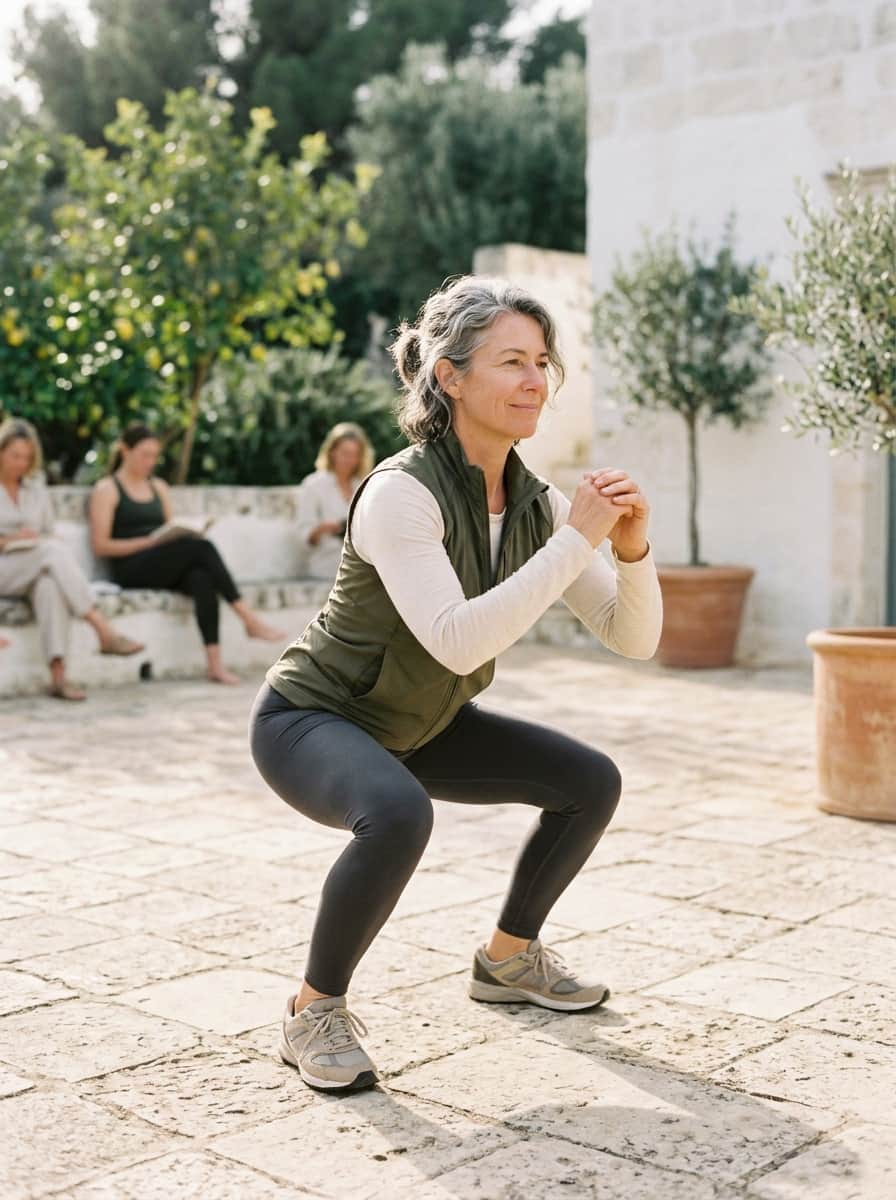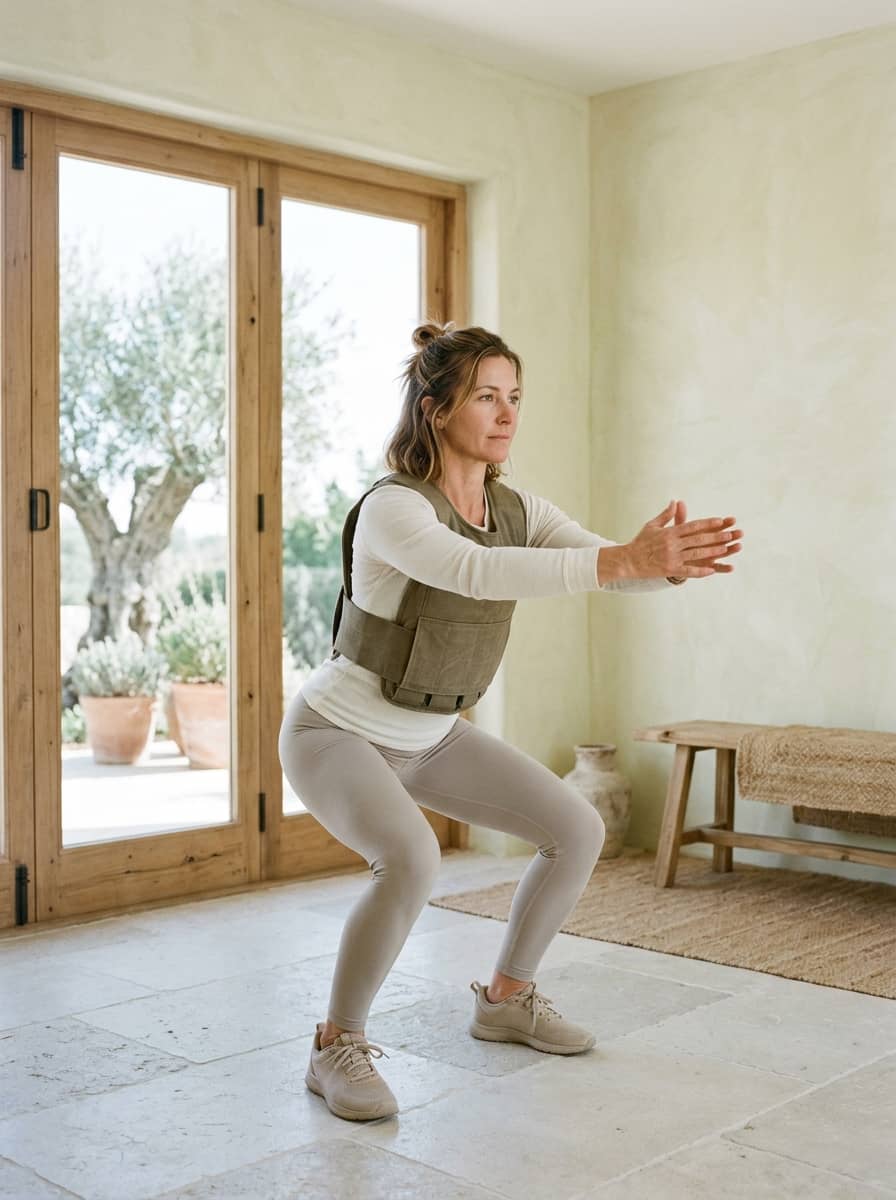
A gentle weighted vest workout for women starts with a light vest (about 4 to 8 pounds, or roughly 5% of your body weight or less) and a handful of low-impact moves: squats to a chair, step-ups, wall push-ups, marching in place and short weighted carries. Aim for 2-3 rounds, two to three times a week, keeping each move slow and controlled. You add weight only once the current load feels genuinely easy and your form stays clean.
If you have been curious about weighted vests but worried they would be too intense on your knees, back or balance, this plan is designed exactly for you. Nothing here involves jumping, running or heavy lifting. Instead, you let the extra load gently challenge your muscles and bones during everyday movements, which is one reason many women find a vest an approachable way to build strength at home. For the bigger picture on how vests work and who they suit, see our guide to weighted vests for women.
Why a Light Vest Works So Well for Beginners
A weighted vest spreads load evenly across your torso rather than pulling at one joint, so it tends to feel more natural than holding dumbbells. That even distribution is part of why many women find a vest comfortable for walking and basic strength moves alike.
The goal early on is not to feel crushed. A light vest simply asks your legs, core and postural muscles to work a little harder through movements you already know. Research suggests that adding modest load to weight-bearing activity may support muscle and bone health over time, though results depend on consistency and your overall routine. As always, if you have osteoporosis, a heart condition, joint issues or you are pregnant, check with a healthcare professional before adding weight.
How to Choose Your Starting Weight
Start lighter than you think you need. A vest you can wear comfortably for the whole session beats a heavy one that wrecks your form by round two.
| Your situation | Suggested starting weight |
|---|---|
| New to strength training | 4-6 lb |
| Active but new to vests | 6-8 lb |
| Comfortable and want more | up to about 5% body weight |
| Returning after a break | 4 lb, rebuild slowly |
When you are ready to buy, our roundup of the best weighted vests for women covers comfortable, secure options, and if you want a vest mainly for walking, see our best weighted vests for walking picks. Fuller figures will appreciate our guide to weighted vests for plus-size women.
The Gentle Beginner Weighted Vest Workout
Warm up first with two minutes of easy marching and a few shoulder rolls, no vest, just to loosen up. Then put the vest on and move through these five exercises. Beginners do one round; work toward 2-3 rounds as you feel stronger.
1. Squats to a Chair (45 seconds)
Stand in front of a sturdy chair, feet hip-width apart. Push your hips back and lower until your bottom lightly touches the seat, then stand tall. The chair gives you a safe target and a reassuring backstop.
Form cue: keep your chest lifted and let your knees track over your toes, not caving inward.
2. Step-Ups (45 seconds each side)
Use a low, stable step or the bottom stair. Step up with one foot, bring the other to meet it, then step down with control. Switch your lead leg halfway through.
Form cue: press through your whole foot, not just the toes, and avoid pushing off the back leg.
3. Wall Push-Ups (45 seconds)
Stand an arm's length from a wall, hands at shoulder height. Bend your elbows to bring your chest toward the wall, then press back. The vest adds a little extra load to your upper body without any floor work.
Form cue: keep your body in one straight line from head to heels, core gently engaged.
4. Marching in Place (60 seconds)
Lift each knee to a comfortable height, arms swinging naturally. This raises your heart rate gently and lets the vest build endurance through simple movement. If you enjoy this, a vest pairs beautifully with Japanese walking with a weighted vest.
Form cue: stand tall, stay light on your feet and breathe steadily.
5. Weighted Carry (60 seconds)
Simply walk slowly around your home wearing the vest, or add a light grocery bag in each hand. Carries quietly build core stability and posture.
Form cue: walk with shoulders back and ribs stacked over hips, taking smooth, even steps.
Finish with a gentle cool-down: remove the vest and stretch your calves, hamstrings and chest for a minute or two.
Tempo and Breathing Cues
Slow is the secret ingredient in a light vest workout. With only a few extra pounds, the way you move matters as much as the load.
- Lower for a count of three, rise for a count of one or two. On squats and step-downs, the slow lowering phase is where your legs do much of the useful work.
- Breathe out on the effort. Exhale as you stand up, step up or press away from the wall. Inhale as you lower.
- Never hold your breath. Holding your breath while straining raises pressure in your chest and belly. If you notice yourself doing it, the move is too hard for now.
- Pause at the top. A one-second pause standing tall before the next rep keeps you from bouncing through the reps.
Moving this way also protects your pelvic floor. If you notice leaking or a feeling of heaviness during any move, stop that exercise and ask a pelvic health physiotherapist before continuing with load.
Easier and Harder Versions of Each Move
Every exercise has a gentler and a stronger version. Start where you can do the full 45 or 60 seconds with good form, and move one column to the right only when that feels easy for two sessions in a row.
| Move | Easier | Standard | Harder |
|---|---|---|---|
| Squat | Sit fully on a higher chair, stand back up | Lightly touch the seat, stand | Hover just above the seat for one second |
| Step-up | Lowest step, hand on the rail | Bottom stair, no hands | Slower lowering, three counts down |
| Wall push-up | Stand closer to the wall | Arm's length away | Hands on a sturdy kitchen counter |
| March | Small knee lifts, hand on a chair | Comfortable knee lifts | Higher knees with a one-second hold |
| Carry | Vest only, slow laps | Vest plus light bag in each hand | Bag in one hand only, stay upright |
The harder column is not a goal you have to reach. It is simply a way to make the workout more challenging without buying a heavier vest.
Your Weekly Schedule
A vest workout fits best into a week that also includes walking, rest and something gentle for mobility. Here is a sample week that many beginners find manageable:
| Day | What to do | Vest? |
|---|---|---|
| Monday | Gentle vest workout, 1 to 3 rounds | Yes |
| Tuesday | Japanese walking, 3 minutes brisk, 3 minutes easy | No |
| Wednesday | Rest or light stretching | No |
| Thursday | Gentle vest workout | Yes |
| Friday | Japanese walking or an easy walk | No |
| Saturday | Longer easy walk, vest optional once you are comfortable | Optional |
| Sunday | Rest, or a short mobility session | No |
For walking days, the free Japanese walking timer runs the intervals for you. On a mobility day, a short wall Pilates session is a calm, unloaded way to work on core and posture. If two vest workouts a week feel like plenty, keep it at two. More sessions are not better if they leave you sore.
How the Vest Should Feel for Home Workouts
For squats and step-ups the vest needs to stay close to your body. Tighten the straps until it does not bounce or slide when you step up, but not so tight that it squeezes your ribs or makes deep breaths hard. The weight should sit on your upper torso, above your hips, and feel even front to back. If the vest pulls you forward on squats, it is too heavy or sits too low. Our weighted vest guide for women covers fit in more detail.
Common Mistakes
- Starting too heavy. If your knees cave in or your back rounds on the first squat, the vest is too heavy. Take packs out.
- Rushing the reps. Fast, bouncy reps feel productive but put more stress on knees and back. Slow down.
- Wearing the vest all day. Long hours of wear around the house add up. Keep it for the workout and a few walks a week.
- Skipping the warm-up. Two minutes of marching without the vest prepares your joints for load.
- Changing two things at once. Add a round or add weight, never both in the same week.
- Slumping on carries. Stand tall, as described in our posture guide, so the vest loads your posture muscles rather than your lower back.
Signs to scale back
Pause the vest for a week and do the plan with bodyweight only if you notice joint pain during a move, pain that lasts beyond the next day, neck or shoulder tension from the straps, or dizziness. Normal muscle tiredness that fades within a day or two is fine. Anything sharp, swelling or worsening is a reason to stop and see a healthcare professional.
How Often and How to Progress
Two to three sessions a week, with a rest day in between, suits most beginners. Your muscles adapt during recovery, not just during the workout, so those rest days matter.
Progress in this order, changing only one thing at a time:
- Weeks 1-2: one round, focus purely on form.
- Weeks 3-4: build to two rounds.
- Weeks 5-6: work toward three rounds.
- After that: add a small amount of weight (1-2 lb), then drop back to two rounds and rebuild.
This slow, layered approach keeps the workout kind to your joints while still challenging you. For more low-impact ideas to rotate in, our exercise hub and a simple 10-minute walking workout at home are easy companions, and on walking days the Japanese walking method adds structured cardio without any load at all.
Who Should Skip or Modify
A weighted vest is not right for everyone, and there is no shame in waiting or scaling back.
Consider skipping the vest, or speaking with your doctor or physical therapist first, if you:
- Are pregnant or recently postpartum
- Have uncontrolled high blood pressure or a heart condition
- Live with significant back, hip or knee pain
- Have balance concerns or a history of falls
- Are recovering from surgery or an injury
If balance is your main worry, you may prefer to build a base with bodyweight moves first, or explore gentler tools covered across our health and wellness content. The vest will still be there when you feel ready.
Frequently Asked Questions
How heavy should a weighted vest be for a beginner workout?
Start at about 5 percent of your body weight or less, which is 4 to 8 lb for many women. Add 1 to 2 lb only when the current load feels easy and your form stays clean.
How often should I do a weighted vest workout?
Two to three sessions a week, with a rest day in between, suits most beginners. Your muscles adapt during recovery, so the rest days matter.
Can a weighted vest workout replace strength training?
For beginners it is a gentle start, but a light vest offers limited load. As you get stronger, adding dumbbells, bands or a structured strength program builds strength further.
Can I do this workout without a vest?
Yes. Do the same five moves with bodyweight only until your form is steady. Many women do the plan without a vest for a few weeks first, and it is a useful workout either way.
How long does the gentle vest workout take?
One round takes about five minutes plus warm-up and cool-down, so a full session of three rounds fits into 20 minutes. That makes it easy to pair with a walk on the same day if you feel good.
Is a weighted vest workout safe if I have joint pain?
Check with your doctor or a physical therapist first. Back, hip or knee pain, osteoporosis, pregnancy and balance concerns are all reasons to get advice before adding load.
The Bottom Line
A weighted vest workout for women does not have to be intense or intimidating. Start with a light vest, move slowly through squats to a chair, step-ups, wall push-ups, marching and carries, and let consistency do the work. Keep your form clean, add weight only when the current load feels easy, and rest between sessions. If anything feels off in your joints or balance, pause and check in with a healthcare professional. Gentle and steady is exactly how lasting strength is built.