
When you purchase through links on our site, we may earn an affiliate commission. Here's how it works.
A phone lock box is a container with a timer that will not open until the countdown ends, so a break from your phone holds even when your willpower does not. For most homes, the Mindsight Timed Lock Box is our top pick: it holds 3 to 4 phones, lets you choose between three commitment levels and has a charging slot. If you want no way out at all, the Kitchen Safe has no override. For a single phone you can carry to work, the Mindsight Personal box is the compact choice.
Lock boxes are not magic and they are not a punishment. They are a simple way to make one decision, once, while you are calm, and let the timer keep it for you at 9 pm when you are tired and the phone is calling. Below: six boxes compared on size, emergency options and charging, who each one suits, and how to use a box so it actually changes your evenings.
We have not tested these boxes ourselves. Our picks are based on the specifications and details in each listing, and we checked that each was available when we wrote this guide.
Our Top Pick
Mindsight Timed Lock Box is the most flexible box for a household: it fits 3 to 4 phones, the timer runs from 1 minute to 30 days, and you choose how strict it is, from a plain lockbox to a mode with no unlock code.
Quick Comparison
| Product | Best For | Holds | Way out early |
|---|---|---|---|
| Mindsight Timed Lock Box | Families and couples | 3 to 4 phones, charging slot | Code in Standard mode; support only in Fortress mode |
| Kitchen Safe Medium | No override at all | One phone or small items, clear base | None until the timer ends |
| Mindsight Personal Timed Lock Box | One phone, home or office | 1 phone in a standard case, charging slot | Code in Standard mode; support only in Fortress mode |
| Vaydeer Metal Time Lock Box | A sturdier metal box | Phones and small items, cable hole | Emergency unlock steps |
| Vaydeer Phone Lock Box with Bluetooth | Staying reachable for calls | Phones up to 6.9 inches | Emergency unlock steps |
| ySky Timed Lock Box | Bags and travel | Phones up to 6.7 inches | Five emergency unlocks in its lifetime |
Best Overall: Mindsight Timed Lock Box
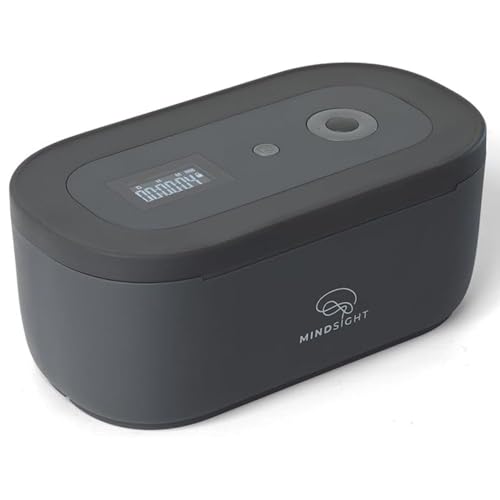
This is the box to put on the kitchen counter or a hallway shelf for the whole household. The listing gives an outside size of about 9 by 5 by 4 inches and room for 3 to 4 phones, depending on thickness (no tablets). You set the countdown anywhere from 1 minute to 30 days and pick a commitment level: Lockbox only (no timer), Standard mode (timed, with an unlock code) or Fortress mode (timed, with no code; the maker can provide an override through customer support in an emergency). A charging slot lets phones charge while locked, and it runs on two AA batteries, which are included.
The three levels are the real strength. Start in Standard mode while you get used to it, and move to Fortress mode for the evenings you keep breaking.
Pros:
- Holds several phones, good for family dinners and evenings
- Three commitment levels in one box
- Charging slot for overnight use
- Timer up to 30 days
Cons: It is a countertop box, not something to carry around. Battery powered, so keep spare AA batteries in the drawer.
Best With No Override: Kitchen Safe Medium

The Kitchen Safe (also sold as kSafe) is the original timed locking container and the strictest option here. You turn the dial to set a time from 1 minute to 10 days, press the button, and the lid stays locked until the timer reaches zero. There is no code and no emergency override. This version has a red lid and a clear 5.5 inch base with an access port.
That clear base is both a pro and a con: you can see your phone, so you know it is safe, but you can also see the screen light up with messages. Turning the phone face down helps.
Pros:
- No override, so the commitment really holds
- Simple dial and button, no app or code to manage
- Longer track record than most newer boxes
- Also fits snacks, cards or keys if you have other habits to pause
Cons: The listing's phone examples are older models, so measure your current phone in its case first. No exit means you should plan how people reach you in an emergency. For tablets and larger phones, the maker sells a kSafe XL that fits items up to 5.5 by 10.4 inches.
Best for One Phone: Mindsight Personal Timed Lock Box

The single-phone version of our top pick, with the same three commitment modes and a 1 minute to 30 day timer. The listing gives an outside size of 7.5 by 4 by 1.5 inches and an inside of 7 by 3.3 by 0.65 inches, so it holds one phone in a standard case (not XL cases). It charges by USB-C and has a slot for charging the phone while it is locked.
It is slim enough for a desk drawer or a work bag, which makes it a good fit for focused work blocks, not only evenings. Pair it with the short breaks in our calm workday plan.
Pros:
- Compact, slips into a bag or drawer
- Same three commitment levels as the larger box
- Rechargeable, no AA batteries
- Charging slot
Cons: Tight inside, so thick or rugged cases will not fit. Holds only one phone.
Best Metal Box: Vaydeer Metal Time Lock Box

If you want something that feels more like a small safe than a plastic container, this metal box is the sturdier option. It runs on 4 AA batteries (not included) and has an external USB-C port, so if the batteries die while it is locked you can still power it to unlock when the time is up. There is a hole for a charging cable, a child lock button, and an emergency unlock procedure described on the included service card.
Pros:
- Metal body, heavier and harder to pry open
- Backup USB-C power if batteries run out
- Cable hole for charging inside
- Child lock
Cons: Batteries are not included. The emergency unlock exists by design, so if you know you will use it, choose a box with no override.
Best for Staying Reachable: Vaydeer Phone Lock Box with Bluetooth
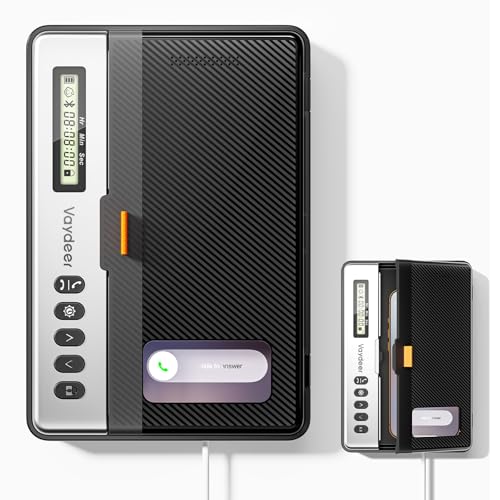
This is the box for people who cannot be completely unreachable: parents of teenagers, caregivers, anyone on call. After you pair your phone with the box before locking it, a Bluetooth button lets you answer calls without opening it. It fits most phones up to 6.9 inches, the timer goes up to 99 hours and 59 minutes, and the maker lists up to 30 days of use per charge, with an emergency unlock procedure.
Pros:
- Answer calls while the phone stays locked away
- Fits most large current phones
- Long time between charges
- Emergency unlock for real urgencies
Cons: Being able to take calls means some interruptions get through, which is the point but softens the break. You have to pair the phone before you lock it, and the listing describes answering calls only.
Best for Bags and Travel: ySky Timed Lock Box

A slim, opaque case that fits phones up to 6.7 inches (not folding phones), with an inside size of about 6.5 by 3.5 by 0.6 inches. The timer goes up to 99 hours and 59 minutes and the listing claims up to 50 days of use on a full charge, with reserve power so it still unlocks if the battery runs low. Because the case is opaque, you do not see notifications, though you can answer calls with earphones or a voice assistant. After you set the time, a 10 second pause lets you cancel a mistake. The emergency unlock works only five times in the box's lifetime, which makes it a real last resort.
Pros:
- Opaque, so the screen cannot catch your eye
- Small and light enough for a handbag
- Long battery life
- Limited emergency unlocks discourage casual use
Cons: Phones larger than 6.7 inches or in bulky cases will not fit. It holds one phone only.
How We Chose
We compared how many phones each box holds and its inside measurements, the longest timer, what happens in an emergency, how it is powered, and whether a phone can charge while locked. We looked for a range of commitment levels, from boxes with no way out to boxes that let calls through, because the right level depends on your life. We did not use star ratings or review counts, and we described each box only from its listing details.
Do phone lock boxes really help?
They help in a specific way. A lock box is what behavioral scientists call a commitment device: you make a decision in advance, while calm, and put something in place that makes the tempting choice harder later. It does not build willpower; it saves you from needing it at the moment you have least of it.
What a box cannot do is change why you reach for the phone. If evenings feel empty without it, the urge moves somewhere else. That is why the pairing matters: a box for the window, plus a plan for what fills it. Our 7-day digital detox plan builds an evening routine around exactly that, and our guide on how to break phone addiction with realistic steps covers the habit side.
You may have read that the mere presence of a phone on the table drains your attention. That idea comes from a well-known 2017 study, but a pre-registered direct replication did not find the same effect, and later research is mixed. The honest reason to put the phone in a box is simpler: out of reach means you cannot pick it up on autopilot.
How to choose a phone lock box
- Decide how strict you need it to be. If you would never override a code, Standard mode is enough. If you know you would, choose a box with no override or one that needs customer support.
- Measure your phone in its case. Compare it with the inside measurements. Large phones, thick cases and folding phones are the usual problem.
- One phone or the household? A shared box on the counter turns screen-free dinner into a family ritual. A personal box goes to work with you.
- Think about calls. If someone may need you urgently, pick a box that lets calls through or keep another way to be reached, such as a landline or a partner's phone.
- Check power. Rechargeable boxes avoid batteries; battery boxes avoid charging. Either way, check it has a backup so it opens when the time is up.
- Want to charge overnight? Look for a charging slot or cable hole.
Who a phone lock box suits, and who should skip it
A box suits you if you know exactly when your phone takes over (dinner, the hour before bed, Sunday mornings, focused work), you have tried app limits and keep tapping Ignore, or your household wants a shared screen-free ritual.
Skip it, or start gently, if you are the only adult at home with young children and the phone is your only way to call for help, you are a caregiver who needs to be reachable at all times without a backup line, or locking the phone makes you feel anxious rather than relieved. In those cases, start with the minimalist phone setup, which keeps the phone usable but quieter, and add a box later for short windows.
How to use a lock box so it sticks
- Pick one window. The last hour before bed is a good first choice. Our sleep hygiene checklist explains why that hour matters.
- Start short. Thirty to sixty minutes, then lengthen. A box you open early on day two teaches you the box does not work.
- Tell people. "My phone is in a box from 9 to 7. Call the landline if it is urgent."
- Have the swap ready. A book, a puzzle, a slow walk around the block, a bath or a 10-minute yoga nidra practice. If you notice tension rising when the phone is out of reach, a few minutes of slow breathing helps.
- Use it for a weekend. Once evenings feel easy, try a longer stretch with our digital detox retreat at home weekend plan.
If the pull is mostly toward one kind of content, our guide to doomscrolling and how to stop explains what keeps you scrolling, and the anti-stress toolkit has other calming options for the moments you would normally reach for a screen.
The Bottom Line
The best phone lock box is the one that matches how strict you want it to be. For most homes, the Mindsight Timed Lock Box is the flexible choice, with room for the whole family and three commitment levels. The Kitchen Safe is for anyone who wants no way out, the Mindsight Personal and ySky boxes travel with you, and the Vaydeer Bluetooth box keeps you reachable for calls. Start with one short window, have something better to do ready, and let the box hold the decision for you.