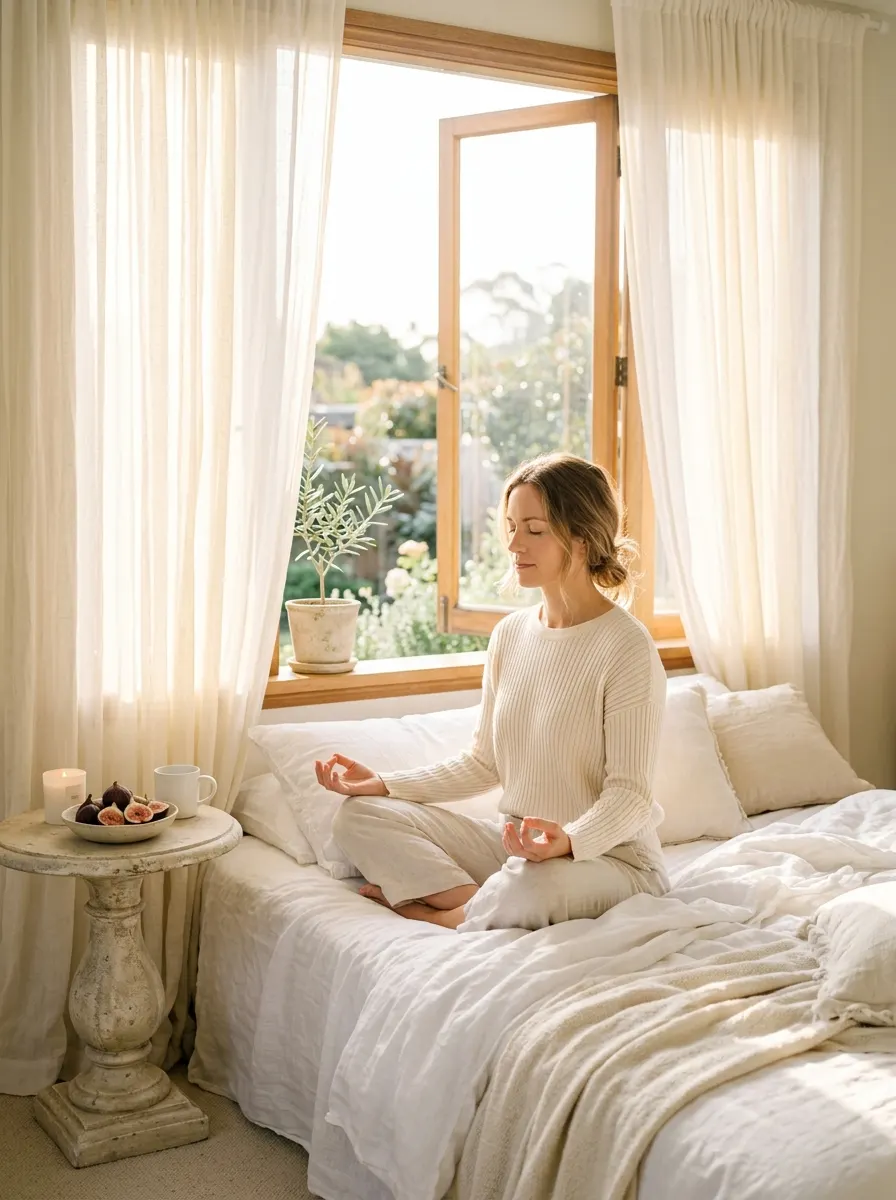
A digital detox retreat at home is a planned weekend offline in your own space. You prepare on Thursday, switch off and put your phone away on Friday evening, spend Saturday and Sunday in a simple retreat rhythm of slow mornings, gentle movement, time outdoors, creative rest and early nights, and come back online on Sunday evening with a clear plan. It gives you much of what a paid retreat offers, structure and a real break, without packing a bag.
What makes it a retreat rather than "a weekend where I tried not to use my phone" is preparation and rhythm. Paid digital detox retreats work because someone takes your phone at check-in and hands you a schedule. At home, you play both roles. This guide gives you the checklist, the schedule, the activities and the re-entry plan to do that well.
What is a digital detox retreat?
A digital detox retreat is a set stretch of time, usually from a weekend to a week, spent away from phones, laptops and social media, with a structured day to fill the space. Commercial retreats typically ask guests to hand over devices on arrival and offer a mix of yoga or gentle movement, meditation, walks in nature, creative workshops and shared, unhurried meals.
The home version keeps the two parts that matter most, the clear boundary around devices and the gentle structure, and drops the travel. It is a longer, deeper step than a daily habit change: if you want a gradual approach instead, our 7-day digital detox for calmer evenings builds one change per night, and a 30-day social media detox works on social apps over a month.
Does a weekend offline actually help?
It can, though it is worth being realistic about what research shows. Studies of short breaks are small and mixed. In one, people who spent 24 hours with their phone sealed in a bag mostly felt a stronger craving for it, with no change in mood or anxiety. Longer, targeted breaks of one to four weeks have shown modest gains in well-being on average, as we explain in our 7-day detox guide.
What a weekend does especially well is show you what an unplugged day feels like, once the first restless stretch has passed, and give you time for the things that research links with feeling better:
- Time in nature. In a study of nearly 20,000 adults in England (White and colleagues, Scientific Reports, 2019), people who spent at least 120 minutes a week in nature were more likely to report good health and well-being. A retreat weekend makes it easy to reach that in two days.
- Unplugged time outdoors. In a small 2012 study by Ruth Ann Atchley, David Strayer and Paul Atchley, people scored about 50 percent higher on a creative problem-solving test after four days of backpacking without devices. The study could not separate the effect of nature from the effect of being offline, but the combination is exactly what a good retreat day looks like.
- People and movement. In a 2025 trial in which adults blocked mobile internet for two weeks, the freed-up time spent with others, outdoors and moving seemed to explain part of the benefit.
So the plan below is built around three things: phone out of reach, time outside and a gentle rhythm that leaves room for rest.
Is a home retreat as good as going away?
Not quite, and it helps to know why. Home is full of cues: the laptop on the kitchen table, the TV remote, the spot on the sofa where you usually scroll. A new setting removes those cues automatically. You can get most of the way there by changing your space for the weekend:
- Put screens out of sight. Laptop and tablet in a closet, TV remote in a drawer, chargers unplugged.
- Create a retreat corner. A chair by a window with a blanket, a book, a notebook and a candle. This becomes the place you go when you would normally reach for the phone.
- Tidy one room on Thursday. A calm room feels like somewhere else.
- Leave the house twice a day. A walk in the morning and one in the afternoon change the scene more than anything else.
Before the weekend: a Thursday checklist
Most home retreats fail on Saturday morning because something needed the phone. Solve those problems in advance.
- Tell people. Send one message: "I am offline from Friday 7 pm to Sunday 7 pm. Call the house or my partner if it is urgent." Set an email auto-reply.
- Plan for emergencies. Decide how close family can reach you, for example by calling, with the phone switched on in a drawer and the ringer at full volume for calls from favorites only.
- Replace the phone's jobs. An alarm clock, a paper map or written directions for walks, a radio or speaker for music, printed recipes, a paper list of anything you planned to look up.
- Shop on Thursday. Groceries for simple, slow meals, plus anything for your activities: a puzzle, art supplies, seeds, a library book or two.
- Write a loose schedule (see below) and put it on the fridge.
- Choose where the phone goes. Decide now, not on Friday night.
Where does the phone go?
Out of sight and out of easy reach. The further away it is, the less you will think about it.
- A drawer in another room, switched off or with only calls from favorites allowed.
- With your partner or a friend, who returns it on Sunday evening.
- A timed lock box, if you know you will open the drawer at the first restless moment. You set the timer, and the decision is made.
If you have a smartwatch or a tablet, they go away too. Otherwise the feeds simply move to a different screen.
The weekend schedule
Treat this as a shape, not a timetable. Keep the anchors (the boundary times, meals, time outside and an early night) and move the rest around.
| When | Retreat rhythm | Ideas |
|---|---|---|
| Friday, 7 pm | Opening ritual | Phone away, light a candle, write one line about what you hope the weekend gives you |
| Friday evening | Slow dinner and an early night | Cook something simple, a bath, a book in bed |
| Saturday morning | Slow start and movement | Wake without an alarm, tea by a window, a walk or gentle yoga |
| Saturday midday | Nourish | An unhurried lunch, ideally with someone, at the table |
| Saturday afternoon | Outside and creative | A long walk, a park, a garden, then a craft, puzzle or sketchbook |
| Saturday evening | Wind down | A film you chose together or a board game, then a calm night routine |
| Sunday morning | Quiet practice | Journaling, a meditation, a longer walk or a farmers market |
| Sunday afternoon | Prepare the week | Plan meals, tidy, write a short list for Monday |
| Sunday, 7 pm | Closing ritual | Reflect, then turn the phone on and use it for one planned task |
Friday evening: arrive
Begin with a small ritual, because it marks the shift. Switch the phone off in front of the drawer, close it and do something with your hands: light a candle, make tea, open a window. Then keep the evening simple. Many people feel restless on the first night. An early bedtime is the kindest response, and our beauty sleep night routine is a gentle 10-minute way to close the day.
Saturday: the full day
Saturday is the heart of the retreat. Expect the urge to check something to arrive in the morning, often several times. When it does, notice it, take three slow breaths and go back to what you were doing. It usually fades by afternoon.
Get outside for at least an hour in total. A long walk is ideal; if you like a structure, a session of Japanese interval walking fits neatly into a retreat morning. In the afternoon, choose something absorbing and screen-free: baking bread, repotting plants, sorting photos, a jigsaw, or a 15-minute mandala practice for calm.
Sunday: return gently
Keep Sunday morning quiet and reflective, then use the afternoon to prepare for the week, so the return to screens on Sunday evening feels planned rather than like a flood. Before you switch the phone back on, write down three things: what felt good, what you missed (if anything) and one rule you want to keep.
Retreat-style practices that work at home
Paid retreats lean on a handful of practices. All of them translate well to a living room or a garden:
- Rest practice: a 20-minute yoga nidra session on Saturday afternoon is one of the most restful things you can do lying down.
- Sound and stillness: a home sound bath meditation with a bowl or chimes, or simply sitting outside listening for ten minutes.
- Gratitude and reflection: a short gratitude meditation on Sunday morning, followed by a page in a journal.
- Breathing: slow breathing with a longer exhale whenever the urge to check something hits. If you want to learn a pattern first, set it up with our breathing pacer on Thursday, then do it from memory over the weekend.
- Nature connection: an unhurried walk where you stop to notice five things you can see, hear and smell, the core of a simple eco spirituality practice.
You do not need to do all of these. Two or three practices, repeated, feel more like a retreat than a packed list.
Doing it with a partner or family
A shared retreat is easier because no one is scrolling next to you. Agree on the boundary times and the emergency plan together, and let everyone pick one activity for the weekend: a bike ride, a board game, cooking a special meal. If others in the house are not joining, ask only for small courtesies, such as no phones at shared meals, and set up your retreat corner somewhere quiet. You can still have a real retreat inside a busy home.
What it might feel like
Everyone is different, but a common arc looks like this. Friday evening feels a little odd and quiet. Saturday morning brings the strongest pull to check, and sometimes boredom or a vague sense of missing something. By Saturday afternoon many people notice that time feels longer and slower. On Sunday, some feel calm and rested; others mainly notice how much they reach for the phone out of habit, which is useful information in itself.
If quiet time brings up worries you usually scroll away from, that is common and not a reason to stop. Write them on paper, go for a walk, or try a calming technique. If anxiety or low mood is persistent and heavy, a weekend off screens is not a substitute for support: talk to your doctor or a licensed therapist.
Coming back online without undoing it
The first hour after you switch the phone back on decides how much of the weekend you keep.
- Check in one batch. Messages first, then email, then social apps if you use them. Notice how little actually needed you.
- Keep one rule from the weekend, for example the phone charging outside the bedroom or no social media before breakfast.
- Change one setting while you feel motivated. A minimalist phone setup with grayscale and a quiet home screen keeps the calm going after the weekend.
- Look at your numbers a week later. Our guide to how much screen time is too much for adults helps you decide what to aim for.
If the weekend felt good, put the next one in the calendar. Many people find a retreat weekend every month or every season becomes something they look forward to.
When a paid retreat makes more sense
A paid digital detox retreat can be worth it if home is too full of work and screen cues to relax, if you want guidance from teachers, or if you would enjoy the company of others doing the same thing. When comparing options, look at how devices are handled (collected at check-in, or just discouraged), what a typical day includes, how active it is, who leads the sessions and what their background is, and the cancellation policy. A weekend at home first is a good way to find out which parts you enjoy most before booking anything.
The Bottom Line
A digital detox retreat at home takes a little planning and no travel. Prepare on Thursday, put the phone truly out of reach from Friday evening to Sunday evening, follow a gentle rhythm of slow mornings, time outside, creative rest and early nights, and plan your return as carefully as the break. You will probably not come back transformed, but you will come back knowing what an unplugged weekend feels like, and which parts of it you want to keep. For more calm, everyday practices, browse our meditation and relaxation guides.