When you purchase through links on our site, we may earn an affiliate commission. Here's how it works.
To connect with your higher self, make regular space to listen: a short visualization to quiet your mind, a few honest journaling prompts, and a habit of checking whether a "message" feels calm and steady or urgent and fearful. Calm, kind and patient guidance is usually the voice worth trusting. Urgent, harsh guidance is more often anxiety.
Many healing and spirituality traditions talk about a wiser part of us, called the higher self, the divine within, the inner teacher or simply your deeper values. Whether you understand it spiritually or psychologically, the practice is the same, and it does not require any special beliefs or tools. Below is a three-step practice, a table to help you tell intuition from anxiety, and a 7-day plan to get started.
What is your higher self?
Your higher self is usually described as the wisest, calmest and most loving version of you: the part that knows what matters to you when fear and habit are quiet. Some people experience it as a spiritual presence, others as their own clear thinking on a good day. You do not need to settle that question to benefit from listening.
What the higher self is not: a voice that demands, shames or frightens you. If guidance makes you feel smaller, rushed or afraid, treat it with caution.
Step 1: A 10-minute higher self visualization
Read the script through once, then do it from memory, or record yourself reading it slowly.
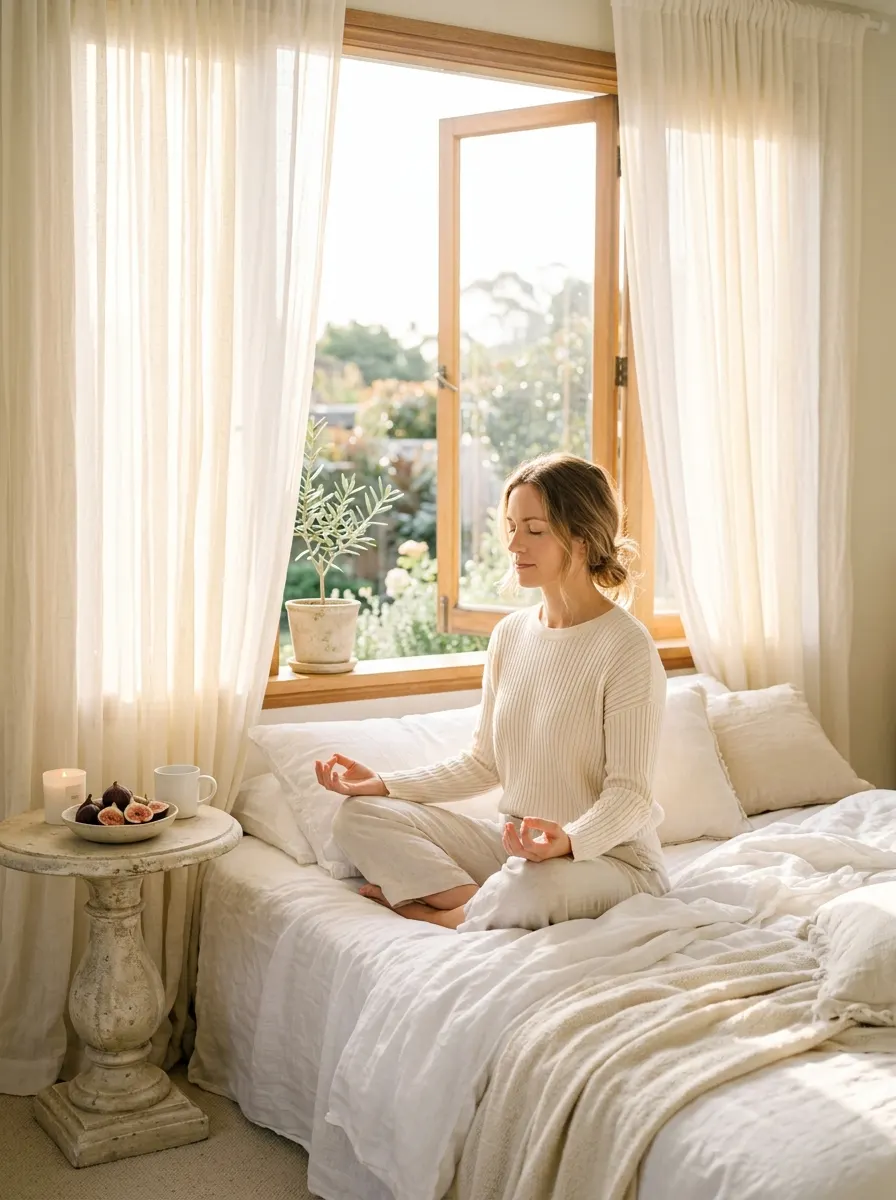
- Settle (2 minutes). Sit comfortably with your feet on the floor. Breathe in for about 4 counts and out for about 6, ten times. The breathing pacer can keep the rhythm.
- Picture a calm place (2 minutes). A real or imagined place where you feel safe: a beach at dawn, a quiet room, a forest path. Notice light, temperature and sound.
- Invite your wiser self (2 minutes). As with any visualization practice, detail helps. Imagine a version of you a few years from now who has handled what you are facing with grace. Notice how they stand, how they look at you.
- Ask one question (3 minutes). Keep it simple: "What do I need to know right now?" or "What is the kindest next step?" Wait. Notice words, images or just a feeling. If nothing comes, that is fine.
- Close (1 minute). Thank this part of you, take three slower breaths, and open your eyes. Write down anything you noticed, even if it seems small.
Step 2: Journaling prompts to hear your inner guidance
Pick one prompt per session and write for 5 to 10 minutes without editing. Any notebook works, though a dedicated mindfulness journal makes it easier to read back your notes later:
- If I trusted myself completely, what would I do this week?
- What do I already know about this situation that I keep ignoring?
- What would my wisest self say to me right now, in one sentence?
- When did I last feel fully like myself? What was I doing?
- What am I doing out of fear, and what am I doing out of love?
- What does my body tell me when I imagine each option?
Writing with your non-dominant hand for the last two minutes is a playful way some people use to slow down and surprise themselves.

Step 3: How do you tell intuition from anxiety?
This is the question most people get stuck on. These differences are a practical guide, not a test you can fail:
| Question to ask | Calm intuition usually feels | Anxiety usually feels |
|---|---|---|
| How does it sound? | Quiet, simple, kind | Loud, repetitive, harsh |
| How urgent is it? | Patient; it can wait a day | "Now or never," panicky |
| What happens in your body? | Settling, more space to breathe | Tight chest, racing heart, clenched jaw |
| What is it focused on? | The next small step | Worst-case scenarios |
| Does it hold up after sleep? | Still feels true the next morning | Fades, shifts or gets louder |
| How does it treat you? | With respect, even when it is honest | With blame or shame |
If the anxious column feels familiar right now, a few grounding exercises for anxiety will settle your body before you try to listen inward. A useful rule: for any important decision, sleep on it and check again. Guidance that still feels calm and true after a night's rest is worth taking seriously. Then weigh it with practical information and, where it matters, advice from people you trust.
Practices by the time you have
- 2 minutes: Hand on your chest, three slow breaths, ask "What do I need?" Then name one thing you are thankful for, a small habit borrowed from gratitude meditation.
- 5 minutes: One journaling prompt, or a 5-minute mindfulness meditation.
- 10 minutes: The full visualization above.
- 20 to 30 minutes: A walk without headphones, or a guided yoga nidra session followed by a few lines of writing.
What about signs and synchronicities?
Many people notice meaningful coincidences: a song that answers a question, a repeated number, running into the right person. Enjoy them as invitations to reflect. Our minds are also very good at spotting patterns, so avoid making big decisions based on a sign alone. Ask instead: "What does this bring to mind, and what do I actually want?"
A 7-day starter plan
- Day 1: The 10-minute visualization. Write down anything you noticed.
- Day 2: One journaling prompt, 10 minutes.
- Day 3: A 20-minute walk without headphones. Notice which thoughts feel calm and which feel urgent.
- Day 4: The visualization again, with the same question as Day 1.
- Day 5: Use the intuition table on one small decision you are facing.
- Day 6: One journaling prompt, then read back your notes from the week.
- Day 7: Write one sentence: "This week my wiser self kept telling me..."
After the first week, two or three short sessions a week is enough to keep the connection steady. If you notice that busy days leave you too drained to listen, our guide on how to protect your energy covers the boundaries that make space for it.
Keeping it grounded
This practice is for reflection and self-understanding. It does not replace medical, legal, financial or mental health advice. If you ever hear a voice that feels separate from you, or experience guidance that pushes you toward harm, talk to a doctor. That is a health question, not a spiritual failing.
Higher self work fits naturally next to shadow work, which explores the parts we tend to avoid, and our guide to the stages of spiritual awakening, which maps how these practices can change over time.
Optional reading
If you like learning from books, Being Your Higher Self is a book-length set of teachings and exercises on this theme. Who it suits: readers who are comfortable with openly spiritual, channeled-style language. Downside: if you prefer a psychological or secular approach, the vocabulary may not suit you, and the free practices above are enough to begin.
Frequently Asked Questions
What is the higher self?
It is usually described as the wisest, calmest and most loving part of you, the part that knows your values when fear is quiet. Some people understand it spiritually, others psychologically. The listening practices work either way.
How do I know if my higher self is talking to me?
Guidance from your higher self tends to feel calm, kind and patient, and it still feels true after you sleep on it. Urgent, harsh or fearful thoughts are more often anxiety. The table above lists the main differences.
How long does it take to connect with your higher self?
Some people notice a calmer inner voice after a few sessions, others after several weeks. Short, regular practice matters more than long sessions. A week of the starter plan is a good test.
Can meditation help me connect with my higher self?
Yes, for many people meditation is the main way in, because it quiets the busy mind enough to notice subtler thoughts and feelings. A short guided visualization or yoga nidra session works well for beginners.
Should I make big decisions based on my higher self?
Use inner guidance as one input, alongside facts and advice from people you trust. Sleep on important decisions and check whether the guidance still feels calm and true. It should never replace professional advice on health, money or legal matters.