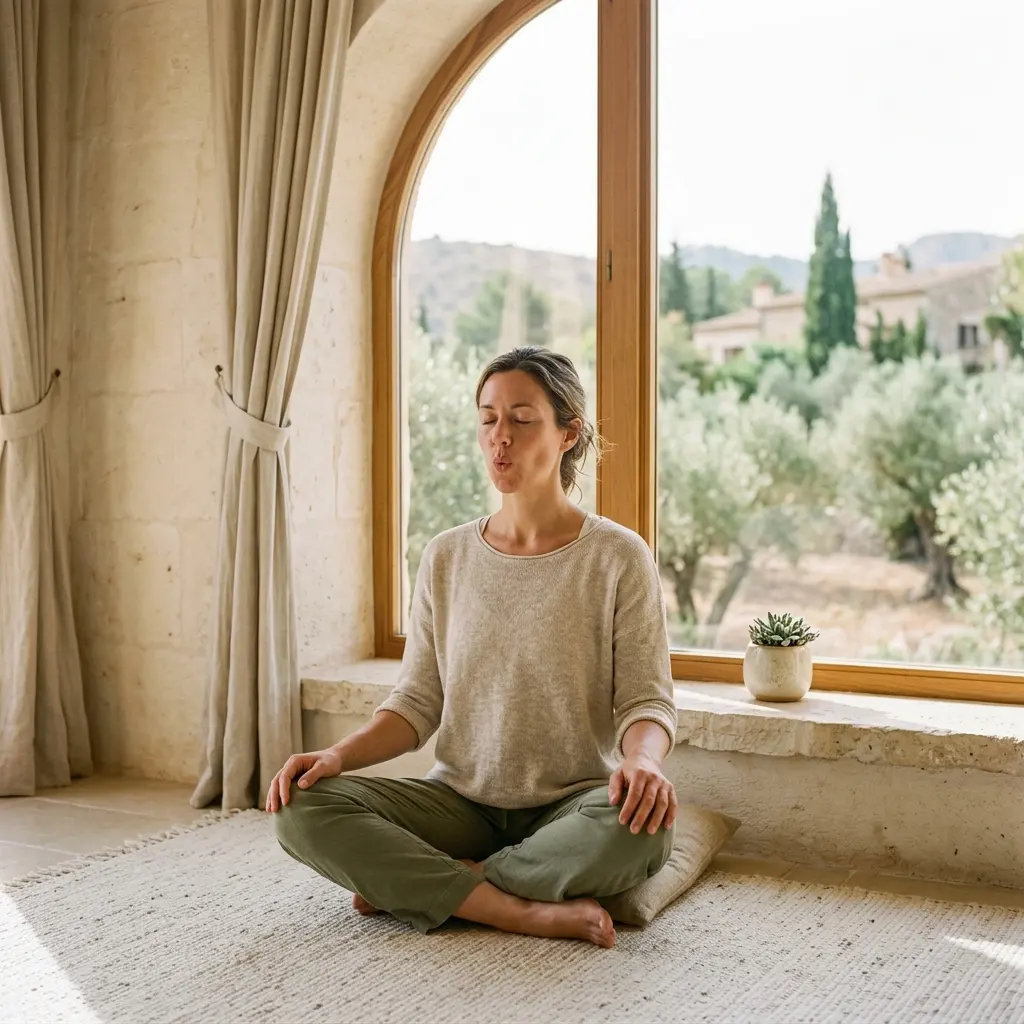
Facial yoga exercises are short holds and movements that work the small muscles of your cheeks, jaw, mouth and eyes, much like a gentle workout for the face. Done regularly for several months, they may make the cheeks look a little fuller and the face more relaxed. They will not give you the result of a surgical face lift, and the research behind them is small.
Below are five exercises with clear cues, reps and what you should feel, a 5-minute routine you can do daily, and an honest summary of the evidence so you know what to expect.

Does facial yoga actually work?
The best-known study comes from Northwestern University. In 2018 its researchers reported that middle-aged women who did 30-minute facial exercise sessions daily for 8 weeks, then every other day until week 20, had slightly fuller upper and lower cheeks in photos rated by dermatologists. The raters' estimate of the women's average age dropped from about 50.8 to 48.1 years.
That is encouraging, but read it carefully:
- It was small. Only 16 women aged 40 to 65 completed the program.
- There was no comparison group, so we cannot say how much was due to the exercises.
- The sessions were long. Thirty minutes a day is far more than most routines you will see online, including the 5-minute one below.
The likely reason it works at all: many facial muscles attach directly to the skin, so a slightly bigger, more toned muscle may sit a little fuller under it. That is a modest change. Facial yoga will not remove loose skin, deep folds or sun damage. Daily habits do more for skin over time, which is the idea behind a holistic skincare routine.
Before you start
- Clean hands, clean face. If your fingers slide, a drop of facial oil helps. If your skin feels tight in cold weather, our winter skincare routine covers barrier care.
- Sit or stand tall. Shoulders down and back, chin level. Slumping shortens the front of the neck and makes the jaw exercises less effective; our posture guide helps if this is hard.
- Use a mirror at first to check that your forehead stays smooth. Frowning while you work is the most common mistake.
- Breathe normally. Holding your breath tenses the whole face. If you tend to tense up, a minute with our free breathing pacer first can help you settle.
The 5 facial yoga exercises
1. The cheek lifter
Works the muscles that lift the upper cheeks.
- Open your mouth into a long "O", drawing your upper lip down over your top teeth.
- Smile with the corners of your mouth while keeping the "O" shape, so you feel your upper cheeks rise.
- Rest your fingertips very lightly on the tops of your cheeks to feel them lift.
- Hold for 20 to 30 seconds, then relax.
You should feel: warmth and light effort high in the cheeks. Avoid: pressing with your fingers or wrinkling your forehead.
2. Fish face
Works the cheeks and the corners of the mouth.
- Suck your cheeks gently in so your lips pucker like a fish.
- Keeping the cheeks in, try to smile.
- Hold for 5 seconds, then release.
- Repeat 5 times.
You should feel: a stretch inside the cheeks and effort at the corners of the mouth. Avoid: biting your cheeks.
3. Air transfer
Works the cheeks and lips, and is a good warm-up.
- Close your lips and take a mouthful of air.
- Push the air into your right cheek and hold for 3 seconds.
- Move it to the left cheek, then above the upper lip, then below the lower lip, 3 seconds each.
- Repeat the circuit for 30 seconds.
You should feel: a gentle stretch in each area. Avoid: blowing so hard that it feels like pressure in your ears.
4. Jaw and neck lengthener
Works the front of the neck and the area under the chin.
- Sit tall and slowly tilt your head back until you are looking at the ceiling. Go only as far as is comfortable.
- Gently push your lower jaw forward until you feel a stretch under the chin and along the front of the neck.
- Hold for 5 seconds, then bring the jaw back and lower your head.
- Repeat 5 times.
You should feel: a stretch along the front of the neck. Avoid: this one if you have neck problems, dizziness when you look up, or jaw pain. Keep the movement slow.

5. Forehead smoother
A release rather than a workout. Many of us hold tension in the brow without noticing, especially on stressful days; our anti-stress toolkit has other gentle ways to unwind.
- Place both palms flat on your forehead, fingertips meeting in the middle just above the eyebrows.
- With light pressure, slide your palms slowly outward toward your temples, smoothing the skin.
- At the same time, let your eyebrows soften and drop.
- Repeat 10 slow sweeps.
You should feel: your brow relaxing. Avoid: raising your eyebrows against your hands, which works the frown muscles you are trying to calm.
A 5-minute daily facial yoga routine
| Order | Exercise | Reps or hold | Time |
|---|---|---|---|
| 1 | Air transfer (warm-up) | 1 circuit, repeated | 0:30 |
| 2 | Cheek lifter | 2 holds of 30 seconds | 1:15 |
| 3 | Fish face | 2 sets of 5 | 1:00 |
| 4 | Jaw and neck lengthener | 5 reps, 5 second hold | 1:00 |
| 5 | Forehead smoother | 10 sweeps | 0:45 |
| 6 | Rest: soft face, three slow breaths | 0:30 | |
| Total | about 5 minutes |
Do it once a day, morning or evening. After two weeks, if you enjoy it, you can add a second round. Remember that the 2018 study used 30-minute sessions, so 5 minutes is a gentle habit, not a copy of that program. Judge progress by photos taken in the same light every four weeks, not in the mirror every morning.
Who should be careful with facial yoga?
- Jaw pain, clicking or TMJ problems. Skip the jaw exercises and ask your dentist or doctor.
- Recent Botox or fillers. Ask your provider how long to wait before facial exercises.
- Facial nerve problems such as Bell's palsy. Exercises should come from a physical therapist, not a general routine.
- Neck problems or dizziness. Leave out the head tilt in exercise 4.
Facial yoga, gua sha or both?
They do different things. Facial yoga works the muscles; gua sha is a light massage of the skin and the fluid just under it, often used for morning puffiness. Neither replaces sunscreen and a good beauty sleep night routine. Many people do a few facial yoga exercises and then a short gua sha routine on the same evening, which makes a calm 10-minute ritual. Once a week you can round it off with one of our DIY facial masks. You do not need a tool for facial yoga; if you want one for massage, our gua sha tool guide compares the options honestly.
If you spend long days at a desk, tension often travels from the shoulders into the jaw. A few minutes of desk yoga alongside these exercises can help you notice and release it.
Frequently Asked Questions
How long does facial yoga take to show results?
In the main study, women saw changes after 8 weeks and more after 20 weeks of long daily sessions. With a shorter routine, expect slower and smaller changes. Compare photos every four weeks rather than checking daily.
Can facial yoga cause wrinkles?
There is no good evidence either way. Repeated frowning or squinting is what deepens expression lines, so keep your forehead smooth during the exercises and stop any move that makes you crease the brow.
Is facial yoga better than Botox or fillers?
They are not comparable. Injectables change the face within days or weeks; facial yoga may give a small change over months. Facial yoga costs nothing and has no recovery time, which is why many people enjoy it as a habit.
How many minutes a day should I do facial yoga?
Five minutes daily is a realistic start that most people can keep. The study that showed results used 30 minutes a day, so you can build up gradually if you enjoy it.
Can I do facial yoga with gua sha?
Yes. Do the exercises first, then a light gua sha routine with oil. Keep both gentle and skip either one on irritated or broken skin.