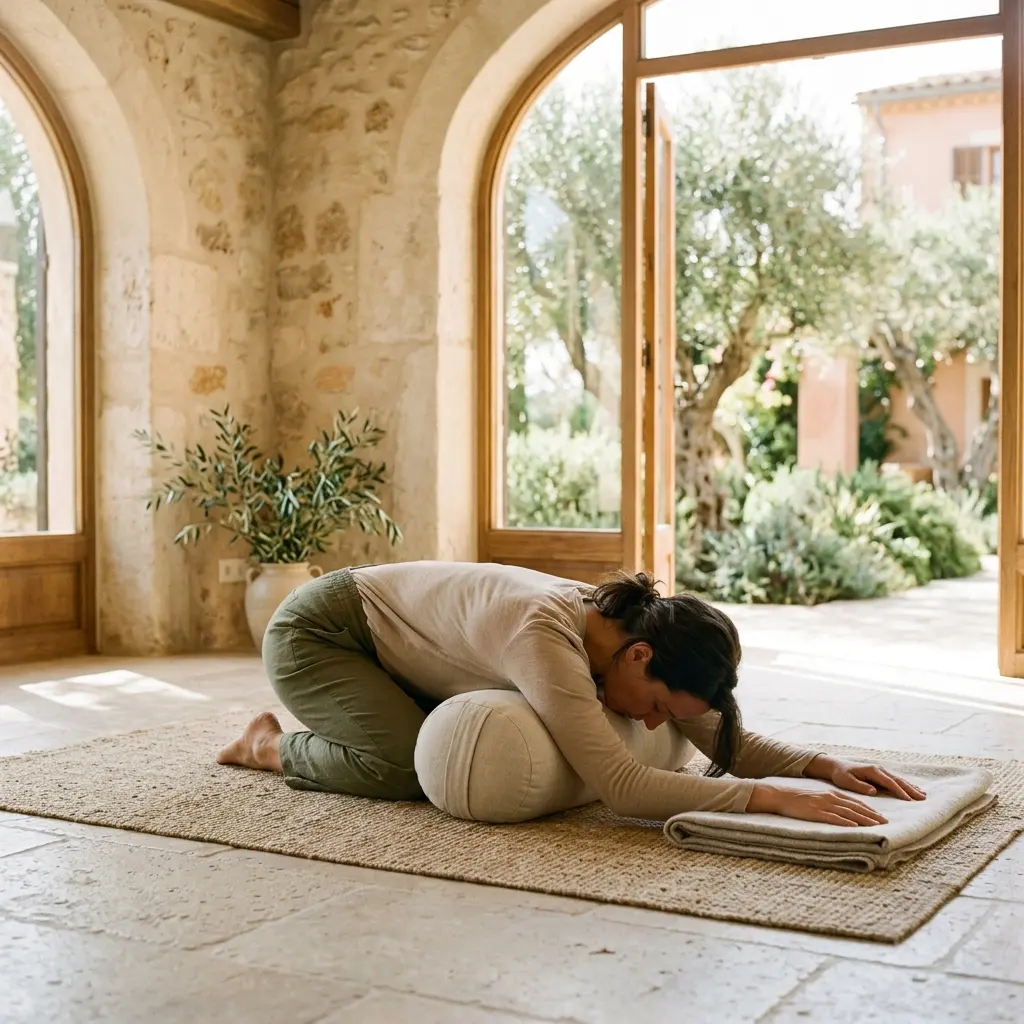
These five gentle tantric yoga poses form a slow, prop-supported sequence you can do at home in about 30 minutes: supported child's pose, reclined bound angle, seated spinal waves, a supported side-lying twist and legs up the wall. Each is held for several minutes with relaxed breathing, so the practice feels closer to restorative yoga than to a workout. The emphasis is on noticing sensation and breath, which is central to how tantric yoga approaches the body.
If you want the background first, what tantric yoga is, where it comes from and how to begin, read our guide to tantric yoga, part of our healing and spirituality section. This page is the practical part: the setup for each pose, how long to stay, what to notice, and when to skip a pose.
What Makes These Poses "Tantric"?
The shapes themselves are familiar from restorative and yin yoga. What makes the practice tantric in spirit is the way you are in them: slowly, with attention on breath and on whatever you feel, without trying to change it. Many people notice that emotions, memories or a sudden sense of release come up during long, supported holds. That is common and usually passes. It is not a sign that something is wrong, and it is not something to chase either. If you want to explore what comes up afterward, gentle journaling such as shadow work for beginners can help, at your own pace.
A gentle sequence like this is a complement to care, not a replacement for it. If you are working through trauma, grief or anxiety, practice alongside support from a qualified, trauma-informed therapist.
What You Need
- A mat or rug, plus a clear section of wall. Thicker foam is comfortable for long floor holds; our yoga mat guide explains the trade-off between grip and cushioning.
- A bolster, or two firm bed pillows stacked lengthwise.
- Two or three blankets or large towels, folded.
- A small cushion or folded towel for your head.
- Optional: an eye pillow, socks and a light layer, because the body cools down in long holds.
If you are choosing props, our roundup of yoga nidra props covers cushions that also work here.
The Sequence at a Glance
| Order | Pose | Props | Hold | What to notice | Skip or modify if |
|---|---|---|---|---|---|
| 1 | Supported child's pose | Bolster, blanket under knees | 3 to 5 min | Breath moving into the back ribs | Knee pain: more padding, or lie face down over the bolster |
| 2 | Reclined bound angle | Blanket under shoulder blades, pillows under knees | 5 to 8 min | Softening across the chest and inner thighs | Groin or knee strain: raise the knee supports higher |
| 3 | Seated spinal waves | Folded blanket to sit on | 2 to 3 min | Where the spine moves easily and where it feels stuck | Low back pain: make the movement smaller |
| 4 | Supported side-lying twist | Bolster in front, cushion for head | 3 to 4 min per side | The breath in the side ribs | Recent abdominal surgery or pregnancy: skip twists |
| 5 | Legs up the wall | Folded blanket under the hips | 5 to 10 min | Heaviness and stillness | Glaucoma, uncontrolled high blood pressure, late pregnancy: lie flat with legs on a chair instead |
Total time with transitions: about 30 minutes. On busy days, poses 1, 2 and 5 make a 15-minute version.
Before You Begin: Two Minutes of Arriving
Sit or lie comfortably. Place one hand on your belly and one on your chest. Breathe in through the nose and let the exhale be a little longer than the inhale, for example in for 4, out for 6. Do this for about ten breaths. If a visual rhythm helps you settle, use our free breathing pacer.
The 5 Poses Step by Step
1. Supported child's pose with bolster
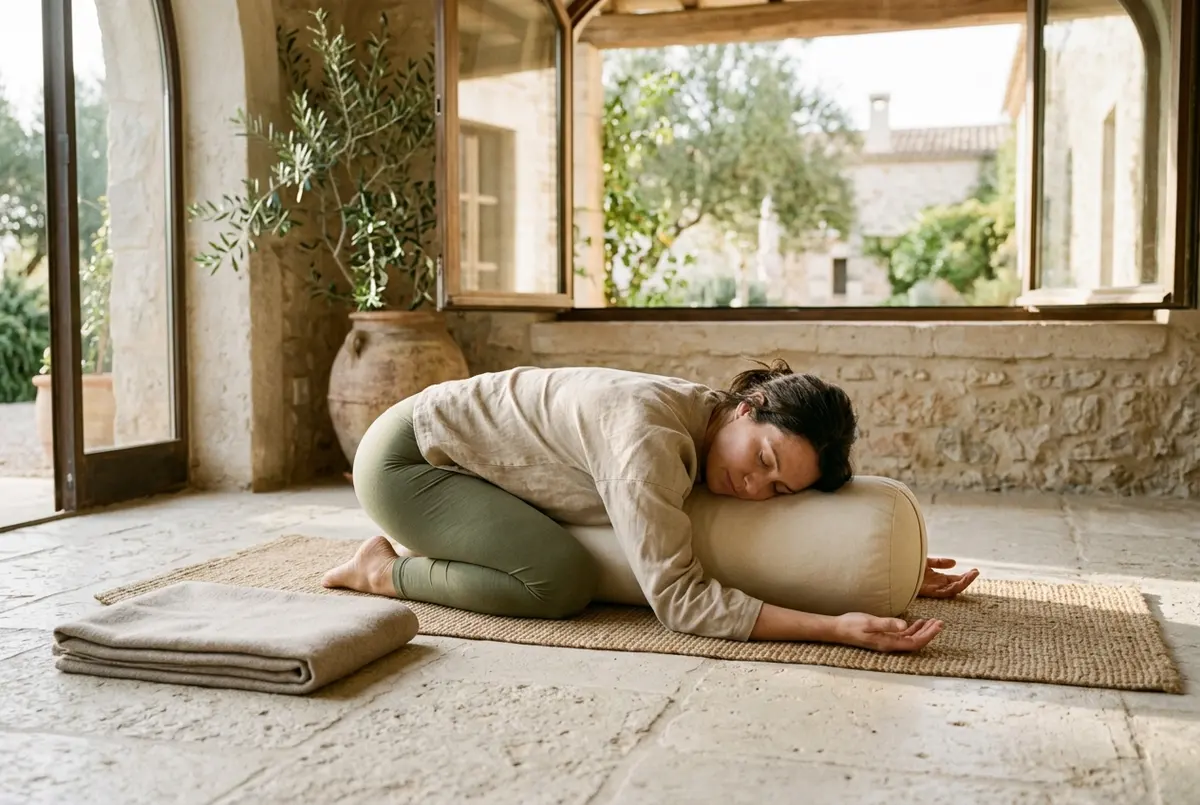
- Place the bolster lengthwise on the mat.
- Kneel with your knees wide and big toes touching, the bolster between your thighs.
- Fold forward and lay your chest and belly on the bolster. Turn your head to one side and rest your cheek on it.
- Let your arms rest on the floor beside the bolster.
- Halfway through, turn your head the other way.
Notice: the back of your ribs rising as you breathe in. Adjust: if your hips do not reach your heels, put a folded blanket between them so you can fully relax.
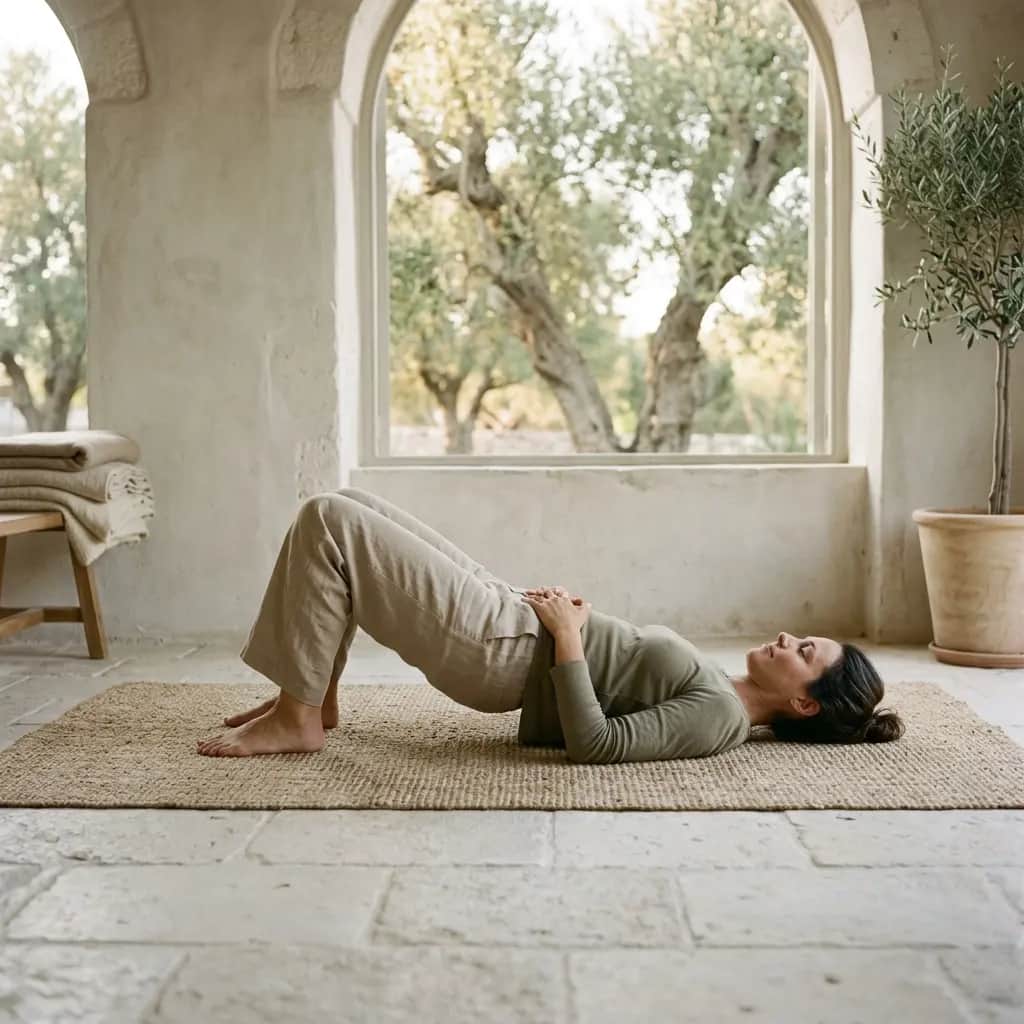
2. Reclined bound angle
- Sit with a folded blanket behind you, placed so it will support your shoulder blades, not your lower back.
- Bring the soles of your feet together and let your knees open out to the sides.
- Slide a pillow or folded blanket under each knee so the thighs are fully supported.
- Lie back. Rest your head on a cushion and your arms out to the sides, palms up.
Notice: any effort in the inner thighs; if you can feel muscles holding, add more support under the knees. This pose often feels exposed at first. If it is too much, cross your arms over your chest or place a blanket over your belly.
3. Seated spinal waves
- Sit cross-legged on a folded blanket so your hips are slightly higher than your knees.
- Rest your hands on your knees.
- Inhale and let your chest move forward and up, the spine gently arching.
- Exhale and round back, chin moving toward the chest.
- Keep the movement small and slow, about one wave per breath, for 2 to 3 minutes.
Notice: places along the spine that move easily and places that feel stuck. You do not need to fix them; stay curious. If you enjoy this kind of slow, sensing movement, somatic Pilates for beginners is built on the same idea. This is the most active part of the sequence and a good bridge before the twist.
4. Supported side-lying twist
- Lie on your right side with your knees bent and stacked, bolster lengthwise in front of your chest.
- Rest your head on a cushion.
- Let your top arm rest on the bolster, or open it behind you only as far as is comfortable, letting your chest turn gently toward the ceiling.
- Stay 3 to 4 minutes, then roll to your back and switch sides.
Notice: your breath in the lower ribs on the side facing up. Some people feel a sense of wringing out in this pose; any gurgling from the stomach is normal and simply a sign of relaxation.
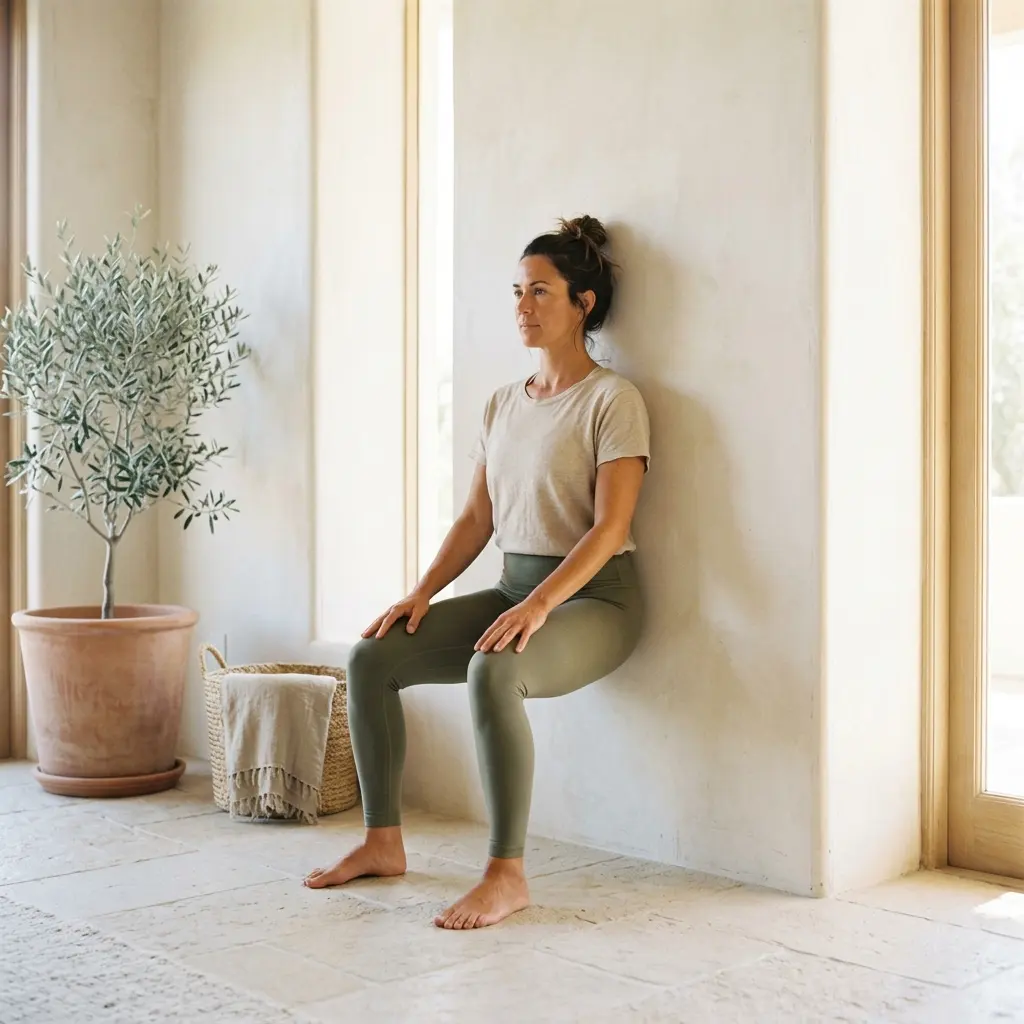
5. Legs up the wall
- Sit sideways next to the wall with a folded blanket nearby.
- Swing your legs up the wall as you lie back. Shuffle your hips as close to the wall as is comfortable; a few inches away is fine.
- Slide the folded blanket under your hips for a slight lift if that feels good.
- Rest your arms by your sides or place one hand on your belly and one on your chest.
- Stay 5 to 10 minutes, then bend your knees, roll to your side and rest for a few breaths before sitting up.
Notice: the heaviness of your legs and the quieter rhythm of your breath. In the evening, this pose fits well into a wind-down with other ways to lower cortisol for sleep.
If Strong Emotions Come Up
Long holds and slow breathing can make room for feelings that are usually kept busy. What helps:
- Open your eyes and look around the room. Name a few things you can see.
- Come out of the pose and sit up, feet on the floor. You can always continue later or not at all.
- Breathe with a longer exhale for a minute.
- Use grounding. Feel your feet on the floor and your hands on your thighs. Our grounding exercises for anxiety offer more options.
If practice regularly leaves you overwhelmed, panicky or flooded with memories, pause the sequence and work with a trauma-informed therapist. A gentle practice should leave you feeling more settled, not less.
Practising Safely
The US National Center for Complementary and Integrative Health notes that yoga is generally considered safe for healthy people when practiced appropriately, and that some poses may need to be modified for health conditions or pregnancy. For this sequence in particular:
- Keep every hold well inside comfort. Restorative poses should feel like nothing much is happening.
- Use more props rather than fewer.
- Avoid long holds lying flat on your back in later pregnancy; a side-lying position with pillows is usually more comfortable.
- If you have glaucoma or uncontrolled high blood pressure, ask your doctor before practising legs up the wall.
To close your practice, many people like to stay lying down for a few minutes or follow with a short yoga nidra recording. Others prefer a sound bath meditation at home.
Frequently Asked Questions
What are tantric yoga poses?
Tantric yoga poses are not a fixed list of shapes. In a gentle home practice they are usually familiar restorative or yin poses, held slowly with attention on breath and sensation. The five poses here are supported versions that most beginners can do with simple props.
How long should I hold each pose?
Most of these poses are held for 3 to 10 minutes. Start at the lower end, especially in reclined bound angle and legs up the wall, and lengthen the holds as your body gets used to resting in them.
Is it normal to cry during yoga?
Many people notice emotions surfacing during long, supported holds, and it is generally nothing to worry about. Let it pass, come out of the pose if you prefer, and breathe slowly. If it happens often and feels overwhelming, talk to a therapist.
Can beginners do tantric yoga poses?
Yes. Because every pose here is supported by props and held at rest, the sequence suits beginners. Start with the 15-minute version (poses 1, 2 and 5) and build up.
How often should I practise this sequence?
Two or three times a week is a good rhythm for most people, often in the evening. Short, regular sessions tend to feel better than an occasional long one.