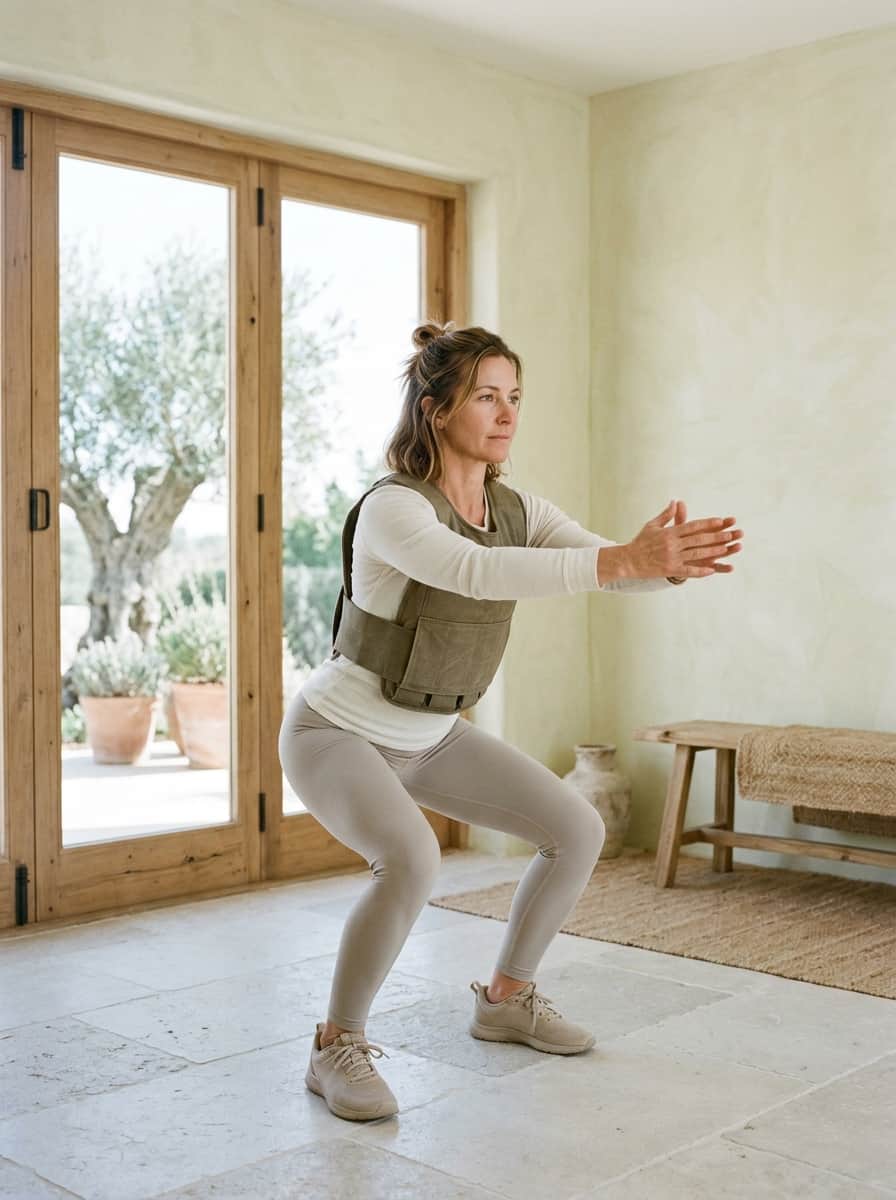
Weighted vest walking can add a gentle extra challenge to Japanese interval walking, but the smart order matters: master the basic rhythm of three minutes brisk and three minutes easy without any load first, then add a light vest (about 5 percent of your body weight or less to start, never more than about 10 percent) only on easy intervals or steady walks. Pushing fast intervals with weight on your frame is where most people run into trouble, so vest and speed are best kept apart until you are well conditioned.
If you have been enjoying Japanese walking and wondering whether a weighted vest will make it "count" more, this is the bridge you need. We will walk you through who benefits, who should skip the vest entirely, and a simple, conservative way to add load without losing the easy, sustainable quality that makes this routine work in the first place.
What Japanese Walking Is (and Why Load Changes It)
Japanese interval walking alternates three minutes of brisk effort with three minutes of comfortable walking, repeated for about 30 minutes. The brisk intervals raise your heart rate; the easy ones let you recover. It is simple, low cost, and endlessly repeatable, which is exactly why so many people stick with it. For the research and the beginner ramp, see the Japanese walking method, and for session variations, our guide to Japanese walking workouts.
A weighted vest changes the equation by adding resistance to every step. That can mean more muscle engagement and a higher calorie burn, but it also means more load on your knees, hips, spine, and ankles. The brisk intervals are where impact and effort peak, so adding weight there stacks two stressors at once. That is the core reason we recommend keeping the vest off your fast intervals until your body has adapted.
Master the Rhythm First, Load Second
Before a vest ever enters the picture, the 3+3 pattern should feel genuinely comfortable. Many people find that takes a few weeks of consistent practice. You want to be able to finish a full session feeling pleasantly worked, not wrecked, and to hold good posture throughout.
A repeating interval timer makes this far easier than watching a clock. Our free interval walking timer setup or a phone app that beeps every three minutes frees you to focus on effort and form rather than numbers.
Signs you are ready to add a vest
- You can complete 30 minutes of 3+3 without needing to stop early
- Your brisk intervals feel "somewhat hard" but controlled, not frantic
- You have no new or lingering joint, hip, or back soreness afterward
- You have been walking consistently for at least several weeks
How to Add a Weighted Vest Conservatively
Once you are ready, start light and add weight only where it is safest. The guideline we use across all our vest guides: start at about 5 percent of your body weight or less, and for walking stay under about 10 percent. For a deeper look at choosing and fitting a vest, see our weighted vests for women guide and our roundup of comfortable, secure walking vests.
Here is the conservative progression we suggest:
| Phase | What you do | Vest weight |
|---|---|---|
| Foundation | 3+3 intervals, no load | None |
| Introduce | Steady easy walks only | About 3 to 5% body weight |
| Blend | Vest on easy intervals, off for brisk | About 5% body weight |
| Progress | Longer steady walks with vest | Up to 8 to 10% body weight |
The guiding idea: use the vest for steady, moderate walking and for the easy intervals, and take it off (or simply walk without it) when you push the brisk efforts. This keeps the cardiovascular benefit of the intervals while reserving the extra load for lower-impact moments.
How to keep the vest off the brisk blocks in real life
Taking a vest on and off every three minutes is not realistic on a sidewalk, so here are three practical ways to follow the "vest on easy, off for brisk" idea:
- Split session. Wear the vest for a steady 10 to 15 minute walk, come home, take it off, then do your 3+3 intervals without it. This is the easiest place to start.
- Loop session. If your route passes your front door, or you walk on a treadmill, do the first two or three rounds with the vest, then set it down and finish the brisk rounds without it.
- Vest-only easy days. Keep your four interval days load-free and wear the vest only on separate easy walks. Many women never move past this, and that is a perfectly good plan.
Wearing the vest through a whole interval session, brisk blocks included, is a later step for people who have walked comfortably with the same light load for many weeks. When you get there, judge the brisk blocks by the talk test rather than your old pace. With a vest, short sentences may come at a slower speed, and that is fine. You are working at the same effort, not chasing the same numbers.
An 8-Week Plan for Adding a Vest
This plan assumes you can already do a full 3+3 session, five rounds, without load. If you cannot yet, spend a few more weeks on the Japanese walking method ramp first. Change only one thing per step, and move on only if your back, hips and knees feel normal the next morning.
| Weeks | Interval days (4 a week) | Vest days | Vest weight |
|---|---|---|---|
| 1 and 2 | 3+3, five rounds, no vest | One easy 10 to 15 minute vest walk | About 3 to 5% of body weight |
| 3 and 4 | 3+3, five rounds, no vest | Two easy vest walks, up to 20 minutes | Same as weeks 1 and 2 |
| 5 and 6 | Split session on one interval day: steady vest walk, then intervals without it | One longer easy vest walk, 20 to 30 minutes | Same, or add 1 to 2 lb if all feels easy |
| 7 and 8 | Loop session on one or two days: first rounds with vest, brisk rounds without | Easy vest walks as you like | Stay at a load that feels easy, under about 10% |
Notice that time comes before weight at every step. You lengthen the walk first, then make it a little heavier, never both in the same week. For the shorter first sessions, a timer set to 3 rounds works well, and you can move up to the standard 5 rounds once the vest feels familiar.
What the numbers look like
For a woman who weighs 160 lb, about 5 percent is 8 lb, so a starting vest of 5 to 8 lb fits this plan, and the walking ceiling sits around 16 lb. For a woman who weighs 200 lb, about 5 percent is 10 lb and the ceiling is around 20 lb. The ceiling is a limit, not a target. Most of the benefit of Japanese walking comes from the intervals, and plenty of women stay with a light vest for good.
How to Read Your Body With a Vest On
The talk test from the original method still works with a vest. On easy blocks you should be able to chat in full sentences. On brisk blocks, short sentences only. If the vest makes even the easy minutes feel breathless, it is too heavy for now or you added it too soon.
Watch for these signs during and after a walk:
- Neck or shoulder tension: the vest is too heavy, sits too low, or the straps are too loose and it pulls forward.
- Lower back ache: too much weight or too much time. Drop back a step.
- Knee or hip pain: take the vest off for a week and walk unloaded. If pain continues, get it checked.
- A changed stride: leaning forward, shorter steps or a shuffle mean the load is changing how you walk. Lighter is better.
- Normal tiredness: warm legs and a pleasant heavy feeling that fades by the next day are fine.
Posture matters more with load. Stand tall, keep your ribs stacked over your hips and let your arms swing freely. Our posture guide has simple cues if you tend to slump on longer walks, and well-fitting shoes for Japanese walking help your feet handle the extra weight.
Common Mistakes When Adding a Vest
- Starting with the vest you already own. A 20 lb vest bought for strength work is too heavy for walking intervals. Start light, even if that means removing packs or buying a lighter vest.
- Adding load to fix boredom. If sessions feel stale, change the format first. Our Japanese walking workouts offer five ways to vary a session without any added weight.
- Chasing the old brisk pace. With load, match the effort, not the speed.
- Walking with a vest every day. A few vest walks a week, with unloaded days between, give your back and joints time to adapt.
- Stacking weights. A vest plus ankle weights or wrist weights at the same time is more load than intervals need. Pick one tool, or none.
Vest, Ankle Weights or Nothing?
A vest sits close to your center, so it adds load without changing your arm swing or leg swing much. That is why we prefer it over ankle or wrist weights for brisk walking. Ankle weights pull at the knee and hip with every step and are better kept for slow, controlled strength moves. If you are curious about them anyway, the free ankle weight calculator suggests a light starting weight for your experience. And walking with nothing extra at all is still a complete, research-backed routine.
Fit and Comfort Matter
A vest that bounces or shifts will quickly sour the whole experience and can throw off your gait. Look for snug, even weight distribution and adjustable straps. If you want picks made with fit in mind, our comfortable weighted vest roundup and our guide to weighted vests for plus-size women both focus on secure, flattering options.
Who Should Skip the Vest
A weighted vest is not right for everyone, and there is no shame in walking without one. The intervals themselves are the engine of this routine; the vest is optional seasoning.
Consider skipping the vest, or checking with a healthcare professional first, if you:
- Have knee, hip, ankle, or back issues, or any history of joint injury
- Experience balance problems or feel unsteady on uneven ground
- Are pregnant or recently postpartum
- Have osteoporosis, a heart condition, or are new to regular exercise
- Notice any pain, pinching, or altered walking pattern when you try it
If building strength is your main goal, you may get more benefit from dedicated resistance work than from loading up your walks. Our gentle weighted vest beginner plan offers a lower-risk way to use a vest at home.
Keeping Expectations Realistic
A vest can modestly increase effort and calorie burn, but it is not a shortcut. Weight loss still comes down to the bigger picture of consistent movement, nourishing food, and sleep, as we explain in Japanese walking for weight loss. Think of the vest as a small progression tool for an already solid habit, not a magic upgrade.
Consistency beats intensity nearly every time. A pleasant, repeatable walk you actually do four or five times a week will do far more for you than an overloaded session that leaves you sore and skipping the next one. For more ways to keep movement sustainable, browse our exercise collection.
Frequently Asked Questions
Is it safe to do Japanese walking with a weighted vest?
It can be for healthy, well-conditioned walkers who start light. Learn the intervals without load first, wear the vest on easy walks and easy intervals, and skip it if you have joint, back, balance or bone concerns unless your doctor agrees.
How heavy should my vest be for Japanese walking?
Start at about 5 percent of your body weight or less. For walking, there is rarely a reason to go above about 10 percent, and many women stay lighter than that.
Should I wear the vest during the brisk intervals?
Not at first. The brisk blocks are where effort and impact peak, so keep them vest-free until the vest feels comfortable on easy walks and easy intervals for several weeks.
Can I wear a weighted vest for Japanese walking on a treadmill?
Yes, and a treadmill makes the loop method easy: do your first rounds with the vest, then set it down for the brisk rounds. Keep the incline flat at first, hold the rail only for balance, and if you walk indoors often, our indoor walking challenge gives you a plan to follow.
How many days a week should I walk with a vest?
Start with one or two easy vest walks a week alongside your unloaded interval days. Even later, a few vest walks a week with lighter days in between is plenty for most women.
Will a weighted vest make Japanese walking better for weight loss?
Only a little. A vest modestly raises the effort of a walk, but weight loss still depends mostly on consistency, food, sleep and overall activity.
The Bottom Line
Weighted vest walking can be a thoughtful next step for Japanese interval walking, but the order is everything: build the 3+3 rhythm without load, then add a light vest (starting near 5 percent of body weight) only on easy intervals and steady walks. Keep the vest off your brisk efforts, prioritize a snug fit, and skip it altogether if you have joint, back, balance, or other health concerns. When in doubt, check with a healthcare professional and let comfort and consistency lead the way.