The best weighted vest for plus size women is one with long, adjustable side straps, a wide or U-neck shape that sits comfortably over a fuller chest, and a secure fit that stops the vest from riding up or rubbing. Prioritize listings that clearly state larger sizing rather than guessing, begin with a lighter load of around 8 to 12 pounds (about 5 percent of your body weight or less), and keep strap extenders on hand if the Velcro runs short.
If you have shopped for a weighted vest before and felt like every option was built for a smaller frame, you are not imagining it. Many vests assume a narrow torso and shorter straps, which leaves plenty of women fighting with pinching, gaps or a vest that simply will not close. Below we walk through what actually matters for fit and comfort, then share honest picks whose listings mention plus-size or wider sizing so you can shop with confidence.
What Fit Actually Means for a Plus-Size Weighted Vest
A weighted vest should feel snug and stable, not squeezing. For a fuller figure, four details decide whether a vest works for you.
Strap length and extenders
Side straps are where most vests fail larger bodies. Look for vests with long hook-and-loop (Velcro) straps or buckle adjustments. If a vest you love runs a little short, inexpensive Velcro strap extenders can add several inches and save the purchase.
Torso length and neckline
A vest that is too short rides up over the bust and bunches at the waist. A U-neck or wider-cut front tends to sit more naturally over a fuller chest without digging into the collarbone or pressing on the breasts.
Chafing and bounce
Rubbing at the underarms and bust line is the most common complaint. Flat seams, soft edging and a close fit reduce friction. A vest that bounces as you walk will chafe faster, so a secure fit genuinely matters more than extra padding.
Starting light
There is no prize for loading up early. Many people find starting at 8 to 12 pounds, or about 5 percent of body weight or less, lets the body adjust without straining the back, hips or knees. You can always add weight later, which is why adjustable models appeal to beginners. For a gentle structured start, see our weighted vest workouts for women.
How to Measure Before You Order
Size charts only help if you have your own numbers ready. Take these measurements in the top you will walk in, with a soft tape measure, standing relaxed.
- Chest at the fullest point. Keep the tape level around your back and under your arms. This is the number most vest charts use.
- Upper torso just under the bust. This is where the lower edge of many vests sits, and it is often where the side straps close.
- Shoulder to lower rib. Measure from the top of your shoulder, near your neck, down to the bottom of your rib cage. A vest much longer than this will rest on your belly or hips.
- Add a little room. Compare your numbers with the largest setting of the side straps. You want to close the vest with some strap left over, not on the last inch of hook-and-loop.
If a listing gives no measurements at all, treat "one size fits most" as unknown, and check the return policy before you order.
Which Vest Style Suits You
| If this is your situation | Look for | Avoid |
|---|---|---|
| Straps never close on standard vests | A listing that states wider or plus-size fit, or long straps plus extenders | Short, single-strap closures |
| A fuller bust that vests press on | A U-neck or wide front cut | Narrow, high-neck fronts |
| Shorter torso | A shorter vest that ends at the lower ribs | Long vests that rest on the belly |
| Brand new to added weight | Adjustable removable weights, started light | Heavy fixed vests |
| Mostly walking | A low-bounce, breathable fit with a pocket | Bulky vests built for heavy training |
Our Top Pick
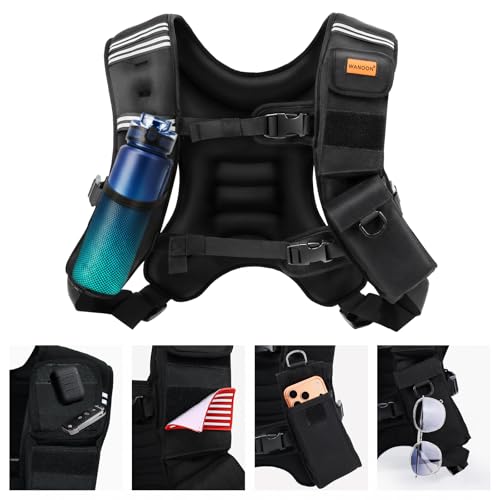
WANOON Weighted Vest for Men Women, Plus Size Fitness Vest wins because its listing is explicitly built around a wider, plus-size fit while still offering a weight range from 8 all the way to 40 pounds, so it grows with you from first walk to serious strength work.
Quick Comparison
| Product | Best For | Why It Wins |
|---|---|---|
| WANOON Plus Size Fitness Vest | Wider fit and room to grow | Designed for plus-size users, 8 to 40lb range |
| BAGAIL Adjustable Weighted Vest | Gradual progression | Removable weights from 4 to 32lb, U-neck |
| BAGAIL Comfort-Fit 12lb | No-chafe daily walks | Women-specific anti-bounce design |
| BAGAIL Comfort-Fit 10lb | Starting lighter | Even distribution, lighter fixed load |
Best Overall: WANOON Plus Size Fitness Vest
This vest stands out because the listing openly markets a wider, plus-size fit rather than leaving you to guess. The broad weight range means a beginner can keep it light while an advanced user can load it heavily, and the phone pocket and reflective strips make it practical for outdoor walking. Measure your torso and compare it with the size chart before buying.
Pros:
- Explicitly designed for plus-size users with a wider fit
- Weight range from 8 to 40lb suits beginners through advanced
- Phone pocket and reflective strips for safe outdoor walks
Cons: The heavier end of the range is far more than most beginners need, so use only part of it at first.
Best for Gradual Progression: BAGAIL Adjustable Weighted Vest
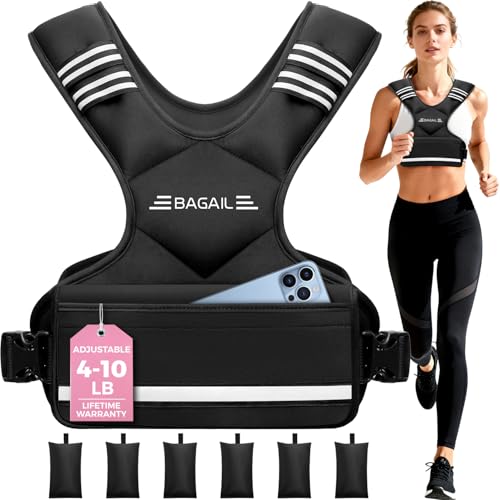
If you want to start light and build up, removable weights let you add load in small increments instead of committing to one fixed amount. The U-neck design tends to sit more comfortably over a fuller bust, and the storage pocket is handy on walks. Check the size chart against your own measurements before ordering.
Pros:
- Adjustable removable weights from 4 to 32lb for gradual progression
- U-neck shape clears the chest more comfortably
- Storage pocket adds everyday practicality
Cons: Removable weights take a few minutes to rearrange when you change the load.
Best No-Chafe Design: BAGAIL Comfort-Fit 12lb
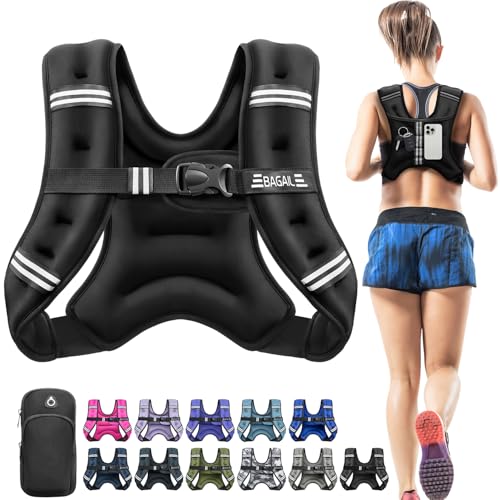
This women-specific vest is built around no-chafe, no-bounce construction, which is exactly what matters most if rubbing at the bust or underarm has ruined vests for you before. The 12-pound fixed weight is a reasonable middle ground once you have adjusted to lighter loads, and the detachable phone pouch is a nice touch. Treat the even-distribution claim as the brand's description, and check the fit yourself on a short walk.
Pros:
- Women-specific comfort-fit with no-chafe, no-bounce construction
- Detachable phone pouch for everyday use
- Reflective stripes for visibility outdoors
Cons: The fixed 12 lb load cannot be lightened on tired days.
Best for Starting Lighter: BAGAIL Comfort-Fit 10lb
The same ergonomic, anti-bounce design in a lighter 10-pound load makes this a gentle entry point if you are brand new to wearing weight. Many people find a lighter vest easier to walk in for longer before any strain sets in, and the reflective strips help on early-morning or evening walks. The trade-off is that a fixed 10 pounds can feel limiting once your body adapts and you want more challenge.
Pros:
- Women-focused ergonomic design with even weight distribution
- Anti-bounce feature for comfortable walking
- Reflective strips add outdoor safety
Cons: The fixed 10lb may limit progression later.
How We Chose
We prioritized listings that explicitly mention plus-size or wider sizing, adjustable or long straps, and comfort features like U-neck cuts and anti-chafe construction, because those are the details that make or break fit on a fuller frame. We never invent size ranges, so where a listing does not state measurements we flag it and recommend checking the size chart yourself. Where fit is hard to judge from a listing, we say so.
Strap Extenders: When They Help and When They Do Not
Hook-and-loop strap extenders can rescue a vest that fits well everywhere except the sides. They work best when the vest itself sits correctly on your shoulders and chest and only the closure runs short. They are less helpful if the vest is too narrow across the back or too short in the torso, because extending the straps leaves the weight panels in the wrong place. Choose extenders that match the width of your vest's straps, check that the hook side grips firmly on a test walk, and replace them when the grip starts to fade. A strap that lets go under load is a nuisance at best.
How to Prevent Chafing
Chafing is the main reason plus-size women give up on vests, and most of it is preventable.
- Fit first. A vest that does not move does not rub. Snug the side straps before you add any weight.
- Layer smartly. A fitted, moisture-wicking top with flat seams sits between the vest and your skin. Avoid loose cotton, which bunches and holds sweat.
- Choose a supportive sports bra. It keeps the bust still under the vest and stops the lower edge of the vest catching on the bra band.
- Protect hot spots. If you know your underarms or inner arms rub, an anti-chafe balm on those areas before a walk can help.
- Build time slowly. Start with ten to fifteen minutes. Your skin needs to get used to the contact points just like your muscles get used to the load.
If a rub starts, stop and adjust rather than finishing the walk. A small red patch today is a sore week tomorrow.
Who Should Wait, and What to Do Instead
Some women are better served by walking without a vest first. Check with your doctor or a physical therapist before adding load if you have knee, hip, back or foot pain, are pregnant or recently postpartum, manage a heart or blood pressure condition, or feel unsteady on your feet. Body weight already gives your legs plenty of work, so a few weeks of regular unloaded walking builds a base a vest can sit on later.
Good starting points without any equipment: our 30-day walking challenge builds the habit gently, the 10-minute walking workout at home needs nothing but floor space, and the indoor walking challenge works on days you cannot get outside. When you are ready for structure, the Japanese walking method alternates brisk and easy minutes, and the free Japanese walking timer keeps the intervals for you. Supportive footwear matters more once you add load, so see our guide to shoes for walking too.
Common Mistakes
- Buying by size label alone. Measurements and strap length decide fit, not "XL" or "one size".
- Starting at the top of the weight range. A vest that holds 40 pounds does not need to carry 40 pounds. Use a small part of the range at first.
- Letting the vest sit low. A vest resting on the belly pulls your shoulders forward. It should sit on the upper torso.
- Adding weight and time together. Lengthen walks first, then add a small amount of load.
- Washing the weights. Remove any weight packs before washing the shell, wash as the label allows and air dry the vest completely before using it again.
If you are weighing vests against other options, our best weighted vests for women guide compares adjustable and fixed picks for all frames, and if your goal is weight loss, Japanese walking for weight loss sets honest expectations for what walking can and cannot do.
A Few Safety Notes
Weighted vests add load to your spine, hips and knees, so build up slowly and stop if you feel joint pain. If you are pregnant, recovering from injury, or managing a back or heart condition, it is wise to check with a healthcare professional before starting. For the bigger picture on safe use, our guide to weighted vests for women walks through the basics, and if walking is your main goal see our best weighted vests for walking. Planning to wear it for interval walking? Read Japanese walking with a weighted vest first.
Frequently Asked Questions
What size weighted vest should a plus-size woman buy?
Measure around your chest and upper torso and compare with each brand's size chart, and favour listings that state larger sizing. Long side straps or strap extenders matter more than the size label.
How heavy should a weighted vest be for a plus-size beginner?
Start around 8 to 12 lb, or about 5 percent of your body weight or less, on short easy walks. Add time before weight, and for walking stay under about 10 percent of body weight.
How do I stop a weighted vest from chafing?
Choose a close fit that does not bounce, flat seams and soft edging, and wear a fitted, moisture-wicking top underneath. A vest that moves as you walk chafes faster than one that sits still.
Are weighted vests safe for plus-size women with knee pain?
Extra load adds to the work your knees do, so check with your doctor or a physical therapist first. Walking without a vest may be the better place to start.
Do strap extenders work on weighted vests?
Yes, if the vest already fits your shoulders, back and torso and only the side closure runs short. Match the extender width to your straps and test the grip on a short walk. If the vest is too narrow or too short, choose a wider-cut vest instead.
How long should a weighted vest be on a plus-size torso?
It should end around the bottom of your rib cage so the weight sits on your upper torso. A vest that rests on your belly or hips tends to bounce, rub and pull your posture forward.
The Bottom Line
A weighted vest for plus size women does not have to be a compromise. Focus on long adjustable straps, a torso-friendly U-neck shape, and a snug fit that prevents chafing and bounce, then start light and progress gradually. The WANOON plus-size vest is our top pick for its openly wider fit and generous weight range, while the adjustable BAGAIL suits anyone who wants to add weight slowly over time. Measure your torso, keep strap extenders handy if needed, and let your comfort guide the pace.