When you buy through links on our site, we may earn an affiliate commission. Here's how it works.
The best yoga mat for Upward-Facing Dog is a fairly thin, firm mat with a grippy surface, roughly 4 to 6 mm thick. In this pose your whole upper body rests on two hands, and a soft, thick mat lets the heels of the hands sink, which bends the wrists further back and makes them work harder. Thick foam mats have a real place at home, but for knees and floor exercises rather than for weight-bearing on the hands.
This guide explains how a mat changes the pose, gives you a simple decision rule, and looks honestly at three mats: who each one suits and where each one falls short. If you are still learning the pose itself, start with our step-by-step guide to Urdhva Mukha Svanasana.
Why Your Mat Matters in Upward-Facing Dog
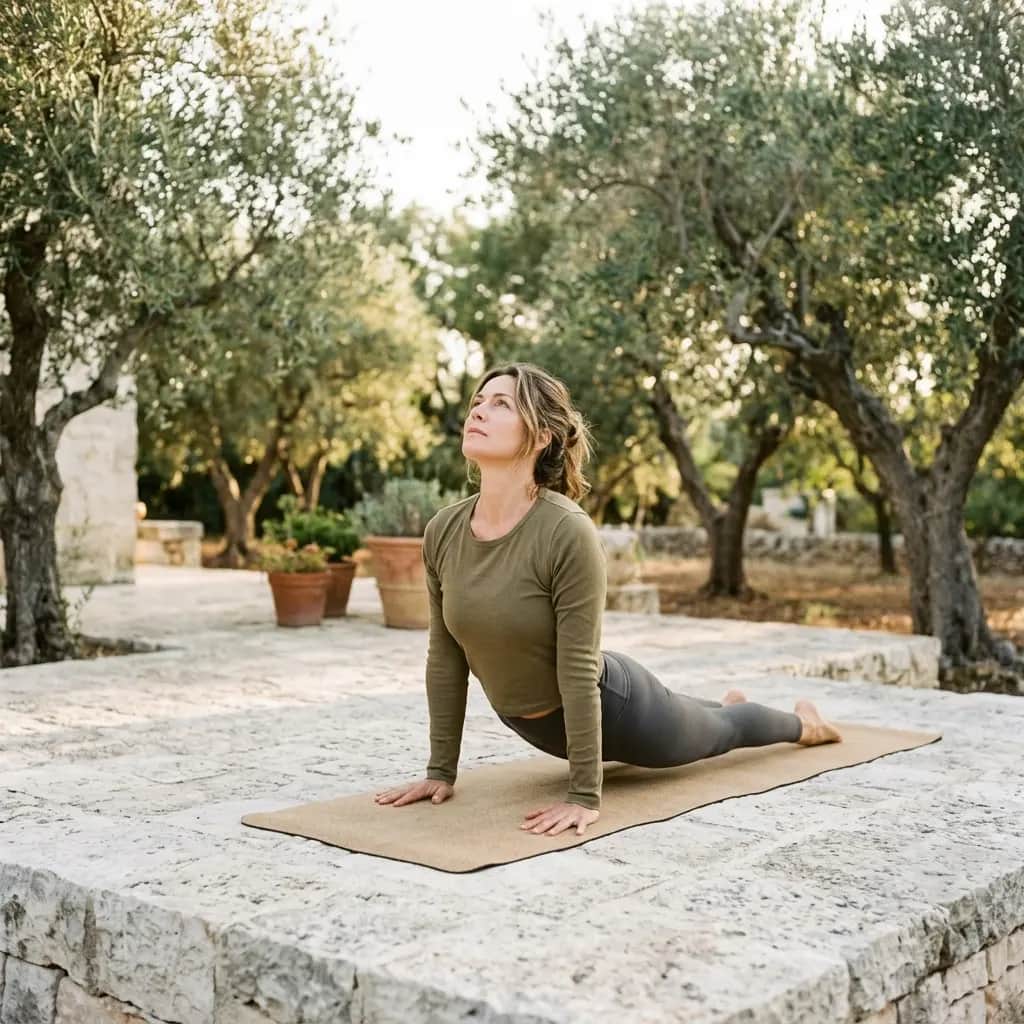
Upward-Facing Dog (Urdhva Mukha Svanasana) puts more weight on the hands than almost any other beginner pose, and only the hands and the tops of the feet touch the floor. Three properties of a mat decide how that feels:
- Grip. If the hands slide even slightly forward, the shoulders move ahead of the wrists and the bend drifts into the lower back. A textured or tacky top surface holds the hands in place.
- Firmness. A firm surface lets you press the floor away evenly through the whole hand. On soft foam the heel of the hand sinks deepest, so the wrist ends up more bent than it would be on a firm floor.
- Comfort for the feet. The tops of the feet press into the mat. A little cushioning helps here, which is why very thin travel mats (around 1 to 2 mm) can feel harsh.
Thickness is a trade-off between these. More foam means comfort for knees and feet, less stability for hands.
The Decision Rule: Grip First, Then Thickness
| Your main practice | Thickness to look for | Surface | Why |
|---|---|---|---|
| Flowing yoga with many Upward Dogs | About 4 to 6 mm | Textured or tacky, firm | Steady hands, wrists supported, still some comfort for feet |
| Sensitive knees, plenty of kneeling | 6 mm, or 4 mm plus a folded blanket under the knees | Grippy | Cushion where you kneel without making the whole mat soft |
| Floor Pilates, stretching, core work on your back | 10 mm up to 1/2 inch | Any non-slip | Lying and kneeling exercises benefit from padding; hands bear little weight |
| Wrist pain in weight-bearing poses | 4 to 6 mm and blocks under the hands | Grippy | Blocks reduce the wrist angle more than any mat can |
Two practical notes. First, if you already own a thick mat, you do not have to replace it: for Upward Dog, try placing your hands on the folded front edge of the mat or on blocks resting on the floor. Second, no mat fixes a hand position that is too far forward. Check that your shoulders end up roughly over your wrists. If your shoulders tend to round forward through the day, our posture correction routine is a useful companion to this pose.
Three Mats and Who Each One Is For
We have not lab tested these mats, and we do not give them scores. What follows is based on each product's listed specifications and on how mat thickness and material typically behave in this pose. Check the current listing before buying, since sizes and versions change.
Gaiam Print Yoga Mat: best fit for Upward Dog on a budget
The Gaiam Print Yoga Mat (Pink Marrakesh) is a PVC mat. The version we link was listed at 68 x 24 inches and about 0.16 inches (4 mm) thick. Gaiam sells its print mats in more than one thickness, so confirm the thickness on the listing.
- Pick this if: your practice includes sun salutations and you want stable hands and a firm press for Upward Dog.
- Good to know: at 4 mm it feels close to the floor, which is exactly what helps the wrists in this pose.
- Downsides: 68 inches is on the short side if you are tall, since your feet may hang off the end in Downward Dog. Thin PVC gives the knees little padding, and new PVC mats often smell for a few days; airing it out helps. PVC is not the most eco-friendly material.
Gaiam Essentials Thick Yoga Mat: for knees and floor work, not ideal for Upward Dog
The Gaiam Essentials Thick Yoga Mat is NBR foam, listed at 72 x 24 inches and about 0.39 inches (10 mm) thick, with a carrying strap.
- Pick this if: most of your home practice is kneeling, lying on your back, gentle stretching or mat Pilates, and your knees or spine feel the hard floor.
- Good to know: the extra length suits taller people.
- Downsides for this pose: at 10 mm the hands sink more than on a thinner mat, so many people feel less stable in Upward Dog and in other hand-balancing positions. NBR foam can also tear or dent if you drag your toes or press with fingernails, and it may feel slippery if your hands sweat.
Retrospec Solana Yoga Mat: an exercise mat for floor comfort
The Retrospec Solana Yoga Mat is a thick foam mat that Retrospec sells in 1/2 inch and 1 inch versions, 72 x 24 inches, with a nylon strap.
- Pick this if: you want a soft floor for somatic Pilates, restorative poses or stretching on a hard floor.
- Downsides for this pose: at 1/2 inch or more, it is closer to an exercise mat than a yoga mat. Hands and feet sink noticeably, so it is the least suitable of the three for Upward Dog, standing balances and anything where you bear weight on your hands.
Quick comparison
| Mat | Listed thickness | Material | Best for | Main downside |
|---|---|---|---|---|
| Gaiam Print | about 4 mm | PVC | Upward Dog, flowing yoga | Short for tall people, little knee padding |
| Gaiam Essentials Thick | about 10 mm | NBR foam | Kneeling, stretching, mat Pilates | Hands sink in weight-bearing poses |
| Retrospec Solana | 1/2 or 1 inch | Foam | Floor exercises, restorative work | Too soft for Upward Dog |
Setting Up Your Hands on the Mat
The right mat only helps if your hands are placed well. Before each Upward Dog:
- Hands beside the lower ribs, not beside the shoulders. Shoulders should end up roughly over the wrists.
- Spread the fingers and press down through the knuckle at the base of the index finger and thumb. This takes load off the outer wrist.
- Press the whole hand evenly so the heel of the hand does not take all the weight, which is where wrists usually complain.
- Point the middle finger forward, or very slightly out if that feels better for your wrists.
- If wrists still ache, put your hands on two blocks. Blocks change the wrist angle more than any mat can. The wrist and finger stretch in our desk yoga poses also makes a gentle warm-up.
The full alignment cues, common mistakes and gentler variations are in our step-by-step guide to the pose linked above.
Keeping Your Mat Grippy
A grippy mat stops being grippy when it is dusty, oily or damp.
- Wipe the top surface after each session with a damp cloth and a drop of mild soap, then let it air dry flat.
- Keep it out of direct sun, which can make foam and PVC brittle over time.
- Hand lotion just before practice makes almost any mat slippery; apply it after instead.
- If your hands sweat a lot, a dry hand towel at the top of the mat helps between poses.
Where Else Each Mat Fits at Home
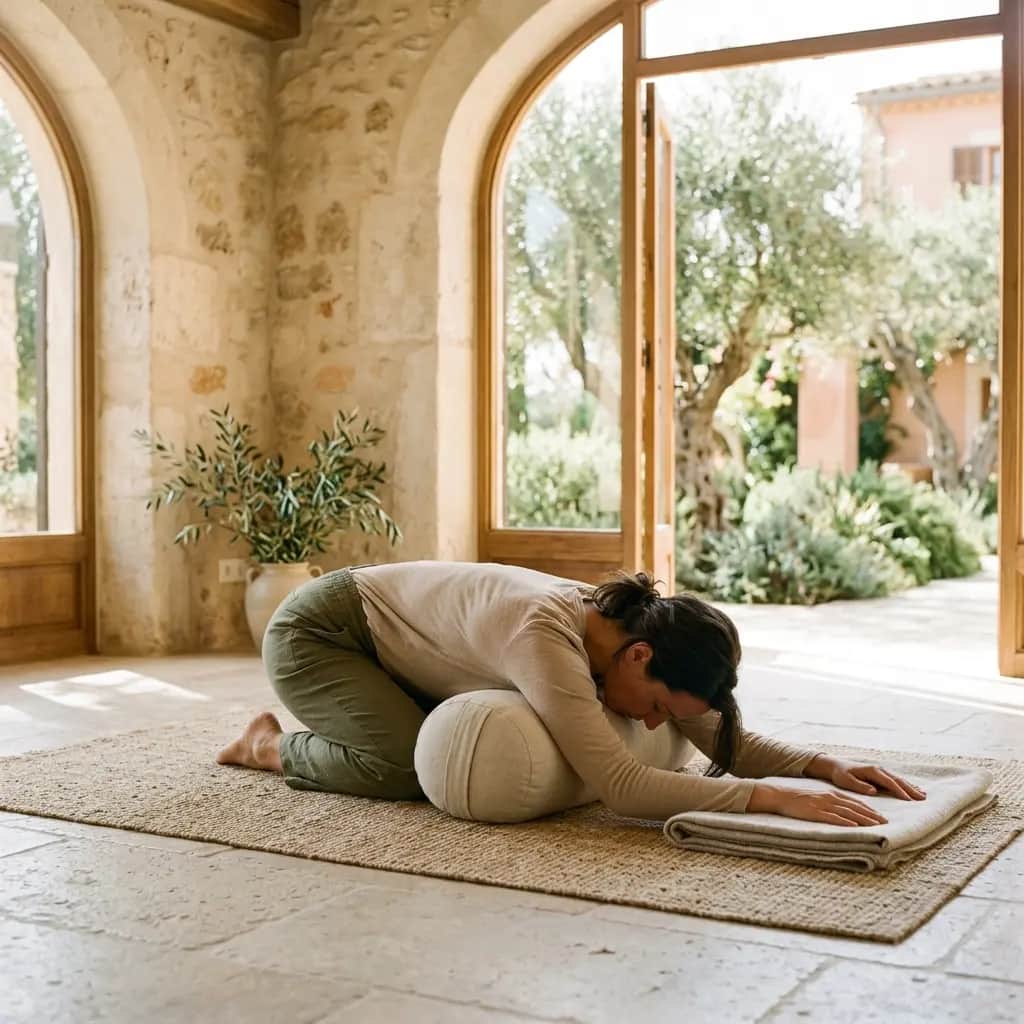
If you also do other gentle movement at home, such as the walking, Pilates and yoga in our exercise guides, the choice may tip one way or the other. Thin and grippy works well for standing yoga and for wall Pilates, where you mostly stand or lie with feet on the wall. Thick foam makes more sense for long, slow floor sessions such as restorative tantric yoga poses or yoga nidra. If tantric practice is new to you, tantric yoga for beginners explains what it is before you roll out a mat. Some people keep one of each: a thin mat for active practice and a thicker one, or a blanket, for slow work; our guide to yoga nidra props covers what makes lying still comfortable.
Frequently Asked Questions
Is a thicker yoga mat better for wrists?
Usually not for weight-bearing poses. On a thick, soft mat the heel of the hand sinks, which can bend the wrist further back. A firmer mat around 4 to 6 mm with good grip, plus blocks under the hands if needed, tends to support the wrists better in Upward-Facing Dog.
What thickness of yoga mat is best for Upward-Facing Dog?
Roughly 4 to 6 mm suits most people. It is firm enough for stable hands and still gives the tops of the feet some comfort. Very thin travel mats can feel hard on the feet, and mats of 10 mm or more let the hands sink.
Can I use a thick exercise mat for yoga?
You can, especially for floor stretches, restorative poses and Pilates. For poses that put weight on your hands, such as Upward Dog, plank and Downward Dog, many people feel less stable on thick foam. Placing your hands on blocks or on a folded edge of the mat is a simple workaround.
How do I stop my hands slipping in Upward Dog?
Clean the mat regularly, avoid hand lotion before practice, and dry your hands if they sweat. Check your hand position too: hands placed too far forward tend to slide. A textured or tacky mat surface helps more than extra thickness.
Do I need yoga blocks for Upward-Facing Dog?
Not always, but they are one of the most useful props for this pose. Hands on blocks reduce the depth of the backbend and the wrist angle, which helps if your lower back pinches or your wrists ache.